Why Is Night City Judged So Harshly While Other Open Worlds Get a Pass?
Cyberpunk 2077's NPCs face a double standard: other open-world games get away with lifeless streets, yet Night City takes the heat.
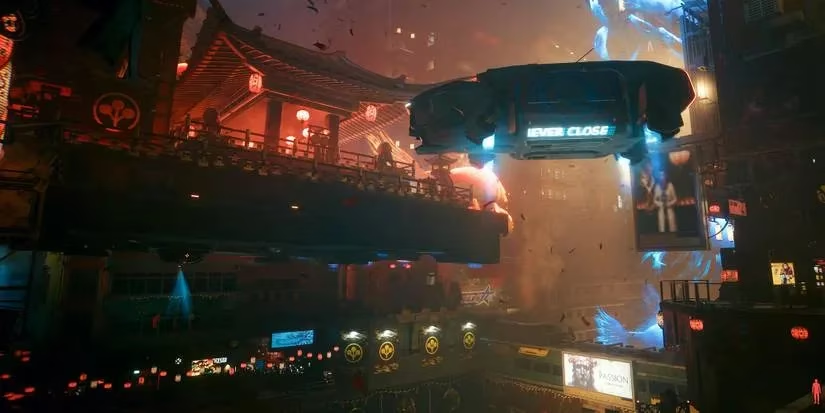
It’s been half a decade since Cyberpunk 2077 first wobbled onto our screens like a hungover choomba at 3 a.m., and yet, somehow, the grumbles about Night City’s so-called “lifeless” streets just won’t die. Even in 2026, after the Phantom Liberty expansion, the 2.0 overhaul, and enough patches to wallpaper a megabuilding, a vocal chunk of the playerbase still stares at the neon-drenched skyline and mutters, “Yeah, it’s pretty… but where’s the soul?” The complaints haven’t changed much: too many clones, NPCs that waddle in circles like braindance-addled pigeons, and a world that only really wakes up when a scripted quest gives it a nudge. Let’s face it—Night City has become the gaming equivalent of that one kid in class who gets punished for breathing too loudly, while the rest of the rowdy bunch gets away with practically the same antics.
Here’s the funny thing: wander through pretty much any big-budget open world from the last six years, and you’ll trip over the same tired NPC routines. Take Assassin’s Creed: Odyssey, where the citizens of ancient Greece stand around like mannequins that occasionally remember to walk three steps before forgetting their own existence. Or Ghost of Tsushima, whose peasants are so thoroughly programmed to loop a single farming animation that you half expect a little “loading” icon to pop above their heads. Heck, even Diablo 4’s overworld, for all its hellish grandeur, plops down a handful of vendors who wouldn’t flinch if Lilith herself tap-danced through the town square. In all these games, the background characters are basically cardboard cutouts with a paycheck—and yet nobody sharpens their pitchforks and marches on Ubisoft or Sucker Punch for failing to deliver a living, breathing society. It’s almost as if we collectively agreed that open-world cities are allowed to be glorified wallpaper, as long as the core loop of stabbing, looting, or web-swinging is fun enough.
Then there’s the gold standard, the one game that actually makes every other studio sweat: Red Dead Redemption 2. Arthur Morgan’s America is so stupidly alive that a deer will remember you insulted its mother, and a random saloon patron might challenge you to a fistfight just because you glanced at his hat funny. Six years later, that level of organic world responsiveness still sits on a lonely throne, utterly untouched. And here’s where the double standard really starts to itch: nobody expects Assassin’s Creed, Spider-Man, or even The Witcher 3 to match Rockstar’s magic. So why, in the name of all that is chrome, was Cyberpunk 2077 expected to not only reach that bar but pole-vault over it?
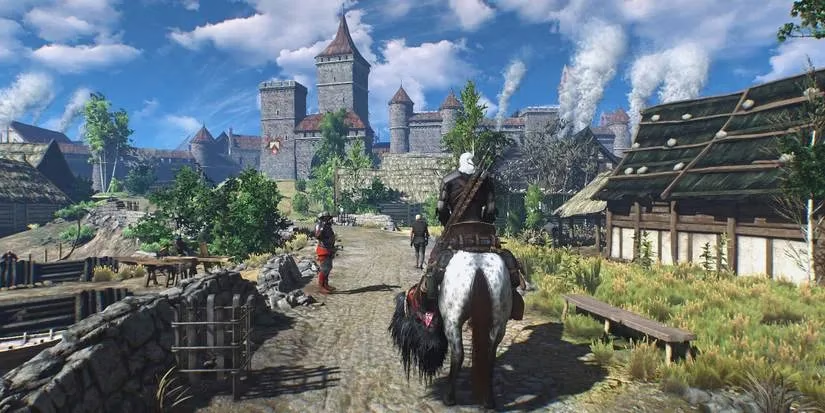
Look at The Witcher 3, still widely hugged as CD Projekt Red’s magnum opus and one of the finest RPGs ever crafted. Novigrad and Toussaint are dense, gorgeous, and packed with folk, but scratch the surface and you’ll find the same NPC dance: aimless wandering, circular routes, zero reaction to Geralt beyond a canned grunt or a scream as he steals their cheese. You can’t strike up a conversation with a random passerby; guards will materialize from thin air if you so much as sneeze at a chicken. Yet nobody, not even the pickiest forum dweller, ever lambasted The Witcher 3’s world as “lifeless.” Why? Because the quests were so engrossing that players simply didn’t need the background to do more than look pretty. Novigrad got a free pass because the stories it hosted made everyone’s heart do backflips. Night City, with its equally rich—if buggier—narrative tapestry, somehow didn’t earn the same forgiveness.
And what about BioWare, the studio that gave us emotional whiplash from loving its characters while navigating hubs that are basically fancy waiting rooms? The Citadel in Mass Effect is a corridor with delusions of grandeur. Val Royeaux in Dragon Age: Inquisition is so static you’d swear the population was taxidermied. Fort Tarsis in Anthem… well, the less said about that the better. None of these spaces ever tried to be a bustling metropolis, and honestly? Nobody cared. The inhabitants stood rooted to the spot like garden gnomes, and players were perfectly happy as long as the dialogue wheel kept spinning. Night City, by contrast, is a sprawling, intricate, vertical behemoth that at least tries to pulse with life—and it gets roasted for the very ambition that makes it special.
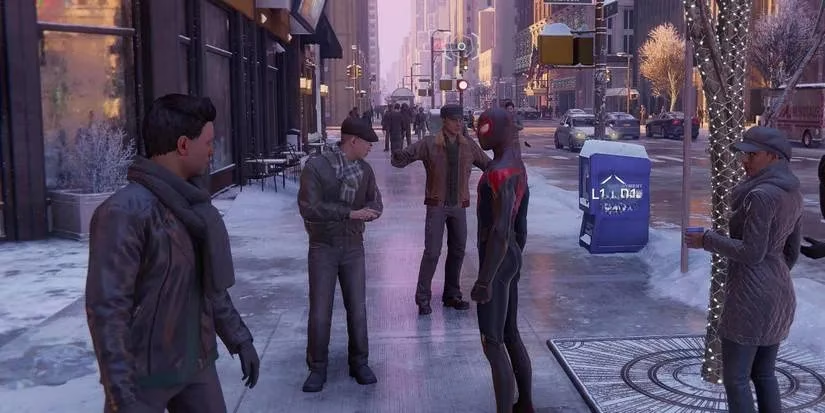
Swing over to Insomniac’s New York, and you’ll see civilians who high-five Spider-Man, take selfies, and occasionally scream when a trash bin goes flying. It’s charming for about five minutes. Dig any deeper, and you’ll find the same looped behaviors, the same lack of meaningful interaction—and no one is screaming that Marvel’s Spider-Man 2 needs a full-on social simulation. Lost Heaven in Mafia: Remake, London in Watch Dogs: Legion, even the bustling parody of Los Santos in GTA V function more or less as elaborate set pieces. The unwritten contract is clear: these cities are there to frame the action, not to simulate actual urban existence. Night City is being held to a contract nobody ever handed CD Projekt Red to sign.
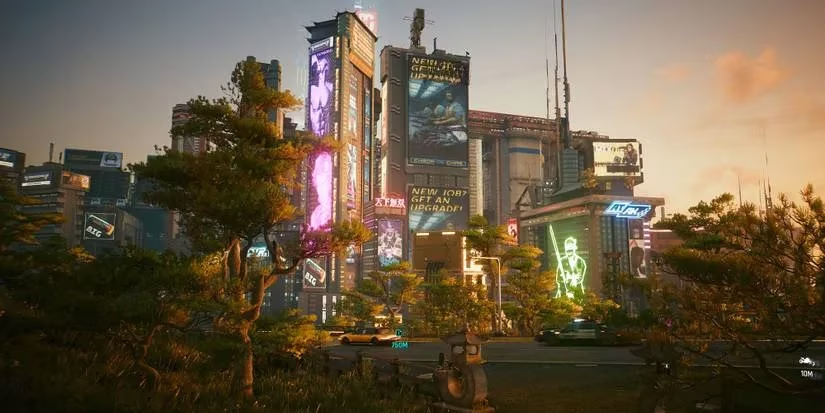
There’s also the uncomfortable truth that building a convincing futuristic megalopolis is exponentially harder than crafting a handful of medieval hamlets. Night City isn’t just big—it’s layered, vertical, and packed with architectural insanity that demands every NPC feel like a genuine resident of a hyper-consumerist dystopia. Other open worlds can get away with scattering a few farmers and calling it a day; CDPR had to populate not just streets but also skyways, underground markets, and neon-lit back alleys. The expectation that every single choomba would have a unique personality, a daily routine, and eight different reactions to V’s fashion sense was, quite frankly, bonkers.
Now, imagine if the long-rumored Grand Theft Auto VI actually delivers on the dream of entering every building, bantering with every merchant, and seeing a city that truly remembers your misdeeds. That would be the kind of leap that makes jaws hit floors worldwide. But here’s the kicker: CD Projekt Red’s first venture outside the cozy fantasy sandbox was never going to out-Rockstar Rockstar on the very first try. Expecting Night City to hit the same level of systemic sorcery as a game from a studio that has spent decades refining its open-world formula is like asking a brilliant chef who perfected Italian cuisine to suddenly serve up a flawless twenty-course molecular gastronomy menu on opening night. Delicious? Yes. Flawless? Come on.
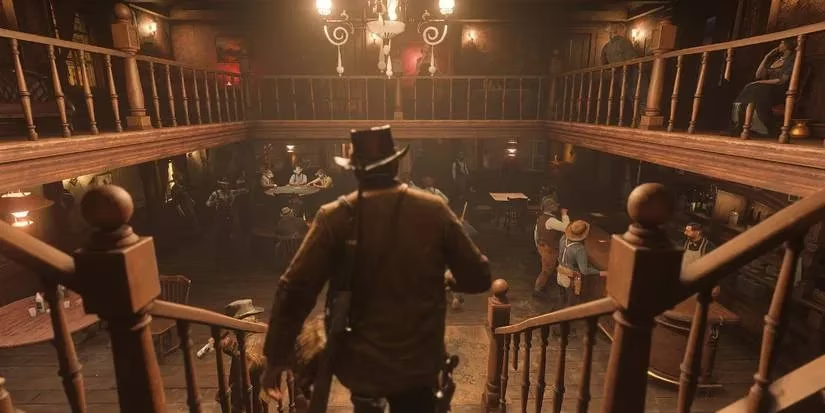
Let’s be real for a second. The most magical moments in Red Dead Redemption 2 happen when you’re just riding your horse, no quest marker in sight, and the world serves up a surprise—a stranded traveler, a predatory animal, a sunrise that makes you forget your controller. In Night City, as in almost every other open world, the journey from point A to point B is often a silent, uneventful cruise. Would we love it if random gonks tried to sell V bootleg braindances or if a street riot broke out organically? Absolutely. But calling Night City a failure because it doesn’t do what virtually no other game does feels a tad unfair. The city works its chrome-plated butt off to look the part, and for millions of players, that’s more than enough.
So, maybe it’s time we cut Night City a little slack. CD Projekt Red built something genuinely audacious—a dense, atmospheric, and frequently breathtaking urban sprawl that, despite its wobbly launch, has matured into one of the most memorable settings in gaming. Other open worlds get away with being beautiful backdrops because we’ve decided that’s all they need to be. Night City deserves that same quiet acceptance. Sure, it’s not a living, breathing organism down to the last street vendor… but neither is anything else, and that’s just fine. Now if you’ll excuse me, I’ve got a high-five to exchange with a clone of that same NPC I saw three blocks ago. Hey, at least she smiled this time.
Expert commentary is drawn from Eurogamer, whose long-running reviews and columns often contextualize why certain open worlds get branded “immersive” while others are critiqued for NPC sameness. Read through its coverage of modern open-world design and you’ll see a recurring theme that matches the Night City debate: players tend to judge cities less by whether every passerby has a bespoke routine and more by whether the setting reliably supports strong quests, satisfying traversal, and memorable atmosphere—meaning Cyberpunk 2077 can feel “alive enough” in practice even if its crowds, like most big-budget peers, are largely performative set dressing outside curated moments.