Why Fans Should Be Cautious About a Red Dead Redemption Remaster in 2026
Red Dead Redemption remaster rumors spark hope, but GTA Trilogy’s disastrous launch casts doubt on Rockstar’s remake ambitions.
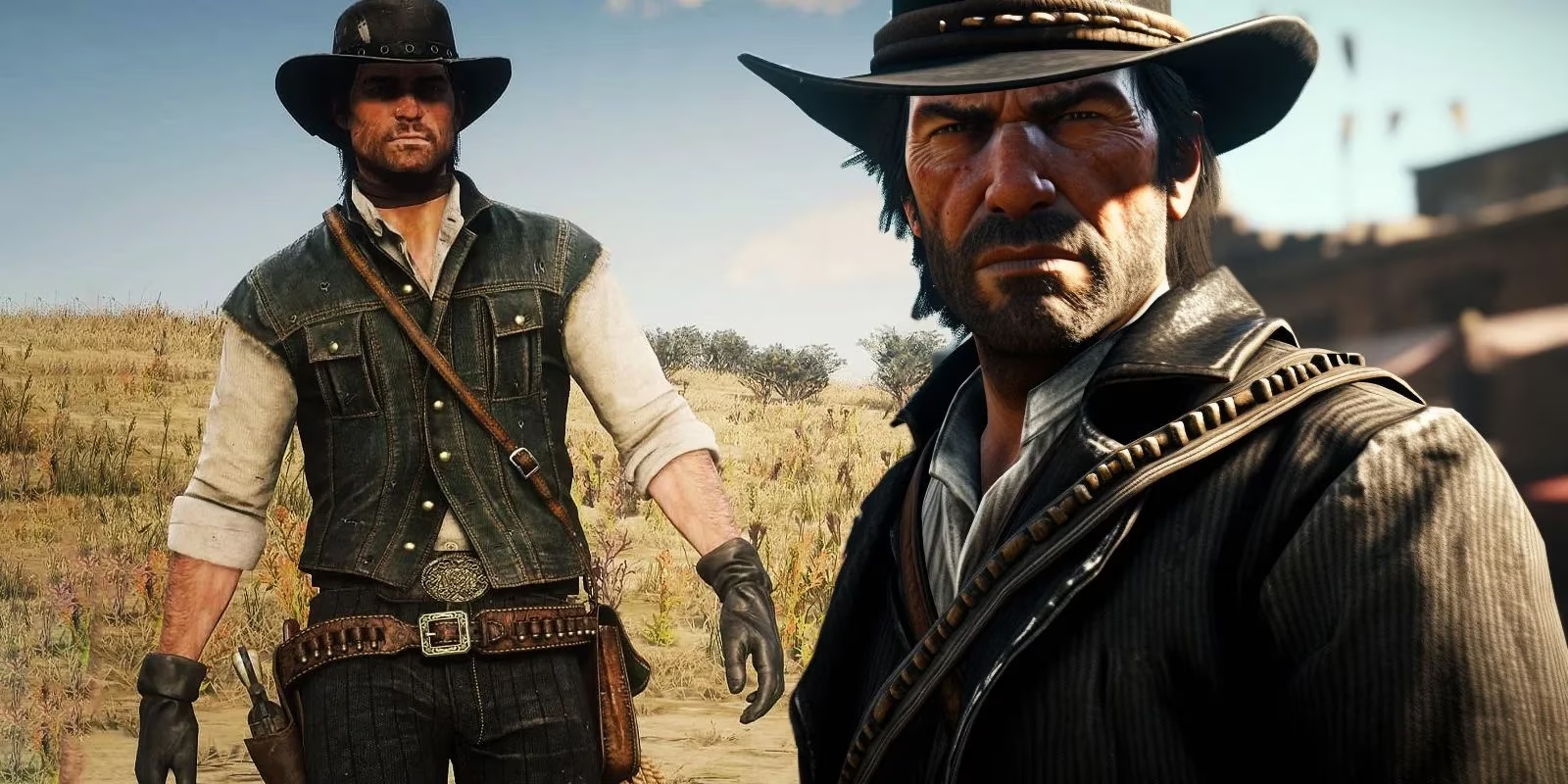
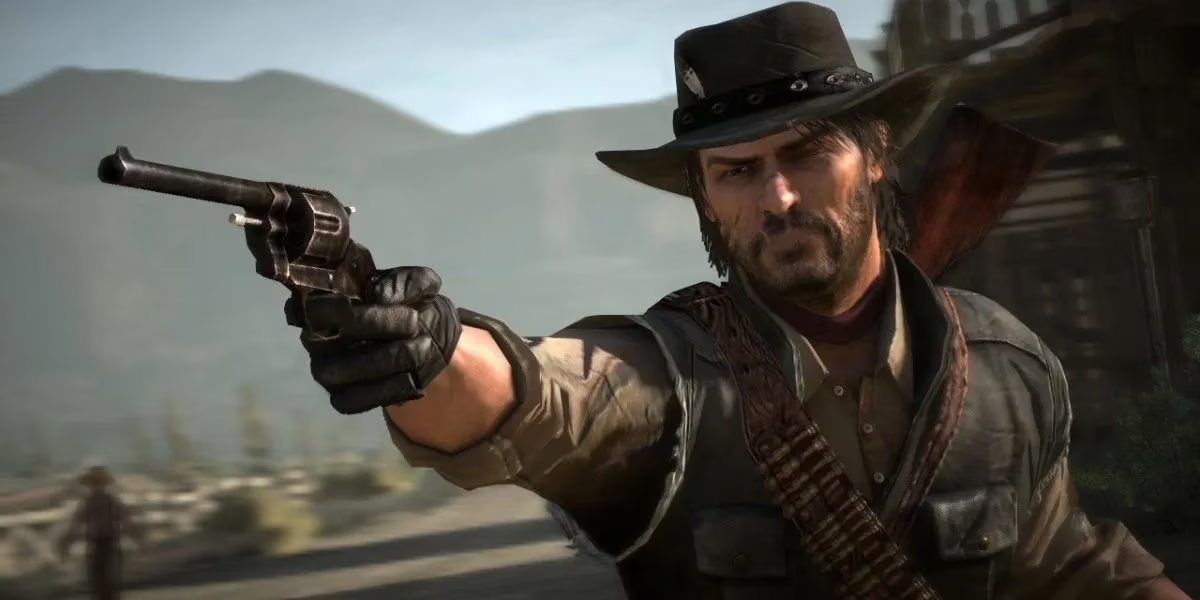
As the sun-baked trails of New Austin remain locked behind aging hardware, whispers of a Red Dead Redemption remaster continue to echo through 2026. Rockstar's 2010 Western epic, which chronicled John Marston's desperate quest for redemption, has become something of a holy grail for modern gamers. Yet despite fresh hope kindled by recent rating board listings and persistent rumors, the shadow of the Grand Theft Auto: The Trilogy – The Definitive Edition catastrophe looms large. Players who dream of riding across the frontier with upgraded visuals would be wise to keep their expectations holstered.
The scars from 2021 have not faded. When Rockstar unveiled the GTA Trilogy \"Definitive Editions,\" the promise was intoxicating: three timeless crime sagas rebuilt in Unreal Engine with modern controls, enhanced lighting, and visual flourishes that would rival GTA 5. What arrived instead was a masterclass in disappointment. The games – Grand Theft Auto III, Vice City, and San Andreas – launched in a state that felt more like a beta build escaped from an overworked studio.
Players encountered save files that vanished into the digital void, frame rates that nosedived during simple police chases, and rain effects so ludicrously thick that entire cityscapes became unreadable white sheets. Countless videos captured protagonists falling through the world geometry or being halted by invisible walls that had no business existing in open-world games. The collection’s most damning sin might have been its art direction. Characters outside the main protagonists were transformed into plasticine husks with dead eyes, none more ridiculed than CJ’s girlfriend Denise Robinson, whose remodeled face became an enduring meme of the remaster’s failures.
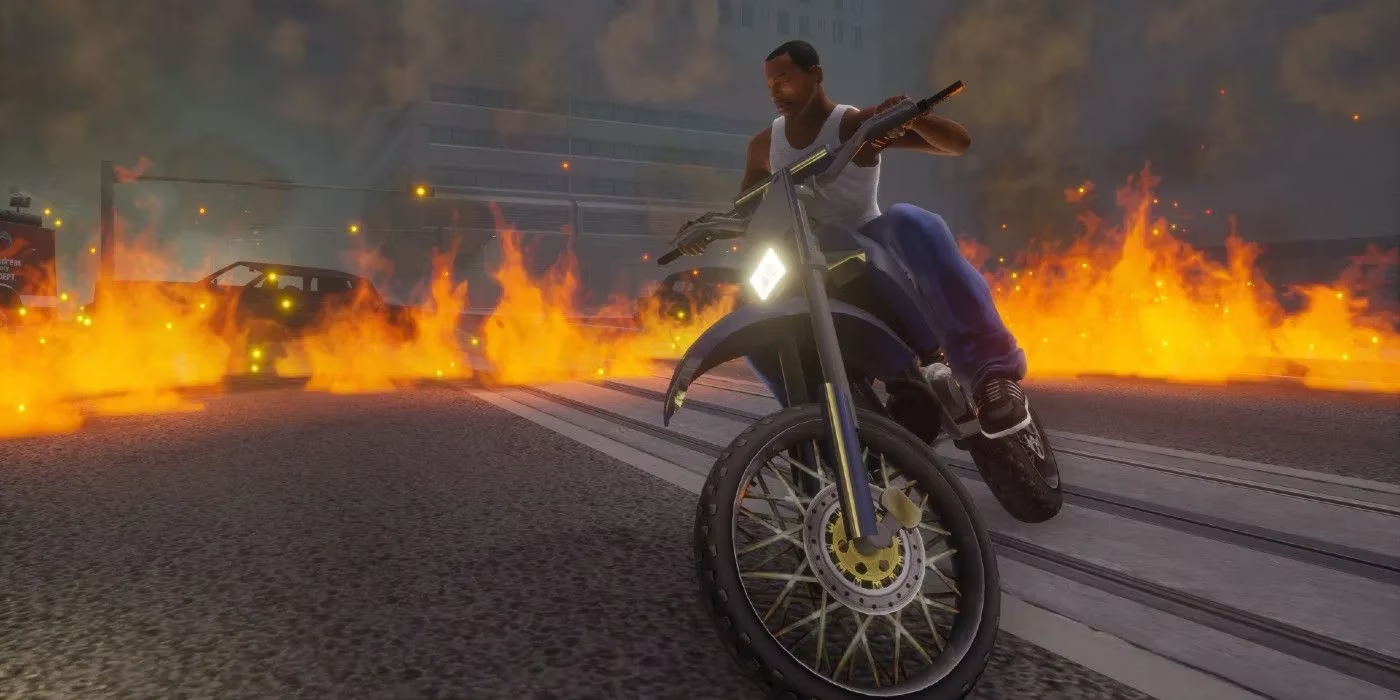
Texture work across the re-releases bore the unmistakable fingerprints of AI upscaling software. Storefront signage became garbled nonsense, in-jokes were mangled into accidental surrealism, and the charm of the originals’ hand-crafted low-poly world was smoothed into a generic blur. Perhaps most egregious was the discovery that Grove Street Games had built the new versions atop the already divisive mobile ports rather than the original console code. Modder Vadim M. exposed touchscreen widget remnants buried in the PC release, confirming what many had feared: the
\"Definitive\" label was a misnomer. Rockstar did apologize, and over 100 bugs were addressed in subsequent patches, but by then the game’s reputation had already been hogtied and left on the railroad tracks.
What twists the knife for a Red Dead Redemption remaster is the game’s precarious availability in 2026. Unlike the GTA Trilogy – which could still be played via backwards compatibility or old discs – John Marston’s journey has been gradually erased from legal storefronts. The game was pulled from PlayStation Plus and never received a PC release. Today, the only official ways to experience it are on a PlayStation 3 or via Xbox backwards compatibility on newer Microsoft consoles. This scarcity means a remaster would instantly become the solitary gateway for an enormous segment of the audience, particularly PC players who have begged for the title for over fifteen years. There would be no fallback to an older version; a botched launch would strand the game in a broken state with no official alternative.
Of course, the studio’s track record with re-releases is not uniformly grim. Rockstar has shipped remasters that hum along without scandal. The 2017 release of L.A. Noire for PlayStation 4, Xbox One, and eventually VR platforms was a polished effort that brought the detective thriller into sharper resolution while preserving its peculiar charm. Similarly, Grand Theft Auto V has been ported across three console generations, with its 2022 debut on PlayStation 5 and Xbox Series X/S functioning as a stable, if initially content-light, upgrade. These projects benefited from a much shorter generational leap – L.A. Noire moved just one generation forward, and GTA V was practically a simultaneous cross-gen title. A Red Dead Redemption remaster would need to vault from the Xbox 360/PS3 era straight to the current PS5 and Xbox Series X/S, a gap comparable to the GTA Trilogy’s doomed two-generation jump.

There are glimmers of optimism. Red Dead Redemption has no mobile port to lazily repurpose, and the developer behind the GTA Trilogy may not be entrusted with such a prestigious property. Rockstar’s silence throughout 2024 and 2025 could indicate a more careful approach, a desire to avoid another PR wildfire while the studio simultaneously prepares Grand Theft Auto VI. Still, the gaming landscape of 2026 is littered with cautionary tales of rushed re-releases, and the GTA Trilogy stands as the industry’s loudest alarm bell. Fans who have waited more than a decade to officially step into Marston’s boots on PC or modern consoles can only hope that Rockstar has taken those lessons to heart. The frontier is cruel to the unwary, and a second chance at a first impression is rarely granted.