Why a Port, Not a Remake, Was the Right Call for Red Dead Redemption
Red Dead Redemption remake debate highlights its unique Western movie style versus Red Dead Redemption 2's immersive period drama.
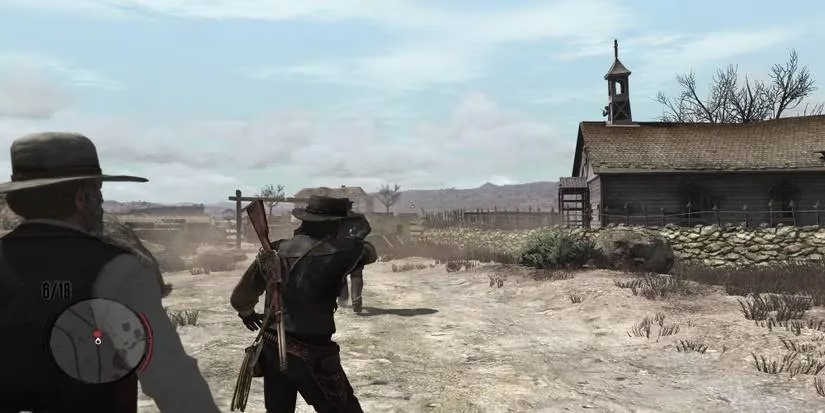
When Red Dead Redemption first rode into the gaming landscape in 2010, it did more than just tell a story—it crafted a myth. The tale of John Marston, a former outlaw dragged back into a life of violence to save his family, arrived with a dusty, sun-baked aesthetic that felt plucked straight from a Sergio Leone frame. For years, it held the unofficial title of 'The Citizen Kane of gaming,' a crown later passed to The Last of Us. So when whispers of a full remake in the style of its 2018 prequel began swirling through communities like Reddit, anticipation hit a fever pitch. Yet in 2023, Rockstar announced not a lavish rebuild but a straightforward port to PS4 and Switch, leaving many fans disappointed. Looking back from 2026, that decision has aged remarkably well—and here's why a remake would have betrayed the soul of the original.
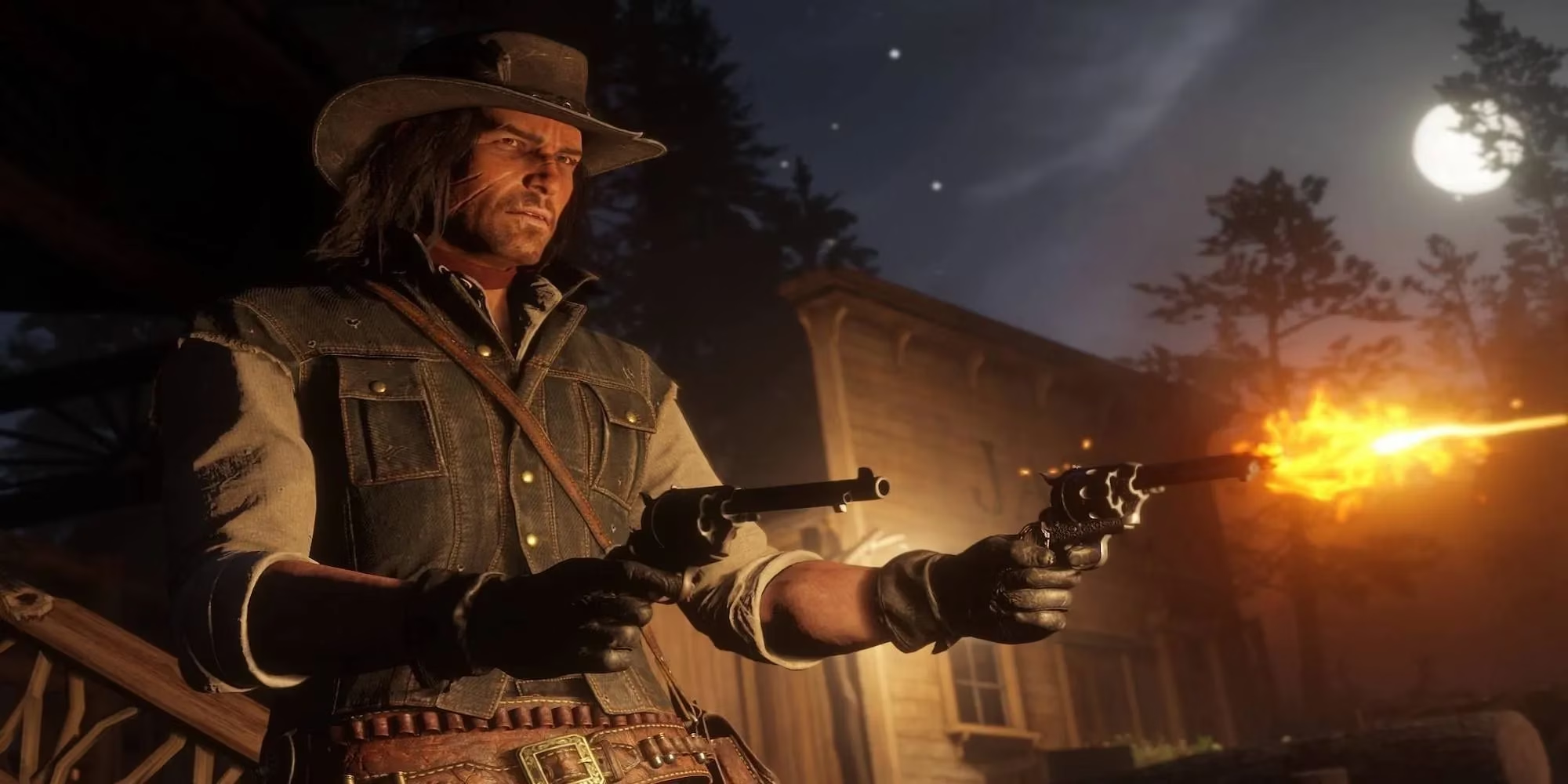
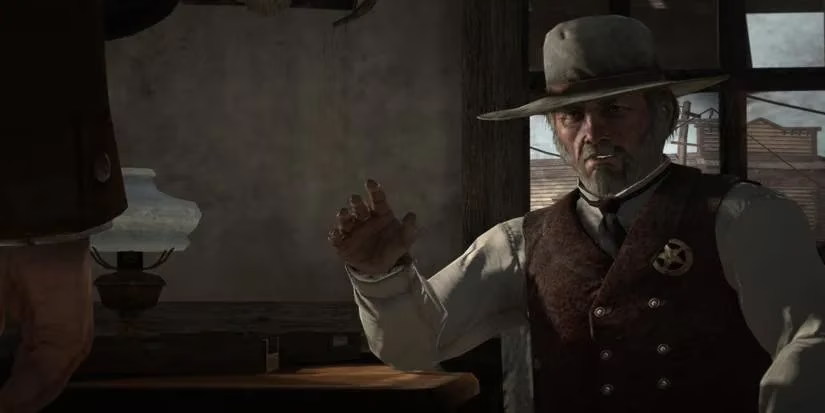
The core misunderstanding stems from the assumption that RDR2 is simply a bigger, better version of the same template. In truth, the two games are fundamentally different beasts. Red Dead Redemption 2 is a period drama, painstakingly researched and steeped in the grim mechanics of survival: horses can die permanently, cores simulate hunger and fatigue, and every action feels slow and deliberate. It’s a simulator of the Old West, where history buffs can spot Angelo Bronte referencing the real-life roots of the American Mafia. The original Red Dead Redemption, on the other hand, is a Western movie rendered interactive. Its characters—the delightfully one-note gunslingers, the corrupt marshals, the melodramatic revolutionaries of Mexico—are pulled from pulp novels and spaghetti westerns, not history books. John Marston can magically pull a buffalo rifle from his pocket and his horse appears at a whistle, no questions asked. That tonal gulf is unbridgeable.
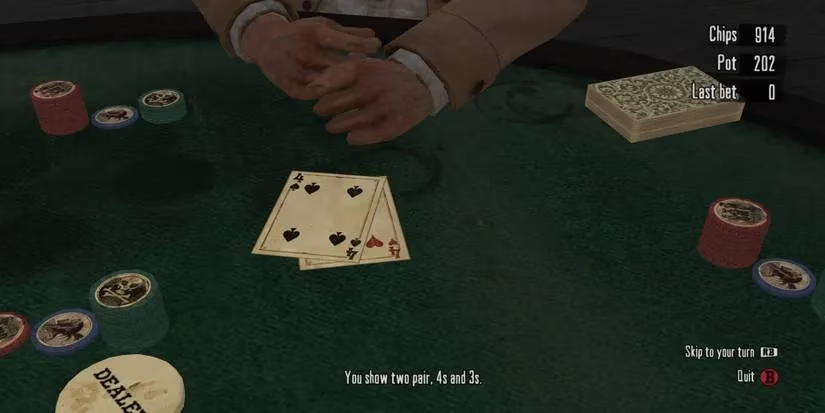
Gameplay systems that define RDR2 would actively undermine what made the first game fun. The horse mechanics are a perfect example. In Red Dead Redemption, the open desert begs you to gallop wildly across it; the only limitation is a simple stamina bar that recovers quickly if you don’t push the horse to a full gallop the entire time. There is no stamina meter on foot at all. Importing RDR2’s horse bonding, the need to calm and feed your mount, and the constant threat of it dying off-screen would have turned the breezy, cinematic pace into a slog. Similarly, the original’s gunplay—where you can shoot weapons out of enemies' hands with a flick of the Dead Eye—operates on a completely different logic from the sequel’s more grounded combat. Healing, gambling, bounties, and random encounters all follow distinct design philosophies. A remake would have forced a choice between preserving the original’s arcade soul or gutting it to fit the prequel’s realism.
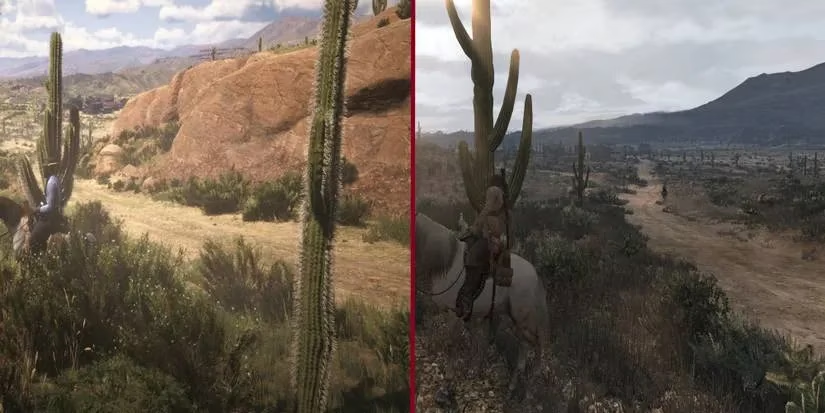
Visual identity is where the clash becomes most apparent. A side-by-side comparison of New Austin in both games reveals a split screen of philosophy. On the left, RDR2’s Armadillo road is lush, green, and impossibly detailed; a sandstorm may roll through, but the color palette remains rich and varied. On the right, the original serves up a landscape that looks bleached by the sun, all pale cacti, yellowed grass, and an overwhelming sense of aridity. That very desolation was a storytelling tool—it echoed the death of the gunslinger era and John’s personal desolation. Injecting the sequel’s vibrant, lived-in aesthetic into that world would have erased its identity. The dust-choked air and unforgiving heat weren’t technical limitations; they were deliberate artistic choices that a remake would have bulldozed in the name of fidelity.
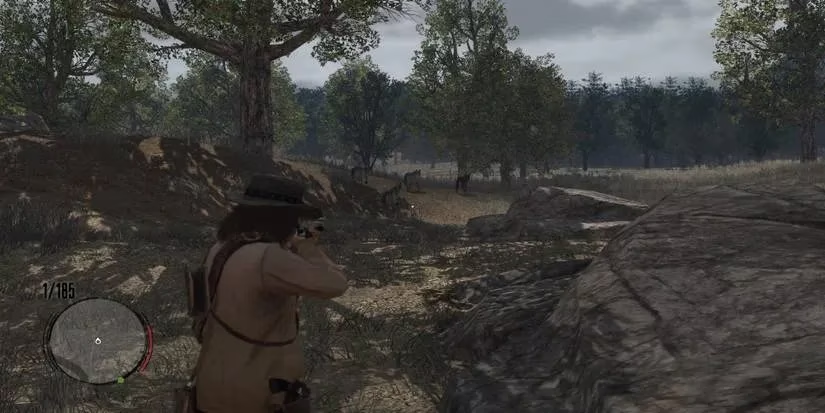
Some complaints about the port were entirely legitimate—asking $50 for a bare-bones conversion with no frame rate boost or PC version stung, and those grievances still echo in forums today. Yet for players who simply wanted access to a classic on modern hardware, the port delivered exactly that: a time capsule. On the Switch’s 6.2-inch screen, the original 720p resolution and untouched textures feel right at home, and the game’s raw, unfiltered personality shines through without the heavy hand of revisionism. The developers may not have given fans their ideal upgrade, but they preserved something arguably more valuable: the integrity of Red Dead Redemption as a cultural artifact.
Looking at the gaming landscape of 2026, the decision stands as a quiet victory for preservation. Remakes often chase the latest graphical benchmarks and modern design trends, but they risk sanding away the quirks that make older games distinct. Red Dead Redemption is not a game that needs to feel contemporary; it’s a product of its time, one that deliberately leans into the romanticised, unrealistic trappings of the Western genre. Its juvenile humor, its sprawling desert emptiness, and its instantly accessible action are features, not flaws. By skipping the remake, Rockstar avoided the trap of turning a beloved classic into a compromised hybrid—a game that would have pleased neither purists nor newcomers. As we continue to debate the merits of preservation versus enhancement, the simple port of Red Dead Redemption remains a testament to the idea that sometimes, the best way to honor a masterpiece is to let it stand on its own, dust and all.