The Unstoppable Evolution of Sandbox RPGs: Where Worlds Collide and Legends Are Forged
Sandbox RPG and open world games in 2026 ignite a revolution, blending genres for deeply personal, endlessly unique adventures.
The gaming landscape of 2026 is a glorious, chaotic melting pot where genres don't just blur—they explode, merge, and give birth to entirely new forms of interactive entertainment. The rigid walls that once separated a stat-heavy RPG from a survivalist's struggle have been utterly demolished. Now, we inhabit vast digital realms where character progression intertwines with base-building, where epic narratives unfold amidst the desperate scramble for resources. This isn't just cross-pollination; this is a full-scale genetic revolution in game design, creating experiences so uniquely complex and personal that labeling them feels almost reductive. At the heart of this revolution lies the mighty Sandbox RPG, a genre defined not by a checklist of features, but by a sacred trinity: meaningful character growth, a world with a story (or the tools to make your own), and an open, interactive playground of staggering scale. The result? A catalog of masterpieces where no two adventures are remotely alike.
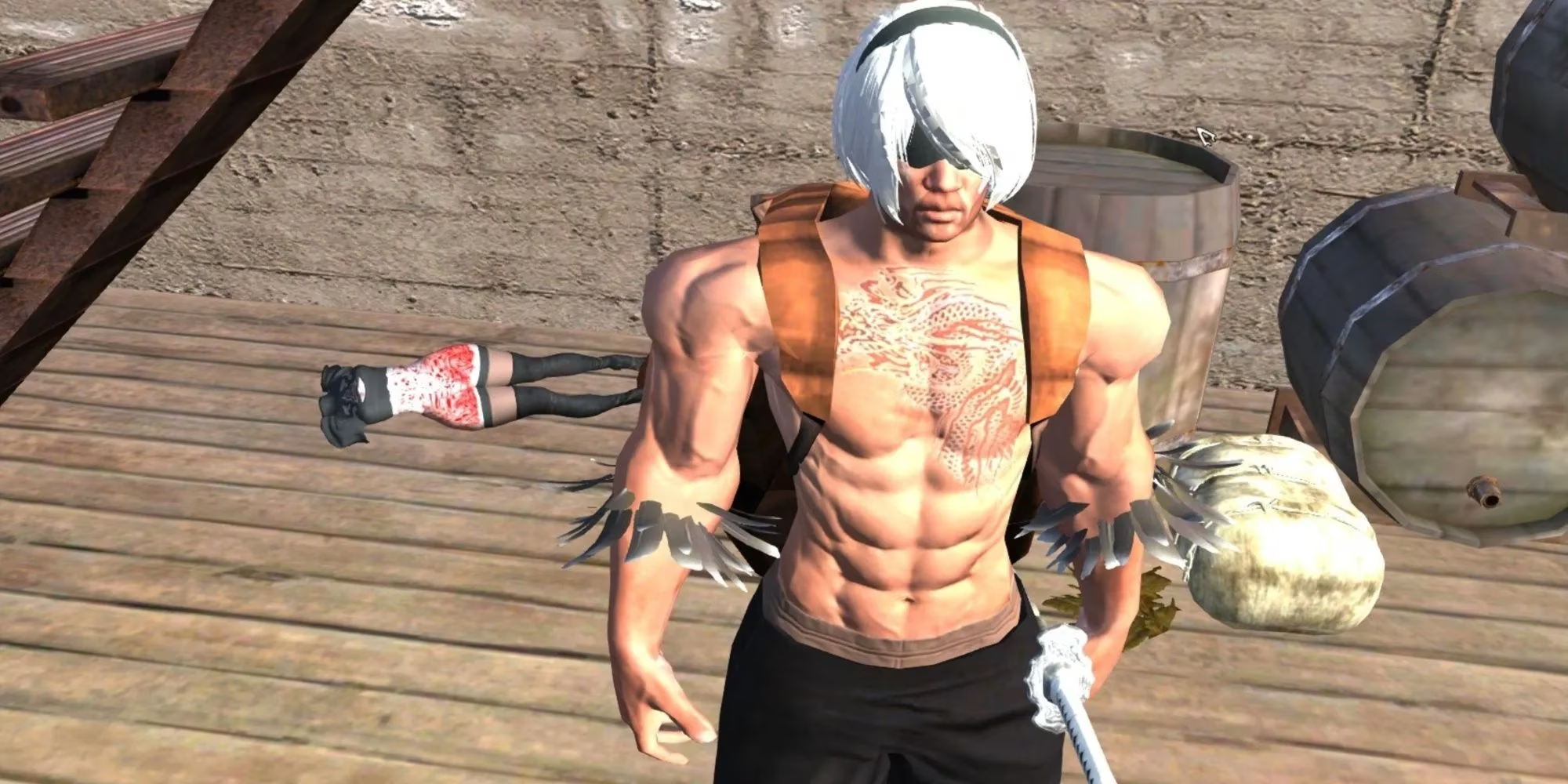
Let us begin with a legend forged in silence and player-driven chaos: Kenshi. Since its 2018 debut, this self-proclaimed "Squad-Based RPG" has ascended to cult status, a brutal testament to the power of emergent storytelling. Forget quest markers and guiding hands; Kenshi throws you into its harsh, top-down world with nothing but the clothes on your back and a desperate will to survive. Its charm—a potent, often painful elixir—stems from this very lack of direction. Every stumbled-upon ruin, every skirmish with bandits, every daring trade route carved through hostile territory is the quest. The world lives, breathes, and fights back with a startling indifference to your existence. You aren't a chosen one; you are just another soul trying not to get eaten by beak things in a land that couldn't care less.
If Kenshi represents the harsh, unforgiving frontier of the genre, then Minecraft is its boundless, creative utopia. To call it merely a "success" in 2026 is to call the ocean damp—it is a global cultural pillar. Its genius lies in a deceptively simple loop: punch tree, craft table, build empire. But beneath that accessible surface churns an ocean of possibility that has ensnared generations. The optional progression system is almost an afterthought to the true endgame: creation. And with its sophisticated in-game coding systems (like command blocks and modding APIs), Minecraft transforms from a game into a platform, a digital canvas where players don't just build castles, but program functioning computers, elaborate adventure maps, and entire game modes within the game. It is the ultimate sandbox because the sand itself is programmable.
Then, there are the worlds that dare to challenge the gods. Elden Ring, the 2022 titan that redefined open-world design, remains a benchmark of awe-inspiring scale and punishing beauty. The initial cries of its difficulty have faded, now recognized as the very heartbeat of its triumph. This isn't a hurdle; it's a gauntlet thrown at the feet of the player, a promise that every victory is earned, every secret uncovered is a treasure wrested from the world's grip. The Lands Between is a sprawling, melancholic painting begging to be explored. You are rewarded not with experience points, but with wonder—a hidden boss in a forgotten cave, a breathtaking vista from a crumbling spire, a lore fragment that shifts your understanding of everything. Exploration is the progression.
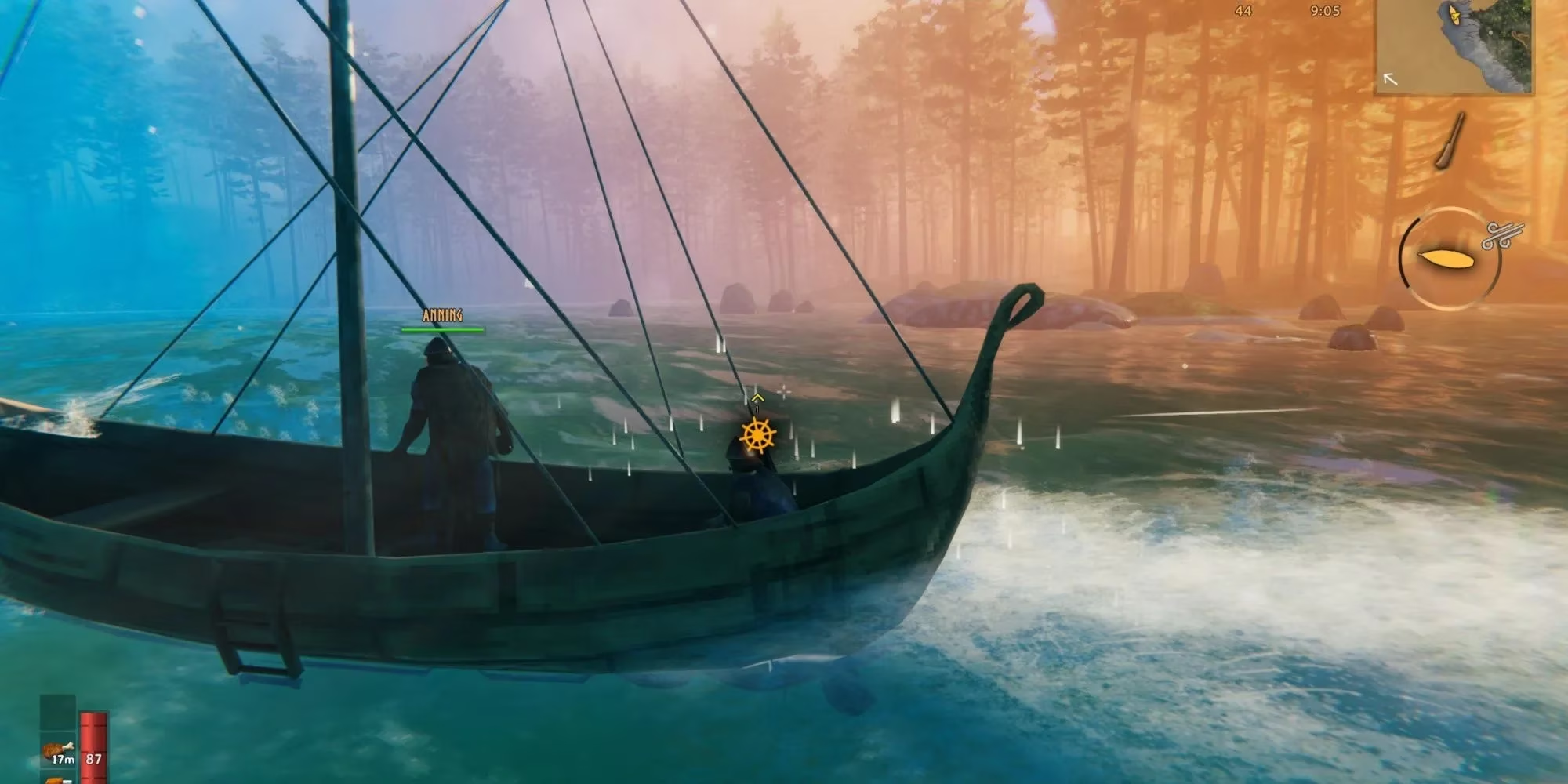
But what of games that blend the visceral thrill of combat with the cozy satisfaction of homesteading? Enter Valheim, the 2021 Viking sensation that asked a brilliant, genre-bending question: Why can't we have it all? Is it a survival game with its resource gathering and hunger meters? An RPG with its skill training and boss battles? A building game with its intricate wooden longhouses and stone fortresses? The resounding answer is a thunderous YES. Its sandbox loop is a masterclass in paced discovery. You explore to gather resources to build better gear to fight a boss to unlock new resources to explore further. The cycle is simple, yet endlessly compelling, especially when capped off by the sheer, wind-in-your-hair reward of spotting a new biome after a treacherous sea voyage.
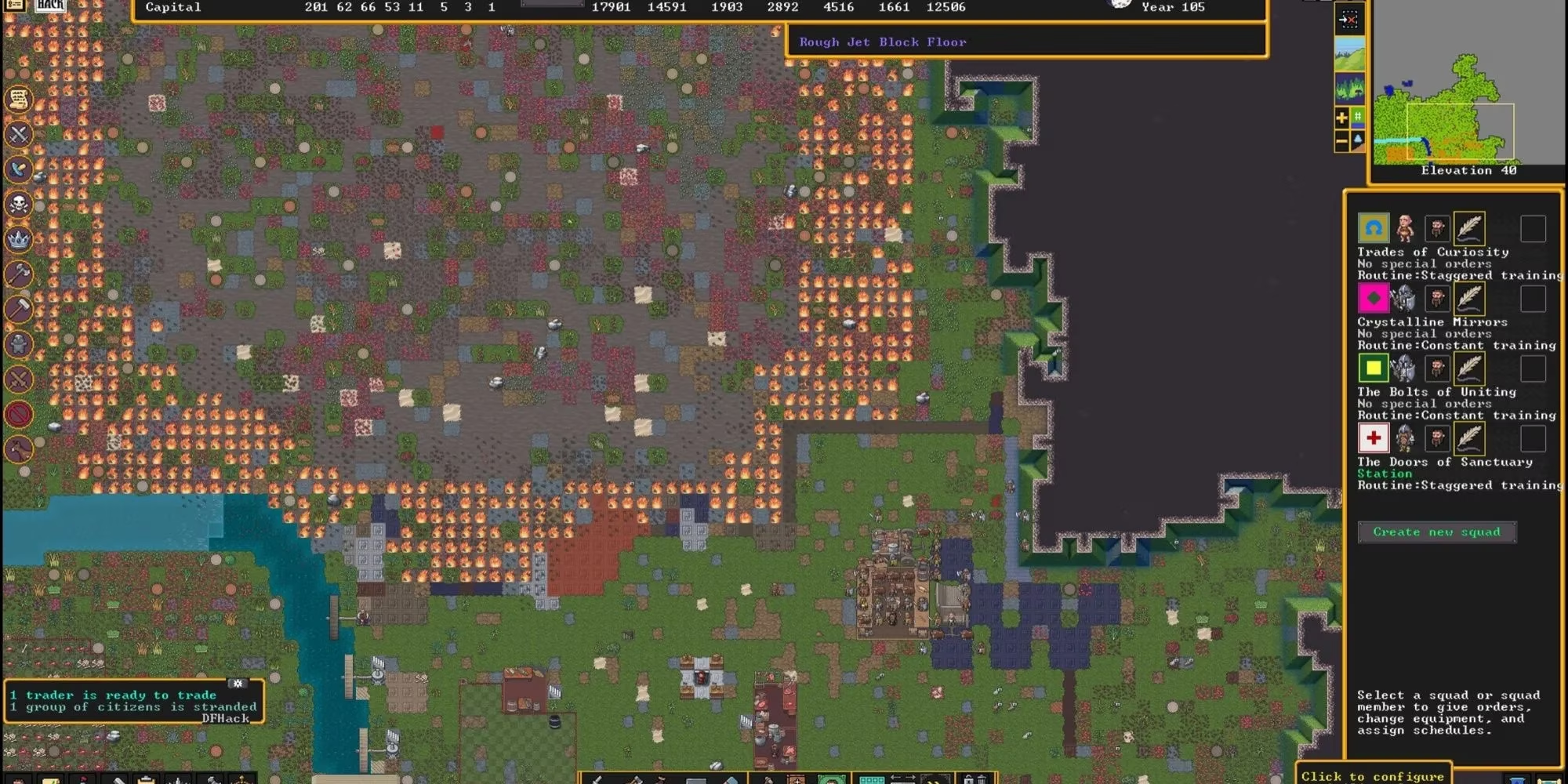
For those who crave complexity of a different flavor, there is the monumental, legendary Dwarf Fortress. A game so deep and systemic it makes spreadsheets look like children's picture books. Since its 2006 alpha, it has cultivated a following who speak in tongues of procedurally generated histories, fluid dynamics, and feline alcohol syndromes. Its ASCII-inspired graphics (later supplemented by a premium graphical tile-set) are merely a window into a simulation of unbelievable depth. Every world is a unique, living ecosystem. Every fortress is a saga of ambition, disaster, and bizarre dwarf psychology. The sandbox here isn't just a map to explore; it's a universe of interconnected cause and effect to manage, where a forgotten pond can flood your entire mineshaft and a melancholy bard can start a tavern brawl that ends your civilization.
Of course, narrative and sandbox can coexist in breathtaking harmony, as proven by the masterpiece that is Red Dead Redemption 2. Rockstar's 2018 opus is a living, breathing diorama of the dying American West. You can ride the rails of Arthur Morgan's heartbreaking main story, a cinematic experience unmatched in gaming. But the magic truly ignites when you step off that path. The world doesn't just exist as backdrop; it invites you in. Hunt legendary animals, get into a bar fight over a game of poker, stumble upon a serial killer's lair, or simply fish by a lake as the sun sets. These aren't side activities; they are the soul of the game, turning a linear narrative into a personal, hundreds-of-hours-long cowboy epic.
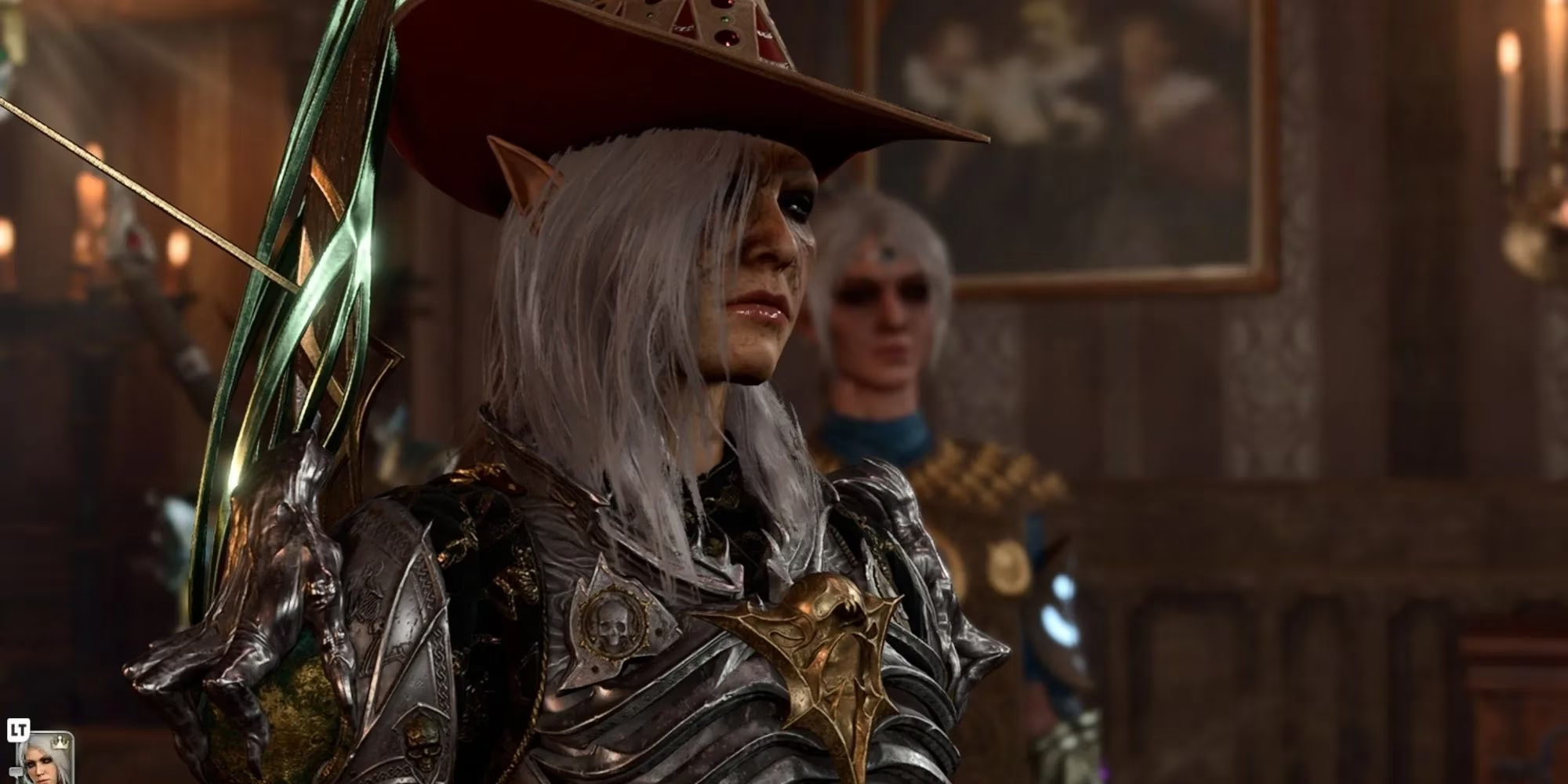
The year 2023 gifted us another narrative-sandbox titan: Baldur's Gate 3. Hailed as a modern classic and a definitive Dungeons & Dragons experience, it proves that a sandbox doesn't need a thousand crafting recipes to feel free. Its freedom is one of choice and consequence. The world map is your playground, but the true sandbox is the dialogue tree, the combat encounter, the moral dilemma. How you choose to solve a quest—through charm, violence, stealth, or devilish cunning—radically shapes the world and your relationships. It is a meticulously crafted reactive narrative where player agency is the ultimate resource, making every playthrough a unique story written in real-time.
We cannot speak of open-world playgrounds without bowing to the king of urban chaos: Grand Theft Auto V. A decade after its 2013 release, its satirical, sun-drenched rendition of Los Santos remains a bustling metropolis of mayhem and opportunity. It perfected the choice: follow the hilarious, triple-protagonist crime saga, or simply disappear into the city's rhythm. Go hiking, customize cars, play tennis, invest in the stock market, or cause absolute pandemonium. Rockstar built the ultimate toy box of modern life (and its violent underside), and players are still finding new ways to play in it. It is the quintessential "make your own fun" simulator.
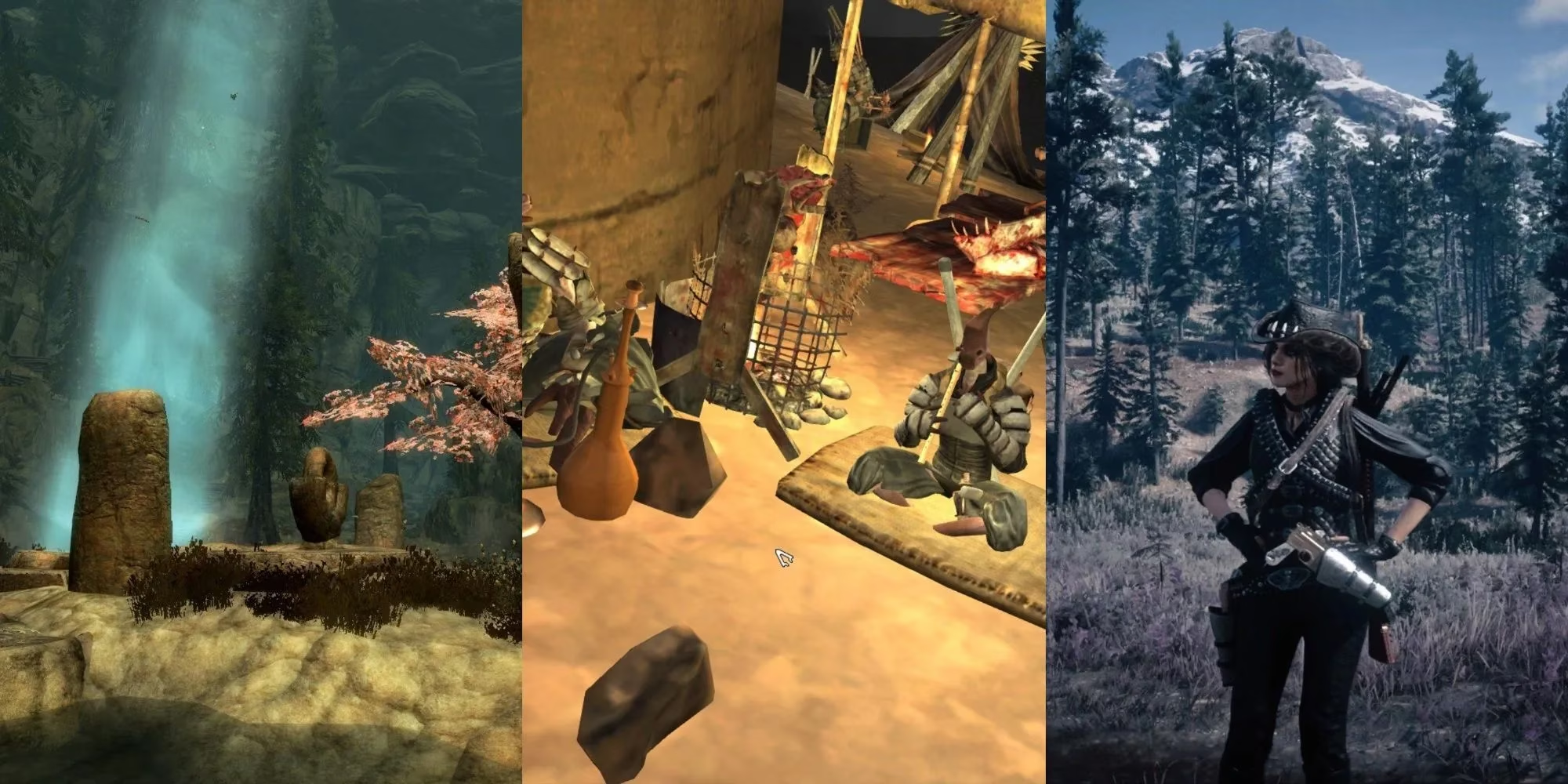
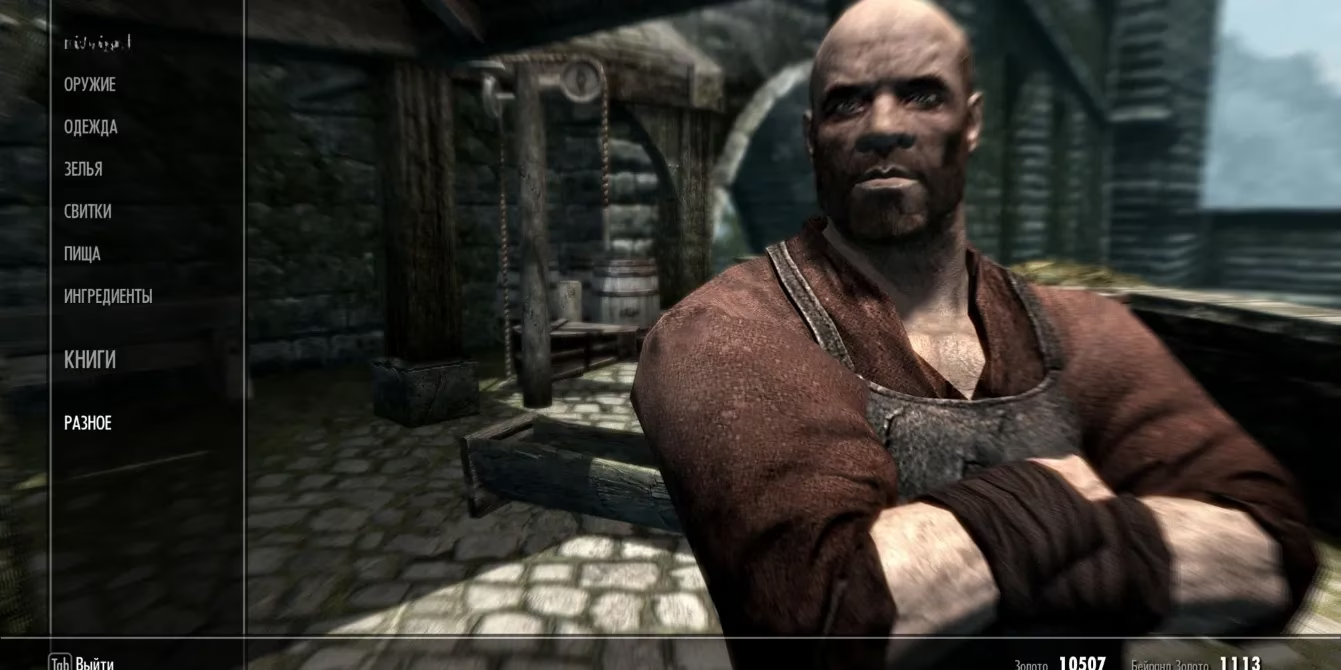
And finally, we arrive at the snow-capped peak, the game that, for many, defined the modern open-world RPG: The Elder Scrolls V: Skyrim. Over 15 years since its 2011 launch, the Dragonborn's cry still echoes across gaming. Its longevity is a phenomenon, sustained by endless mods, re-releases, and a simple, undeniable truth: it makes you feel like a true adventurer. The world of Skyrim rewards curiosity. See that distant mountain? You can climb it, and you'll probably find a dungeon, a dragon, or a hidden word wall at the top. Its sandbox activities—joining guilds, buying houses, mastering crafts—may seem quaint next to modern hybrids, but they are executed with such immersive cohesion that you don't just play Skyrim; you live in it. It is the foundational text, the sacred scroll from which so many other sandbox RPGs have drawn inspiration.
The tapestry of sandbox RPGs in 2026 is richer and more varied than ever. From the silent, brutal freedom of Kenshi to the narrative labyrinths of Baldur's Gate 3, from the systemic genius of Dwarf Fortress to the curated chaos of GTA V, these games offer more than entertainment. They offer possibility. They are not just played; they are inhabited, shaped, and ultimately owned by the player. This is the true power of the genre: the promise that the greatest story you'll experience is the one you create for yourself, one unpredictable, glorious moment at a time. 🎮✨🗺️