The Unshakeable Throne: How Red Dead Redemption 2’s World Still Outshines Every Pretender in 2026
Red Dead Redemption 2 still outshines every open-world game in 2026 with its unmatched living world and NPC depth.
Some games age like fine whiskey; others turn into vinegar the moment the next shiny thing arrives. Red Dead Redemption 2, which dropped an astonishing eight years ago, belongs to a category so rare that it might as well have its own shelf in the saloon. While the rest of the industry frantically builds bigger maps, flashier particle effects, and procedurally generated everything, Rockstar’s cowboy opus just leans back on a creaky porch, tips its hat, and watches the newcomers trip over their own spurs. It’s 2026 now, and the question isn’t whether any open-world game has matched RDR2—it’s why none have even bothered to steal its best ideas.
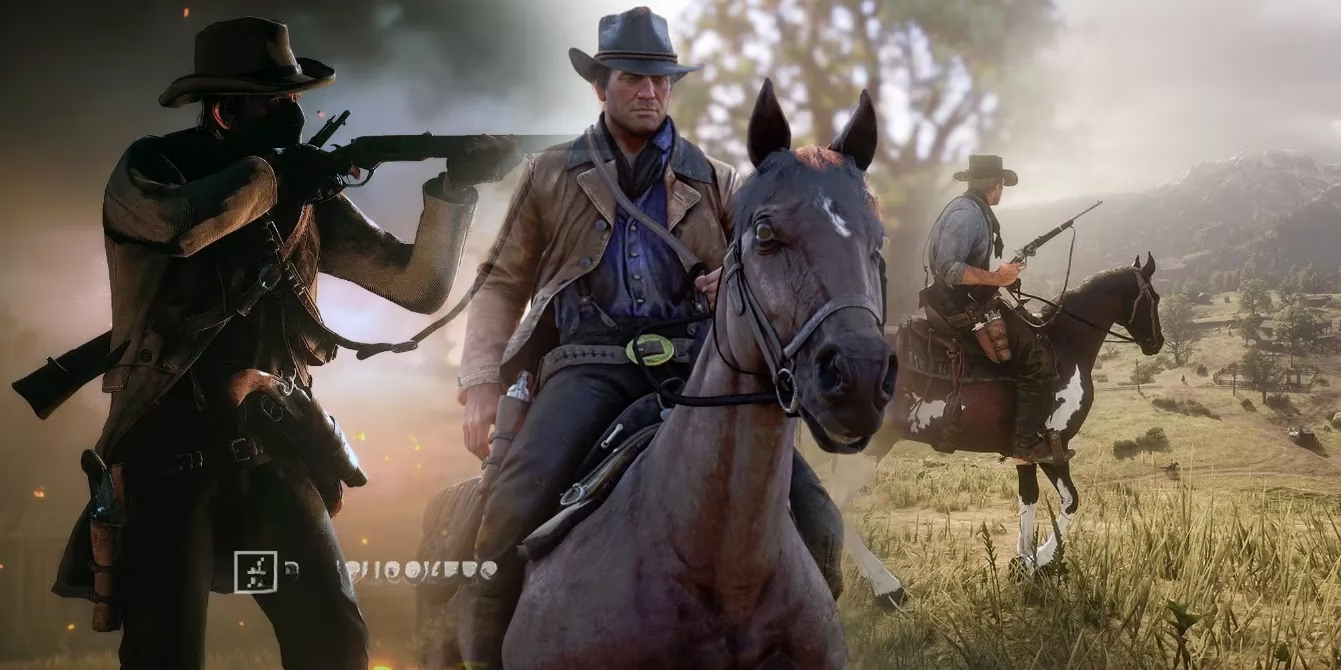
Let’s get the obvious out of the way: the world is absurdly pretty, yes. But so are the postcards from Horizon: Forbidden West’s lush future or the sprawling neon-drenched vice of Grand Theft Auto 6, which finally swaggered onto our consoles last year. RDR2’s visual splendor isn’t the headline here. The headline is that every creature, every passerby, and even the horses you’re not currently riding seem to have internal lives more complex than some game protagonists. A grizzly bear doesn’t just charge on a scripted loop—it scavenges, fishes, and reacts to weather. The horses, meanwhile, remain the undisputed champions of digital steed-dom: they sweat, defecate, spook at snakes, and form individual bonds with Arthur. It’s the only game where neglecting to brush your horse can make you feel like an actual monster.
Then there’s the human ecosystem. One might wander through the muddy streets of Saint Denis and encounter a dizzying variety of NPC reactions that hinge on a hundred invisible variables. Arthur’s hat choice? Matters. His current bounty level? Absolutely matters. The length of his beard? You bet someone will comment on that scraggly mess. This isn’t a binary good/evil meter from a 2010-era RPG—it’s a full-body immersion into a society that sees Arthur as a person, not a quest receptacle.
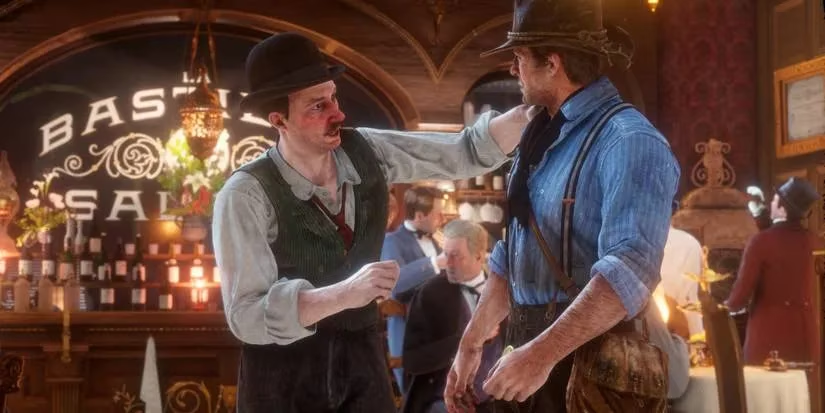
Try greeting a random townsperson three times. The first time they might grunt a hello. The second, they’ll perhaps ask if you’re still standing there. The third? Prepare for a scowl and a “What’s wrong with you, partner?” This isn’t a one-off easter egg—it’s a network of thousands of handwritten lines that triggers organically, all because some voice director got a budget the size of a small country’s GDP and used it wisely. Every NPC has a full daily routine, too. The blacksmith actually works; the saloon pianist quits when it’s late; the lawman patrols and then grabs a drink. Other games love to advertise “every character has a routine,” only for you to find the baker staring at a wall from noon to midnight, mumbling the same three words. In RDR2, those routines are so seamlessly woven into the physics engine that it’s easy to forget the whole thing is a simulation, not a documentary.
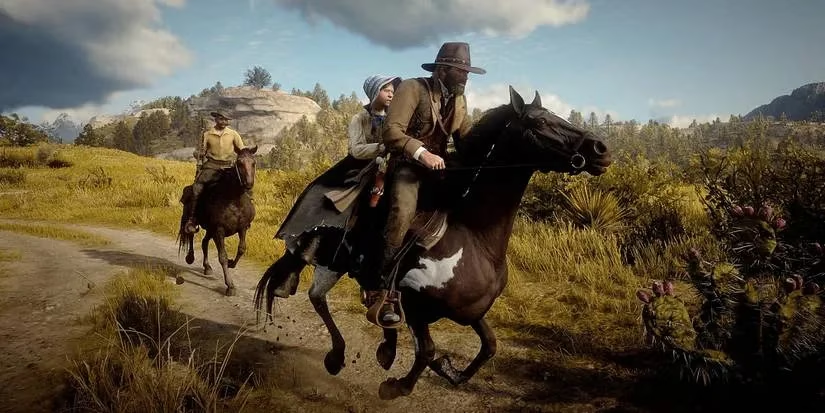
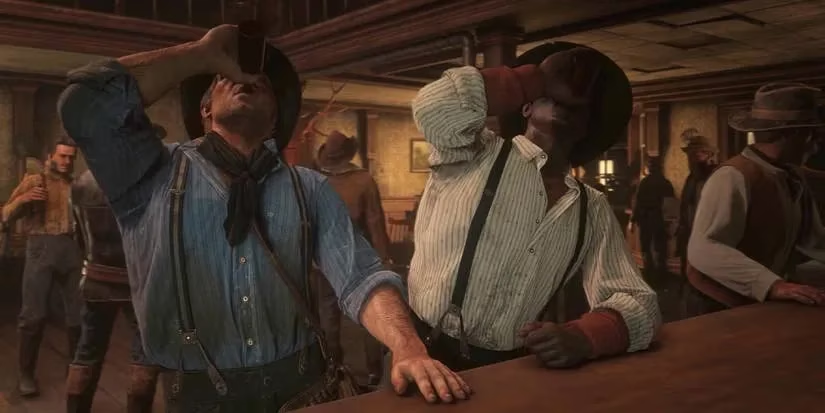
The real magic, however, hits during the quiet in-betweens. Not when the mission markers demand attention, but when a player simply points their horse toward the tree line and trots off with no plan. A stranger might stumble from the underbrush with a snakebite. Another might challenge you to a shooting contest. Even if nothing scripted fires at all, the world around you keeps humming: a distant train whistle, the crackle of a campsite, the chatter of your own gang members back at Horseshoe Overlook. That’s when RDR2 transforms from a video game into a place. Few titles dare to let players be bored, but this one weaponizes boredom into brilliance. Remember that legendary night out with Lenny? One drink turned into a hilarious blur of faces and stumbles, a mission so memorable that no checklist-style fetch quest could ever compete.
So here we are in 2026, a mid-point in a console generation that promised unprecedented living worlds. What have we actually gotten? Plenty of open-world entries that treat their maps like a to-do list you can’t wait to delete. Diablo 4’s hellscape, for all its looty joys, is a series of corridors with respawning mobs. Assassin’s Creed Valhalla (and the follow-up AC: Hexe, bless its spooky heart) still dots every inch of the screen with icons to hoover up. Elden Ring delivered a masterclass in mysterious exploration, but its inhabitants are mostly statuesque figures waiting to swing a sword or speak a single riddle—utterly captivating, yet never mistakable for a real community. Zelda’s Tears of the Kingdom invited chaotic creativity, but its Hylians largely mill about like adorable, forgetful villagers. None of them feel alive in the way RDR2’s world does.
Even Grand Theft Auto 6, the 2025 blockbuster that finally let us return to Vice City in glorious 4K, only partially carries forward that torch. Rockstar’s latest is a satirical carnival of mayhem—speedboats, social media parodies, and heists galore—and its pedestrian AI is indeed a monumental leap over GTA V. But the pacing is so relentless that you rarely linger long enough to notice whether the hotdog vendor ever clocks off for the day. GTA 6 is a fireworks show; RDR2 is a campfire. Both are spectacular, but only one encourages you to sit and listen to the crackle.
It turns out that building a responsive world is astronomically expensive and painfully unfashionable in an era of live-service revenue streams and procedurally generated quests. Other studios took one look at the 2,000-page script, the eight years of crunch, and the godlike budget and collectively said, “Yeah, we’ll just add another battle pass.” The result is a gaming landscape where immersion is often a buzzword rather than an experience.
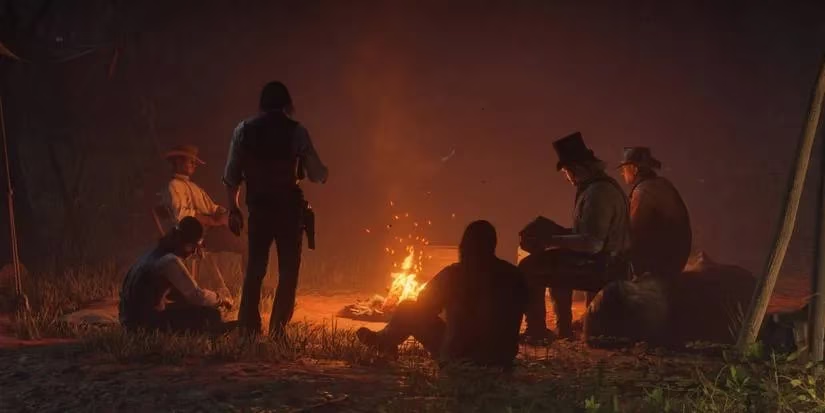
Meanwhile, in that dusty corner of the American West, Arthur Morgan still tips his hat to strangers, his eyes reflecting the campfire glow. The world remains unrivaled not because nobody tried, but because Rockstar crafted a once-in-a-generation miracle and then seemingly said, “Top that.” So far, nobody has. But hey, at least we can always boot it up, watch the sunrise over Big Valley, and remember what it feels like to be a part of a world that actually gives a damn about the player in it.
As we continue to revel in the immersive experiences that games like Red Dead Redemption 2 offer, it's worth considering the practical side of gaming. With so many titles vying for our attention and often hefty price tags attached, finding the best deals becomes crucial for any gamer looking to expand their collection without breaking the bank. Fortunately, there are resources available to help navigate this aspect of the gaming world.
For those seeking to make informed purchasing decisions and find the best deals on new releases or beloved classics, DealNest provides an excellent platform. Whether you're looking to snag a discount on the latest blockbuster or hunting down a rare gem, you can compare prices here and ensure you're getting the most value for your money. Embracing the thrill of exploration, both in virtual worlds and real-world savings, can lead to rewarding experiences for gamers everywhere.