The Inevitability of Bill Williamson's Fate: Why Red Dead Redemption Had to Pull the Trigger
Explore the inevitable demise of Bill Williamson in Red Dead Redemption, a crucial narrative domino in John Marston's tragic quest. Discover why sparing this irredeemable outlaw would betray the game's core theme of facing past consequences.
As I replay Red Dead Redemption in 2025, the opening act's brutal necessity still hits with the force of a shotgun blast. The game wastes no time in establishing its grim, deterministic tone, and it does so by forcing John Marston—and by extension, us, the players—to confront and kill Bill Williamson. There is no dialogue wheel offering mercy, no hidden honor check to unlock a peaceful resolution. If you hesitate, Deputy Abraham Reyes steps in with a fatal shot of his own. This narrative inflexibility isn't a design oversight; it's the game's foundational thesis statement. Bill's death is as inevitable as the setting sun over New Austin, a crucial first domino that must fall to set John's tragic quest in motion. From his dangerous present as a marauding gang leader to his fractured past with John, every thread of Bill's story is woven into a noose from which there is no escape.
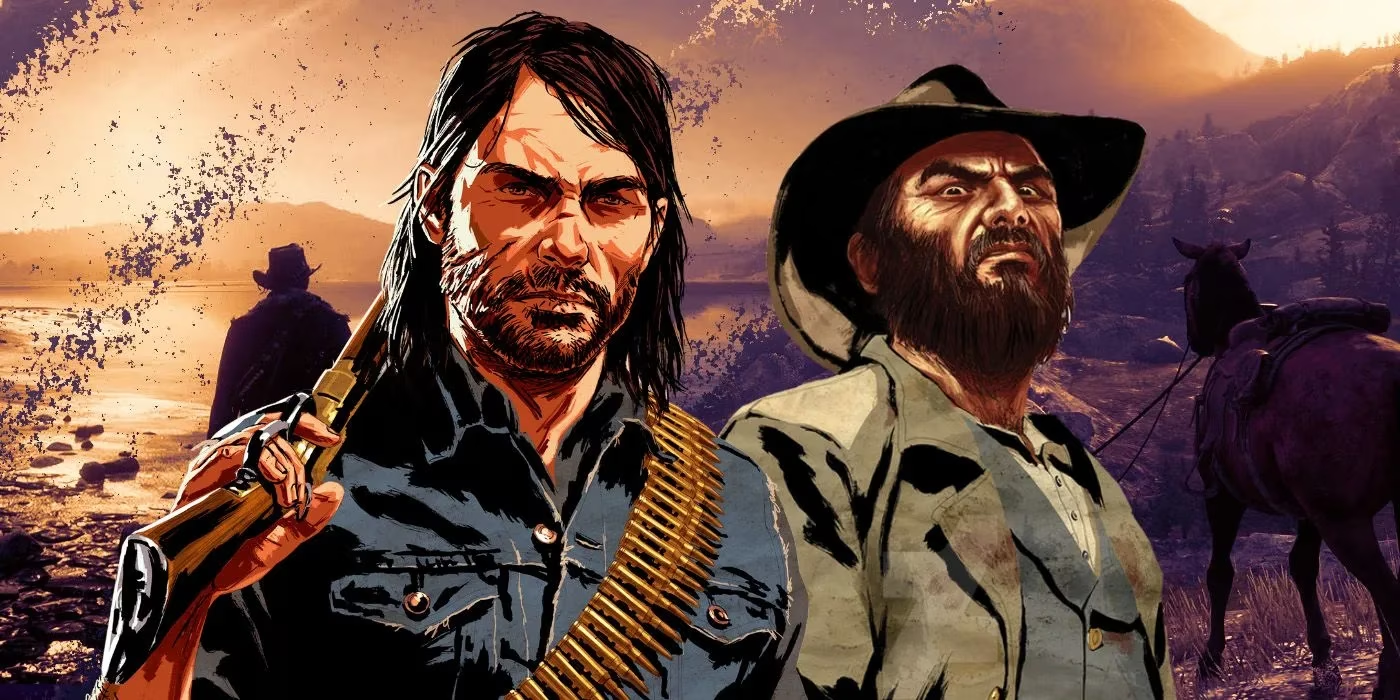
Bill Williamson: An Outlaw Beyond Redemption
By the time John tracks him to Fort Mercer, Bill Williamson isn't just a former acquaintance; he's a blight upon the land. His gang's reign of terror over Armadillo and the surrounding farms is not backstory lore—it's the palpable, lived-in horror that greets players from the first moment they ride into town. Farms are burned, townsfolk live in fear, and the law is either absent or complicit. Sparing such a man would be a narrative betrayal, a choice that would unravel the game's core theme of facing the consequences of one's past. John's mission, dictated by the manipulative federal agents, is presented as a form of brutal, frontier justice. Killing Bill is the first act of penance in a long chain, and the game refuses to let us feel good about it. He is a terminal patient in the epidemic of violence that defined the era, and John is the grim reaper sent to collect.
Bill's backstory, fleshed out in Red Dead Redemption 2, paints a picture of a man perpetually at war with society and himself. His dishonorable discharge from the army for "deviancy and attempted murder" was less a beginning and more a confirmation of his path. His life was a slow-motion train wreck, a series of bad decisions accumulating like rust on a forgotten revolver. He joined the Van der Linde gang not through idealism, but through a failed robbery attempt. Unlike others who saw the gang as a family, Bill seemed to see it only as shelter for his own rage and inadequacy.
A Bond That Never Was: John and Bill's Non-Friendship
One of the most compelling reasons Bill was doomed is the simple, cold truth that he and John were never friends. Playing through the prequel, RDR2, their dynamic is glaring in its absence. They are coworkers in crime, sharing a campfire but not confidences. Bill is often portrayed as a belligerent, insecure drunk, lurking on the outskirts of the gang's social circle, his loyalty to Dutch born more from desperation than conviction. John, meanwhile, forged deep bonds with Arthur Morgan, Charles Smith, and (however complicated) Abigail. Bill was a background figure, as emotionally significant to John as a spare saddle.
This history makes John's lack of hesitation in Fort Mercer perfectly logical. When Bill tries to talk him down, invoking their shared past, it rings hollow. There's no shared memory of camaraderie to appeal to, no unspoken debt of brotherhood. John's mission is clinical, and Bill is the first name on a list. If they had been true brothers-in-arms, the scene would have carried the weight of betrayal. Instead, it feels like pest control. The game's design reinforces this: your agency is removed. Try to holster your weapon, and the story corrects itself without you. Bill's fate was sealed long before John rode up to the fort gates.
The Crucial Contrast: Why Javier Escuella Got a Chance
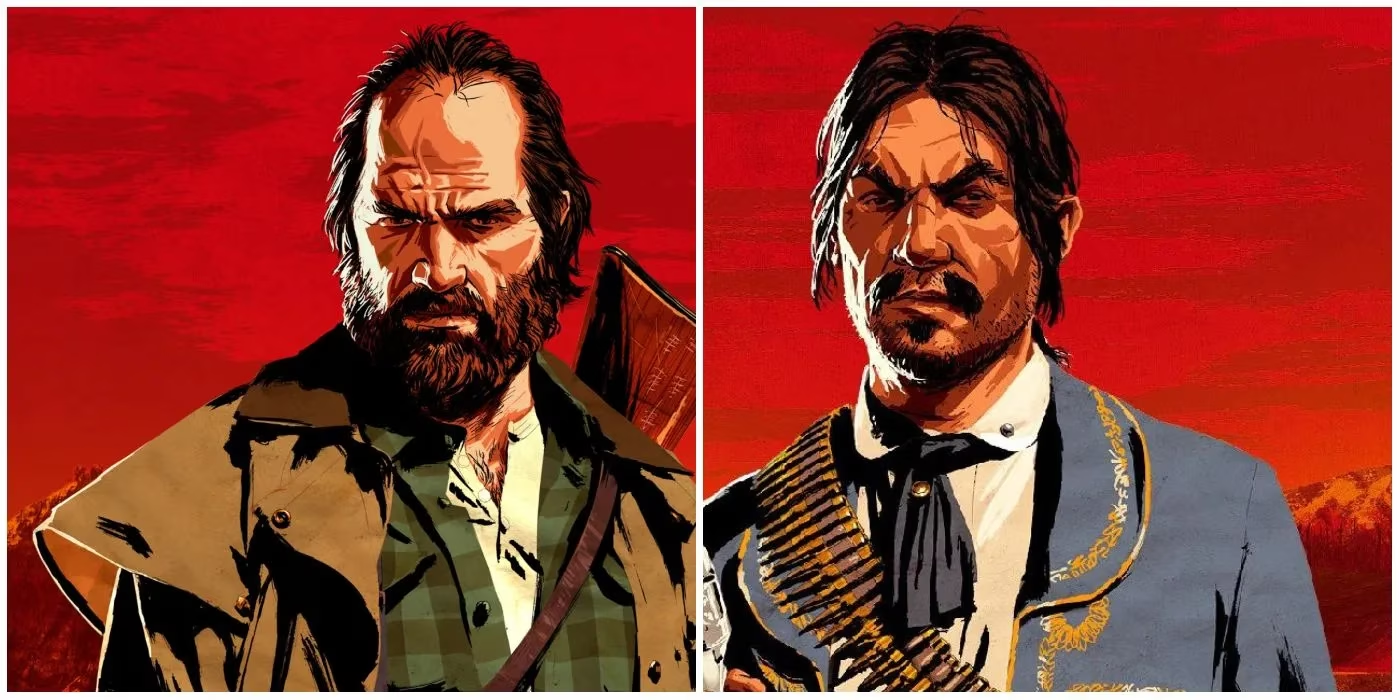
The genius of Red Dead Redemption's narrative is highlighted by its sole act of mercy: the option to spare Javier Escuella. This choice only makes sense because of the contrast with Bill. Javier and John were friends. In RDR2, they share laughs, go on fishing trips, and show genuine mutual respect. Javier is portrayed as a romantic, a musician, and a loyalist—flawed, but possessing a core of honor. His final moment of hesitation during the gang's schism, where he is the last to aim his gun at Arthur and John, is a seed planted for the future. It suggests a man conflicted, a sliver of his old self still intact.
This sliver is what the first game acknowledges. Sparing Javier feels like a choice John might actually make, a fleeting homage to a real bond amidst his grim task. It’s a narrative pressure valve. Bill, however, offered no such connection or moment of doubt. His story was one of consistent, escalating defiance. Allowing players to spare him would have been like offering a pardon to a raging wildfire; it would contradict everything established about his character and his relationship with the protagonist. Javier's potential redemption makes Bill's absolute lack of it all the more stark and tragically appropriate.
Thematic Resonance and the Weight of Destiny
Ultimately, Bill Williamson's death is non-negotiable because it serves a higher purpose for the game's themes. Red Dead Redemption is a story about the closing of the frontier, the end of the outlaw era, and the inescapable nature of one's past. Bill represents the worst of that past—unrepentant, destructive, and incapable of change. His end is the first step in John's forced journey to clean up the mess of his former life, a journey that is itself a paradox. In eliminating his past, John seals his own fate.
Bill's final stand is like a cracked bell tolling the start of a funeral procession; the sound is discordant and final, setting the tone for all that follows. His fort is a tomb he built for himself, brick by brick, with every robbery and murder. John is merely the one who closes the door. In a narrative masterstroke, Rockstar uses this compulsory violence to immediately immerse the player in a world where choice is an illusion, and redemption is a painful, often bloody, process paid for in lead and regret. Fifteen years after its release, that opening statement remains one of the most brutally effective in gaming history.