Red Dead's Enduring Legacy: A Cycle of Sin, Betrayal, and the Unbroken Frontier
Red Dead Redemption’s enduring legacy and tragic storytelling captivate fans, exploring themes of redemption and the American myth with unmatched depth.
As I look back from 2026, the echoes of gunfire from the Van der Linde gang still reverberate through the gaming landscape. The saga of Red Dead Redemption is more than a series of Western-themed games; it’s a sprawling, generational tragedy that dissects the American myth with the precision of a surgeon’s scalpel. While the world eagerly consumes the neon-soaked chaos of Grand Theft Auto VI, my mind, and those of many dedicated fans, keeps wandering back to the dusty trails and moral quagmires of Rockstar’s other masterpiece. The story of Arthur Morgan and John Marston wasn’t just concluded with their deaths; it was a seed planted, one that has germinated into fervent speculation about where the saga could—and should—go next. The franchise’s core themes—the corrosive nature of greed, the illusion of redemption, and the inevitable crushing weight of progress—feel more relevant than ever, acting as a haunting mirror to our own modern complexities.
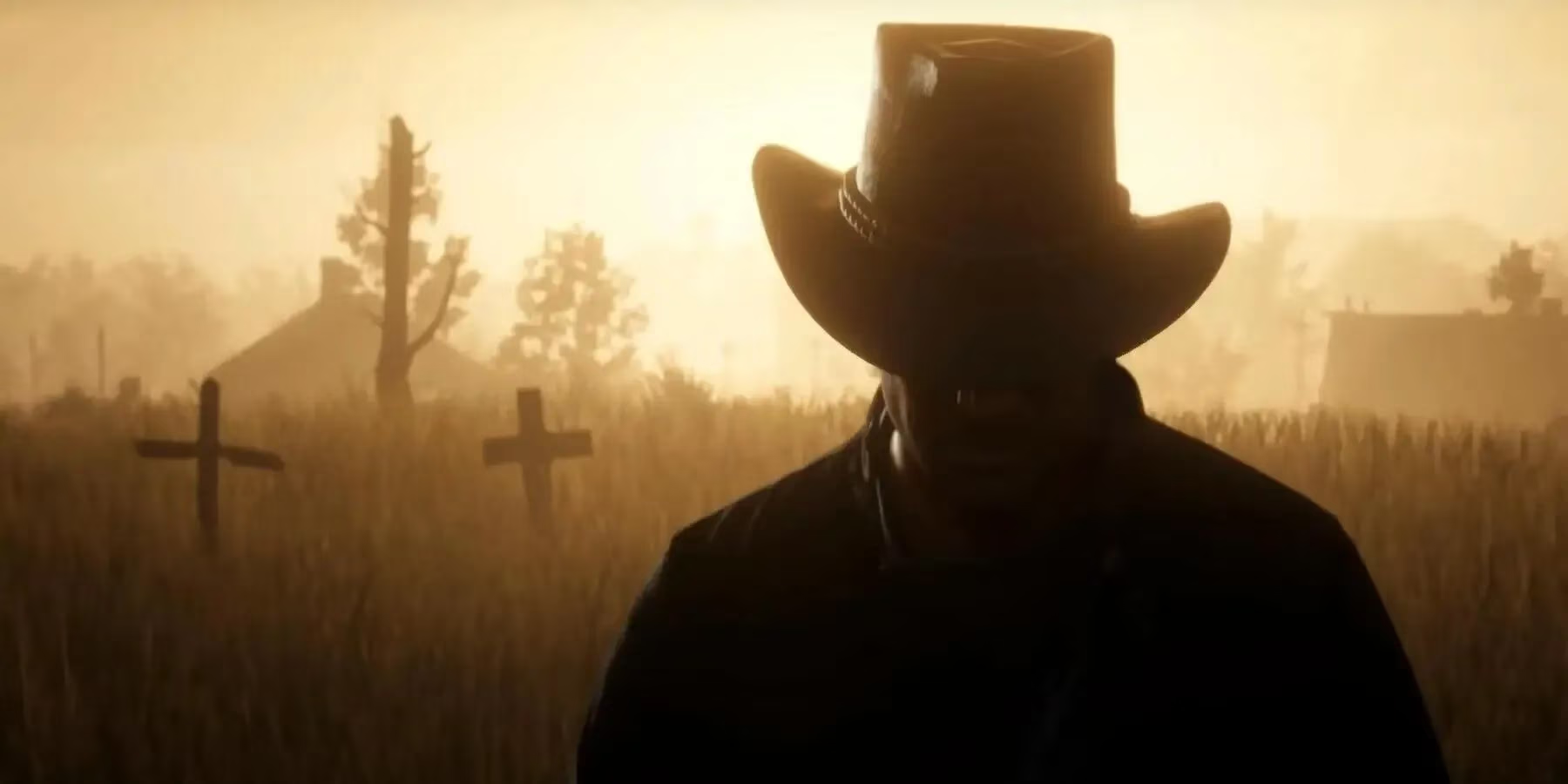
At the heart of this epic are two men, Arthur Morgan and John Marston, running on parallel treadmills of desperation. Their quests are not linear paths to salvation but closed loops of obligation, like a record skipping on the same tragic groove. Arthur’s desperate scramble for "one last score" to save his found family is undercut by the gang’s own rotting foundation. John’s government-forced manhunt to secure his own family’s safety is a deal with the devil that was always destined to be broken. Both are noble men shaped by a brutal world, yet they are perpetually caught between:
-
Vindication vs. Vengeance: Is killing Micah Bell or Edgar Ross an act of justice, or simply perpetuating the violence?
-
Need vs. Want: The gang’s desire for freedom morphs into an insatiable greed that destroys them.
-
Survival vs. Excess: Their outlaw code becomes obsolete in the face of civilization’s steamroller.
Their greatest enemy isn't the law or rival gangs, but time itself. The "taming" of the West isn't a backdrop; it's an active, antagonistic force. The wilderness that forged them is being sold off in parcels, their way of life becoming a museum exhibit before their eyes. This existential dread is the series' true villain.
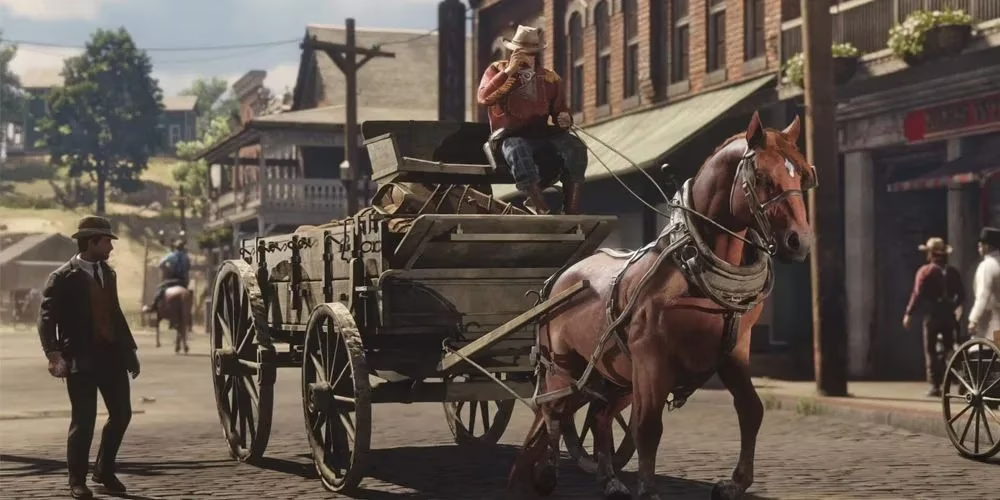
The narrative engine of both games is betrayal, a poisoned heirloom passed from one generation to the next. Dutch’s descent into paranoid madness, orchestrated by the serpentine Micah, shatters the gang and leads to Arthur’s lonely, TB-ridden end. The U.S. government’s betrayal of John Marston is even more coldly bureaucratic, a contractual hit executed on his own ranch. These aren't just plot twists; they are foundational tragedies. The epilogues—and Jack Marston’s final act of vengeance in the original game—provide catharsis but no absolution. Killing Ross doesn't unshoot John; it merely passes the bloody pistol to the next in line.
This brings us to the looming question for a potential Red Dead Redemption 3: Jack Marston. To make him the protagonist is to accept that the cycle is the point. He wouldn’t just carry his own gun; he’d shoulder the cumulative guilt of his lineage, a inherited debt of sin that compounds with each generation. Dutch’s charismatic, flawed philosophy is less a creed and more a cognitive virus, infecting Arthur, then John, and finally lying dormant in Jack, waiting for the right conditions of anger and loss to activate. Can Jack break free?
| Character | Core Motivation | Ultimate Fate | Legacy |
|---|---|---|---|
| Arthur Morgan | Protect the "family" & secure freedom | Dies from illness & betrayal, a failed redemption | Moral compass for John; the gang's lost soul |
| John Marston | Secure safety for his real family | Betrayed & killed after achieving his goal | Becomes the legend he never wanted to be |
| Jack Marston | (Potential) Avenge his father & find his place | Unknown—The key to breaking or continuing the cycle | The living embodiment of the saga’s central question |
The hopeful ending would see Jack, the educated son who witnessed the cost firsthand, lay down his father’s weapon and walk away, finally severing Dutch’s toxic legacy. But the grim, more thematically consistent path—and the one Rockstar has meticulously paved—leads him to pick up that weapon. His journey wouldn't be about redemption in the traditional sense, but perhaps about understanding. Understanding that the West wasn't won or tamed, but consumed, and that his family were both its products and its fuel. As we look to the future of this franchise, we aren't just asking for another open-world cowboy game. We're waiting to see if the most compelling tragedy in video games will finally find its last, resonant note, or if the cycle of violence on the American frontier is truly, tragically, eternal. 😔🤠