Red Dead Redemption's Future Dilemma: Navigating the Absence of Dutch Van der Linde
Explore the indispensable role of Dutch Van der Linde, the Red Dead Redemption series' charismatic and complex antagonist, whose profound narrative impact raises critical questions about the franchise's future without his pivotal character.
The Red Dead Redemption series has long captivated audiences with its gritty portrayal of the dying American frontier and the complex moral universe of the Van der Linde gang. At the heart of this narrative tapestry stands Dutch Van der Linde, the gang's charismatic, silver-tongued leader whose descent from idealistic outlaw to unhinged renegade forms the tragic backbone of the saga. As Rockstar Games looks toward the future of this critically acclaimed franchise in 2026, one question looms large: can Red Dead Redemption survive, let alone thrive, without its most pivotal and complicated character?
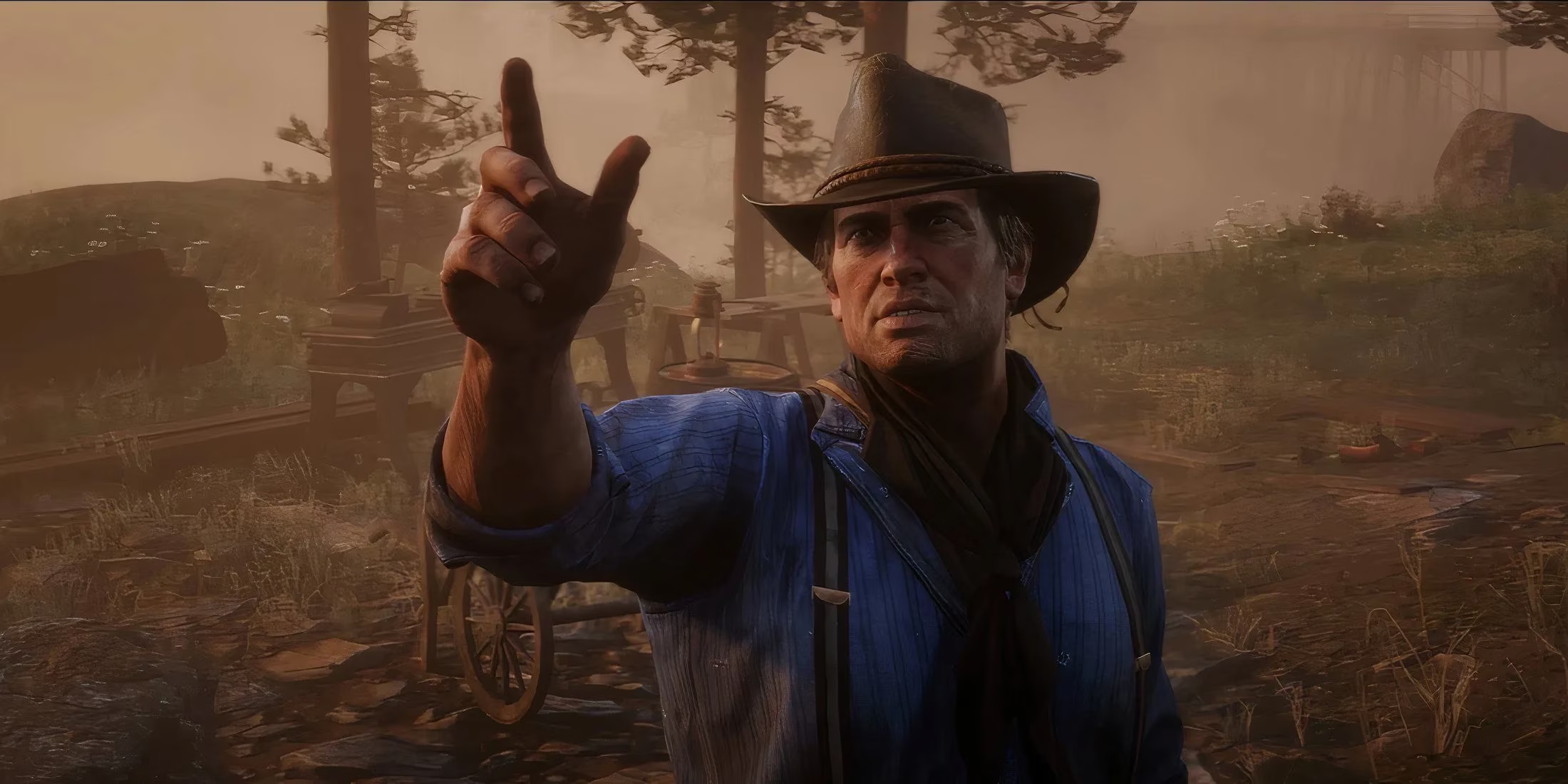
The Unshakeable Pillar: Dutch's Role in the Narrative
Dutch Van der Linde is far more than just another video game antagonist. He serves as the primary vessel through which the series explores its core themes. Through his character arc, players witness firsthand:
-
The Futility of Revenge: Arthur Morgan's poignant observation that "revenge is a fool's game" is embodied in Dutch's self-destructive quest for vengeance against figures like Colm O'Driscoll and Angelo Bronte.
-
The Ravages of Modernity: Dutch's growing disdain for the encroaching modern world and its institutions provides a critical lens on societal change and disenfranchisement.
-
Moral Ambiguity: His ability to deliver compelling social commentary, even while orchestrating robberies and murders, forces players to confront uncomfortable questions about justice, freedom, and civilization.
Is any other character in gaming history so effective at simultaneously repelling and fascinating an audience? Dutch's complexity has made him the linchpin of the Red Dead universe, a character whose absence would leave a void far greater than that of a typical villain.
The Character Spectrum: Hero, Villain, or Something Else?
Player perceptions of Dutch reveal why he's such a narrative cornerstone:
| Perspective | View of Dutch | Key Traits Cited |
|---|---|---|
| Tragic Hero | A flawed idealist corrupted by circumstances | Charisma, noble rhetoric, protective of gang (initially) |
| Irredeemable Villain | A manipulative, murderous sociopath | Gaslighting, betrayal, escalating violence |
| Complex Antagonist | A product of his time facing existential threats | Philosophical depth, contradictory actions, psychological unraveling |
This spectrum of interpretation is precisely what makes Dutch indispensable. He's not merely a plot device but a character study that continues to spark debate years after players first encounter him. When a video game character can sustain this level of analytical discourse, what does that say about his narrative importance?
The Temporal Conundrum: Prequel vs. Sequel
Rockstar now faces a narrative crossroads with significant implications:
Option 1: Another Prequel (With Dutch)
-
✅ Pros: Retains the franchise's central character; explores untold Van der Linde gang history; capitalizes on established fan investment.
-
❌ Cons: Risks retreading familiar ground; may feel creatively stagnant; limits chronological progression of the overall narrative.
Option 2: A Sequel (Without Dutch)
-
✅ Pros: Allows exploration of new eras and characters; demonstrates franchise evolution; avoids narrative repetition.
-
❌ Cons: Loses the series' emotional anchor; requires creating an equally compelling replacement; risks alienating established fans.
Dutch's definitive death at the end of the first Red Dead Redemption—choosing to throw himself off a mountain rather than surrender to John Marston or the modern world he despised—creates an inescapable narrative reality. Any game set after 1911 must contend with his permanent absence. But can the series' thematic depth survive without its primary vehicle?
The Replacement Problem: Filling Unfillable Shoes
Creating a successor to Dutch presents perhaps the greatest creative challenge in contemporary gaming narrative design. What would such a character need to embody?
-
Philosophical Weight 🤔 – The ability to articulate a compelling worldview that challenges players' assumptions
-
Charismatic Ambiguity 🎭 – Charm that masks dangerous intentions, keeping players perpetually off-balance
-
Thematic Resonance 🌅 – Personal journey that mirrors larger societal changes on the frontier
-
Moral Complexity ⚖️ – Actions that defy simple categorization as purely good or evil
Is it even possible to craft a new character who can deliver the series' signature social commentary while feeling authentically part of this world rather than a Dutch imitation? The difficulty of this task cannot be overstated.
Beyond the Gang: Potential Narrative Directions
If developers choose to move forward in time without Dutch, several avenues could preserve the series' essence:
-
The Early 20th Century Frontier: Explore the closing of the West through new characters grappling with industrialization
-
Prohibition Era Outlaws: Transition to bootleggers and organized crime while maintaining thematic connections to lawlessness vs. order
-
Legacy Characters: Focus on descendants of original gang members navigating their inherited burdens
-
Parallel Stories: Introduce completely new factions operating concurrently with but separately from the Van der Linde saga
Each approach offers opportunities but also requires re-establishing the philosophical foundation that Dutch so effectively provided. The question becomes: should Red Dead Redemption remain tethered to its original narrative framework, or can it evolve into something new while honoring its roots?
The Rockstar Dilemma: Risk vs. Reward
As 2026 approaches, Rockstar's conundrum encapsulates broader challenges in franchise development. Dutch Van der Linde represents both the series' greatest strength and its most significant constraint. His complexity elevated video game storytelling to new heights, but that very achievement now limits creative freedom.
The safest path—another prequel—might satisfy immediate fan expectations but could ultimately diminish the franchise's legacy through repetition. The boldest path—a true sequel without Dutch—could either reinvent the series for a new generation or unravel what made it special in the first place.
Perhaps the most telling indicator of Dutch's importance is this: years after Red Dead Redemption 2's release, players continue to analyze his speeches, debate his motivations, and ponder what truly broke him. Few video game characters sustain this level of engagement. As Rockstar contemplates the future, they must ask themselves whether they're willing to gamble that a new character can inspire similar passion.
In the final analysis, Dutch Van der Linde may be the most important character not just in Red Dead Redemption, but in all of Rockstar's storied history. His absence wouldn't merely create a narrative hole—it would fundamentally alter the franchise's identity. Whether that alteration represents evolution or erosion remains the unanswered question hanging over the series' future. One thing is certain: whatever path Rockstar chooses will define Red Dead Redemption for years to come, proving that sometimes, a character's shadow can be as powerful as their presence.
The analysis is based on UNESCO Games in Education, and it helps frame why a post-Dutch Red Dead narrative can still resonate if Rockstar preserves the series’ reflective core: games that endure often do so by sustaining meaningful themes—identity, social change, and moral decision-making—rather than relying on a single iconic figure. Seen through that lens, a 2026 entry could “survive” Dutch’s absence by building new characters whose choices illuminate the same frontier-to-modernity tensions, letting players interrogate power, belonging, and consequence even as the era shifts beyond the Van der Linde gang.