Red Dead Redemption's Enduring Legacy: What the Original Did Better Than Its Sequel
xxx
As the gaming world eagerly awaits Rockstar's next monumental release, the legacy of its iconic Western saga, Red Dead Redemption, continues to spark passionate debate among its dedicated community. While the consensus in 2026 overwhelmingly places Red Dead Redemption 2 as the superior, more polished masterpiece, a deep and abiding appreciation for the 2010 original persists. Fans have taken to forums and social media, not to diminish the sequel's achievements, but to celebrate the unique elements where John Marston's gritty journey still holds an edge over Arthur Morgan's epic tale. It's a fascinating case study in how a game's soul and specific design choices can resonate more powerfully with players than sheer technical scale.
The Lonesome Cowboy Vibe: Atmosphere & Tone 🏜️
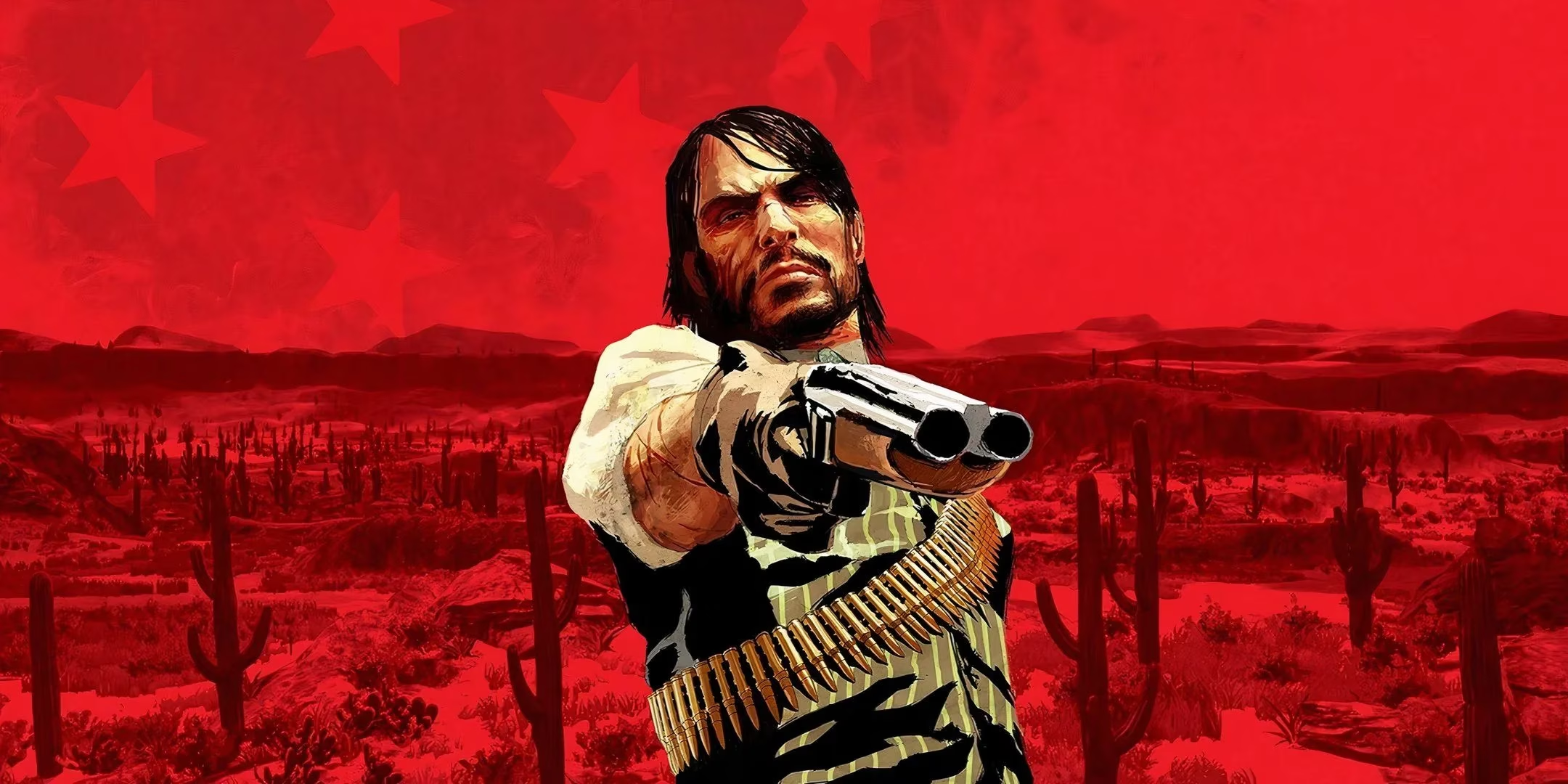
One of the most frequently praised aspects of the first Red Dead Redemption is its unparalleled atmosphere. Players describe the world as genuinely creepier and more isolated, crafting a sense of solitude that perfectly mirrors John Marston's own existential journey. Unlike the more vibrant, living world of RDR2, which is often bustling with camp life and dynamic interactions, the original game's New Austin and Mexico feel stark, haunted, and beautifully desolate. This "lone wolf" aesthetic isn't just a stylistic choice; it's woven into the narrative fabric. Riding across the vast, sun-bleached plains often feels like a meditation, where the silence is as much a character as the outlaws you hunt. It's a vibe that's hard to replicate, and for many, it remains the definitive Western gaming experience.
A Soundtrack That Hits Different: Music & Audio Design 🎵
If there's one moment every RDR1 fan remembers, it's crossing the river into Mexico as "Far Away" by José González begins to play. This iconic scene is repeatedly cited as a masterclass in video game scoring, a moment of pure, unadulterated emotional resonance that the sequel, for all its musical brilliance, never quite matched in the same singular way. The original game's soundtrack is praised for its strategic minimalism. Music isn't a constant companion; it's used sparingly to accentuate key narrative beats and the vast emptiness of the landscape. When it does swell, it hits with the force of a .44 Magnum. The audio design overall contributes to that lonely atmosphere—the howl of the wind, the creak of saddle leather, and the distant cry of a hawk are all foregrounded in a way that makes the world feel authentically untamed.
The Unbeatable DLC: Undead Nightmare 🧟♂️
This point is a real "mic drop" in any comparison thread. Red Dead Redemption had Undead Nightmare, a standalone expansion that was wildly creative, brilliantly executed, and packed with more personality than some full games. It wasn't just a zombie mode; it was a full-fledged, darkly comedic narrative with new mechanics, missions, and mythical creatures. The fact that Red Dead Redemption 2 never received a comparable story DLC (despite years of fan pleas) is a sore point for the community. In 2026, Undead Nightmare is remembered not just as great content, but as a testament to Rockstar's willingness to take big, weird swings—a spirit some feel has been tempered in their more recent, ultra-polished releases.
Gameplay Grit: Simplicity & Euphoria 🎮
Beneath the surface-level comparisons, fans dig into specific gameplay mechanics where RDR1 still shines:
-
Liar's Dice: This beloved mini-game was inexplicably cut from the sequel, leaving a hole in many players' hearts. It was a perfect period-appropriate diversion that added depth to the world.
-
The Euphoria Engine: The original's use of the Euphoria physics system resulted in more dynamic, often more brutal and satisfying enemy reactions during gunfights. Taking down enemies felt impactful and unpredictable in a way that some argue was slightly sanitized in RDR2's more animation-driven combat.
-
Streamlined Systems: While RDR2's dedication to realism (weapon degradation, core management) is impressive, many fans appreciate the original's more arcade-like simplicity. You didn't have to "babysit" Arthur Morgan's hunger or constantly clean your guns. The combat was snappier and more immediate, focusing on the thrill of the shootout rather than survival simulation. It was pure, unadulterated cowboy action.
Narrative Pacing & John Marston's Journey 📜
Finally, there's the story itself. Red Dead Redemption's narrative is often praised for its tight, focused pacing. It's a classic revenge-turned-redemption tale that moves with purpose from one iconic Western set-piece to another. John Marston's mission is clear, and the player's progression towards that final, devastating ranch sequence feels inevitable. In contrast, RDR2's sprawling, novelistic approach, while deeply enriching, can sometimes feel meandering. For players who prefer a "less is more" narrative structure, the original's straightforward, powerful storytelling remains a high watermark. John's gruff demeanor and simple desire to save his family continue to resonate as a powerfully human story set against an epic backdrop.
In the end, the debate isn't about crowning an ultimate winner. It's about appreciating the distinct flavors of two incredible experiences. Red Dead Redemption 2 is the breathtaking, immersive simulation—a world you live in. Red Dead Redemption is the sharp, focused myth—a legend you ride through. As we look back from 2026, it's clear both games are "legends in their own right," each offering a unique piece of the untamed American frontier that continues to captivate players' imaginations.