Red Dead Redemption 3: The Debate Over Jack Marston's Future and a Potential 1920s Setting
Explore the electrifying future of Red Dead Redemption 3, where the fate of Jack Marston and the Wild West itself hangs in the balance. Discover the thrilling possibilities of a sequel torn between the untamed past and the modern era.
As the gaming world eagerly awaits Rockstar's next move after the monumental success of Grand Theft Auto 6 in 2025, whispers and fervent speculation about Red Dead Redemption 3 have reached a fever pitch. While the studio has kept its cards close to its chest, the sheer triumph of 2018's Red Dead Redemption 2 makes a sequel feel less like a possibility and more like an inevitability waiting in the wings. The fanbase, however, is already deeply divided, passionately arguing over the very soul of the next installment: should it journey further back into the untamed past, or boldly leap forward into a world where the cowboy's sunset has long faded? The debate is on, and everyone's got a horse in this race.
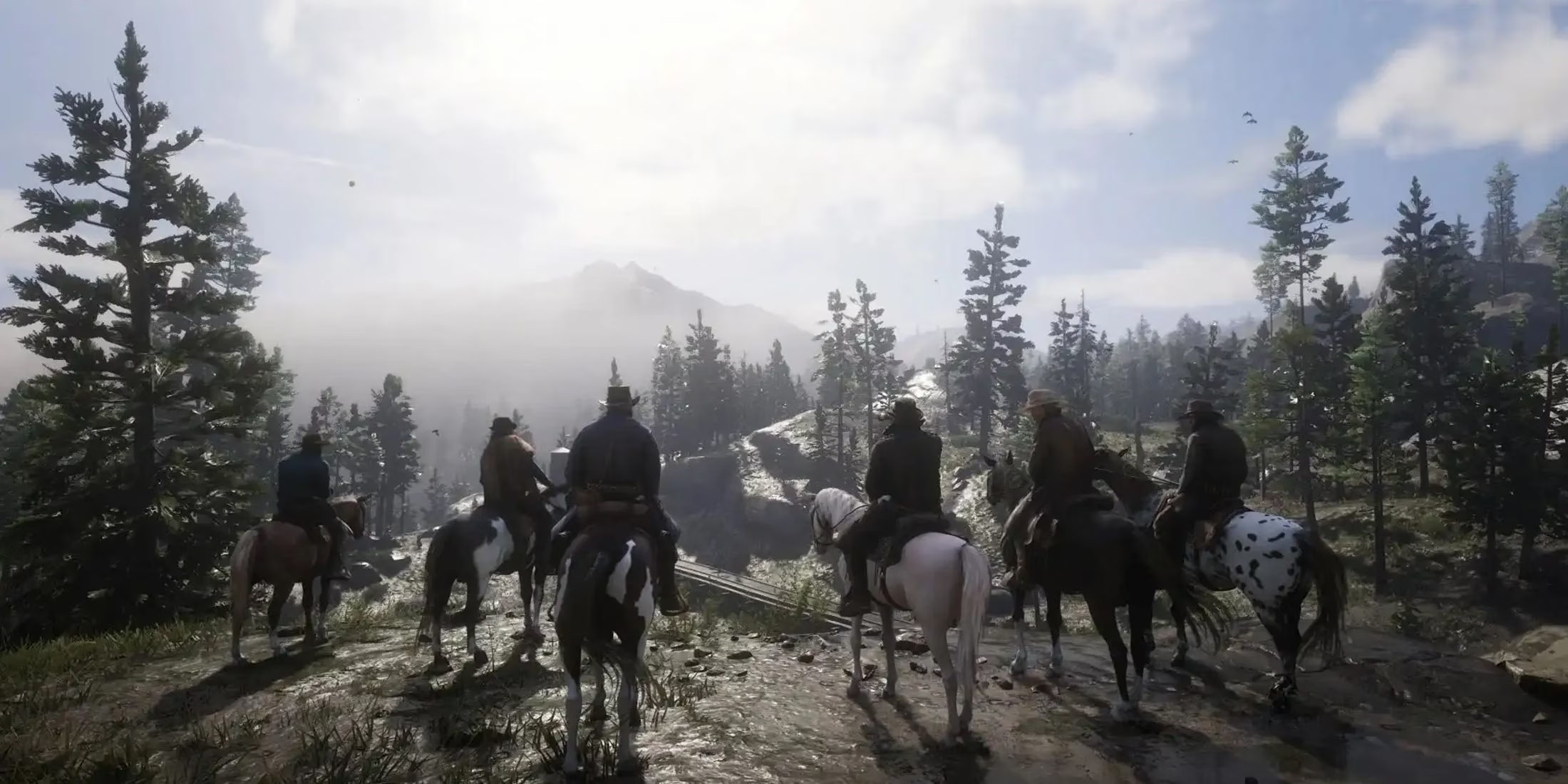
One compelling narrative thread that has captured the imagination of many is the continuation of the Marston family saga. The franchise has a neat little tradition, you see. The protagonist from one game's epilogue often saddles up to become the main star of the next chronological title. John Marston, the hero of the original Red Dead Redemption, took center stage in RDR2's epilogue, tying the stories together with a poignant bow. Following this pattern, all eyes naturally turn to Jack Marston, the boy we last saw as a young man seeking vengeance at the end of the first game. His story is far from over, and Red Dead Redemption 3 could be his time to shine.
But here's where things get really interesting, and a bit controversial. Picking up Jack's tale would mean leaving the classic Wild West firmly in the rearview mirror. We're talking about a setting that pushes deep into the 20th century. Imagine this:
-
The 1910s: Jack, perhaps disillusioned and rootless, could find himself in the trenches of World War I. This would offer a brutal, poignant chapter exploring the end of an era, literally and metaphorically, with the old ways dying in the mud of Europe.
-
The Roaring Twenties: The core of the game could then transition into the 1920s—a world of flappers, jazz, speakeasies, and, most importantly, the rise of organized crime. The lone outlaw is extinct; replaced by sophisticated gangsters in sharp suits.
This proposed shift is a double-edged sword. On one hand, it would mean saying goodbye to beloved series staples:
| Potential Losses | Potential Gains |
|---|---|
| Widespread horseback travel & cattle drives | The introduction of early automobiles & intense car chases |
| Classic frontier towns and open-range shootouts | Bustling, complex urban environments like a developing Saint Denis or new cities |
| The "frontier justice" ethos | Navigating the web of Prohibition-era gangland politics and modernized federal law |
It's a big swing. The game would essentially become a daring hybrid—melding the deep, narrative-driven heart of Red Dead with the urban, systemic chaos of Grand Theft Auto. Some fans are terrified this would lose the series' identity, while others are thrilled by the prospect of such a bold evolution. Talk about a leap of faith!
Yet, even in this unrecognizable new world, there would be precious room for familiar faces to bridge the gap. Two fan-favorite characters from Red Dead Redemption 2 are perfectly positioned to appear: Sadie Adler and Charles Smith. Their fates after RDR2 are known to be open-ended, and both would be in their 40s during the 1920s.
-
Sadie Adler, the fierce widow turned bounty hunter, could have evolved into a formidable figure in this new criminal landscape or a weary guardian of the old codes.
-
Charles Smith, the stoic and honorable hunter, might be struggling to find his place in a world that has no place for men like him.
An encounter with either—or better yet, both—could serve as a powerful anchor for a protagonist like Jack Marston. As he grapples with his identity, caught between the legacy of his father and a world that has moved on, a seasoned Sadie or Charles could appear not just as a cameo, but as a living reminder of the sacrifices made for his survival. They'd be a tangible link to the roots he's desperately trying to understand or escape. Now that would be some powerful storytelling.
Of course, the future is unwritten. Rockstar might still decide to go back to the beginning, exploring the early days of Dutch van der Linde and Hosea Matthews. But the possibility of following Jack into the dawn of the modern age presents a narrative richness that's hard to ignore. It would allow the franchise to truly come full circle, completing the Marston family's tragic, epic journey while redefining what a "Red Dead" game can be. Whether riding across the plains or driving through city streets, the heart of the series—themes of redemption, loss, and the death of a way of life—could beat just as strong. Only time, and Rockstar, will tell which path they choose to ride down.