Red Dead Redemption 3: The Case for Including Mexico While Avoiding Map Bloat
Red Dead Redemption 3 may resurrect the unfinished Mexico map from RDR2, testing Rockstar’s ability to fill vast spaces with meaningful content.
The landscape of interactive storytelling has rarely felt as immersive as it did in Red Dead Redemption 2, a title that redefined open-world design with its staggering depth and attention to detail. Yet, even this towering achievement left tantalizing fragments on the cutting room floor. As the gaming community looks ahead to Red Dead Redemption 3, speculation swirls around what Rockstar Games might deliver with the technology of 2026 and beyond. One of the most persistent whispers involves a region that fans glimpsed but never officially walked: Mexico. Its inclusion would not only satisfy a decade-long curiosity but also address features that RDR2 could not quite deliver. However, this expansion comes with a crucial caveat—bigger does not automatically mean better.
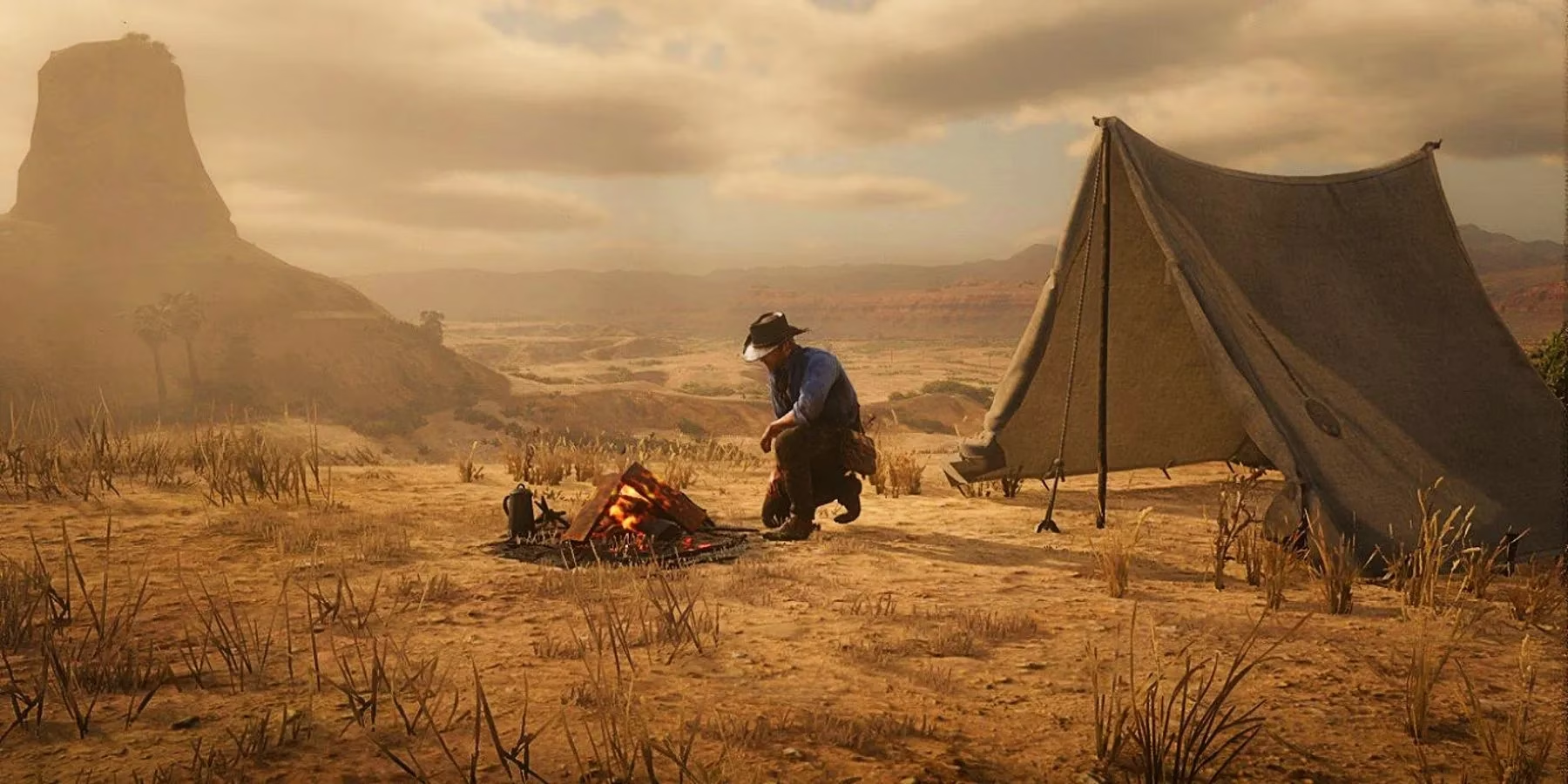
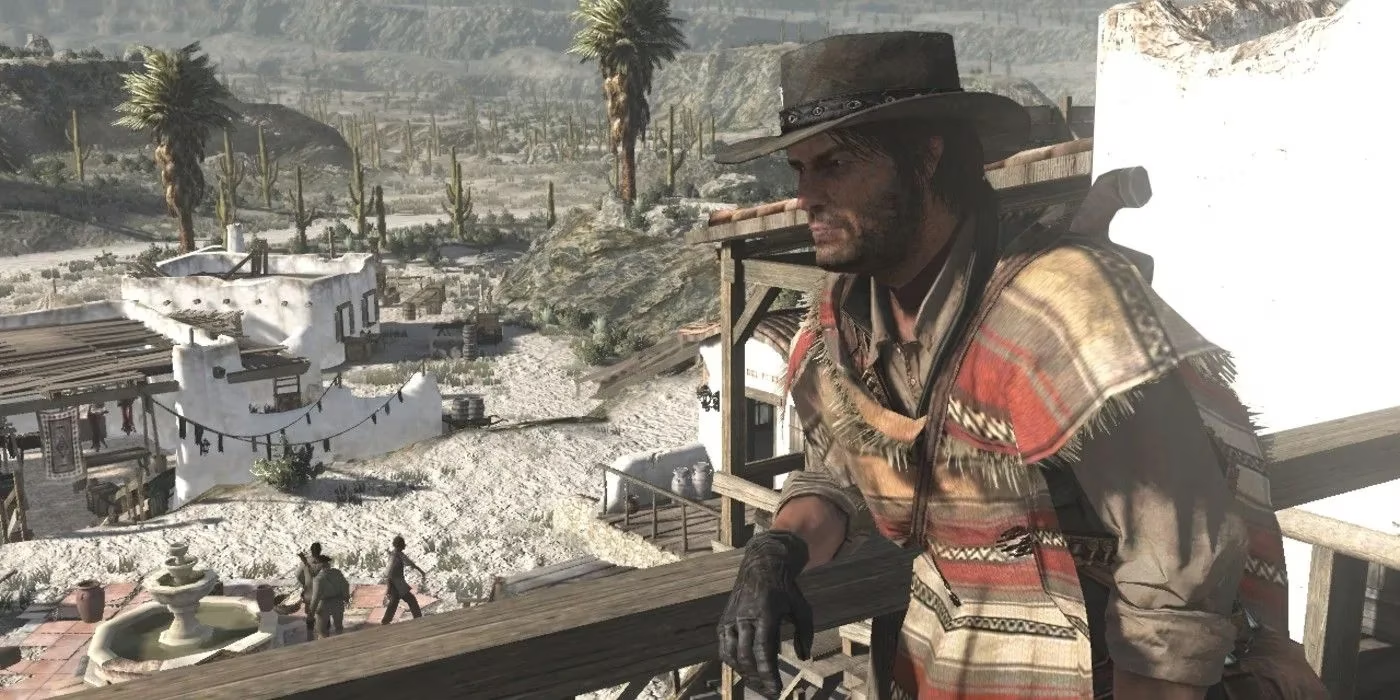
During the development of Red Dead Redemption 2, evidence suggested that the map was originally intended to reach beyond the borders of New Austin, into the territory of Nuevo Paraíso. Players who ventured out of bounds using glitches discovered that a portion of Mexico was not only modeled but contained surprising detail—textured buildings, winding paths, and even remnants of settlements. This hidden geography sparked immediate questions. Why would Rockstar invest resources in an area most players would never see? Theories point to a late-stage decision to trim the map, perhaps to maintain pacing or focus the narrative. Whatever the reason, the unfinished promise of a traverse-able Mexico left a quiet ache in the hearts of explorers. If Red Dead Redemption 3 finally opens that door, it will fulfill a wish that originated before many current-gen consoles were even on the horizon.
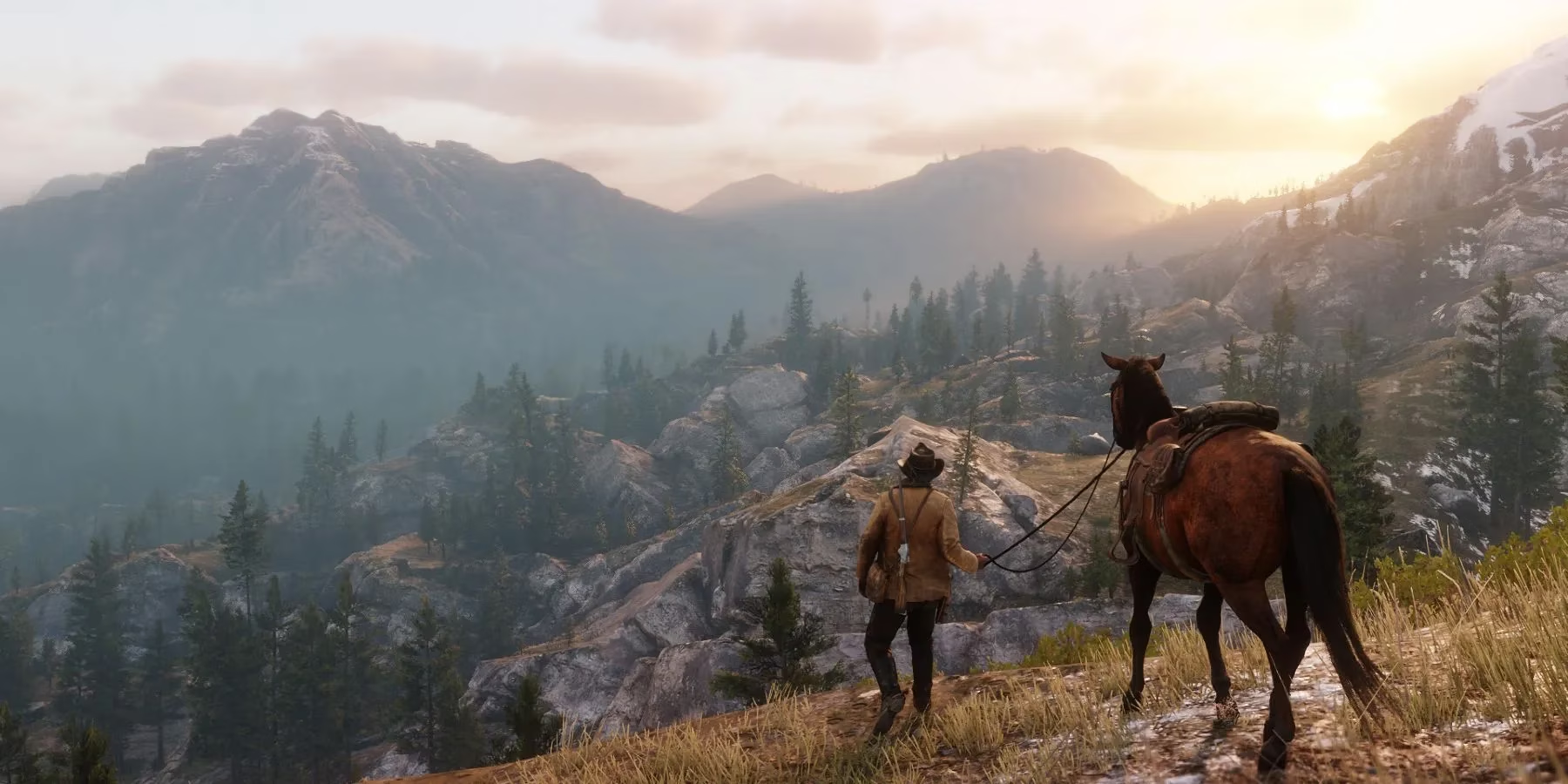
The prospect of an expanded frontier is undeniably exciting. Console and PC hardware have leaped forward since 2018, and by the time RDR3 launches, SSDs, advanced streaming, and powerful GPUs will make seamless continent-spanning maps more feasible than ever. Imagine a single, uninterrupted journey from the snowy peaks of the Grizzlies down through the deserts of New Austin, across a bustling border checkpoint, and into the sun-scorched landscapes of Mexico. The narrative possibilities are equally vast—bandito wars, revolutionary fervor, and complex cultural encounters could all weave into a campaign that rivals the emotional weight of Arthur Morgan’s saga. Yet, every square mile added to a game world demands a trade-off. Will the team be able to fill that space with moments that matter, or will the land feel like an empty tribute to ambition?
This is where the cautionary note rings loudest. Red Dead Redemption 2 succeeded largely because of its density. Every canyon hid stranger interactions, every swamp concealed a legendary beast, every cabin held a handwritten letter that deepened the world’s lore. Exploration was rewarded not with empty vistas but with narrative crumbs that formed a feast over dozens of hours. If the next installment stretches its borders to include Nuevo Paraíso, it must resist the temptation to let the terrain become a hollow expanse. A map twice the size but half as vibrant would be a regression, not progress. Rockstar’s own track record shows they understand this balance—Grand Theft Auto V’s Los Santos and Blaine County felt alive precisely because of the curated chaos packed into every block. RDR3 faces the same test: can it make Mexico feel as handcrafted as Valentine, Saint Denis, or Rhodes?
The question then shifts from whether Mexico could appear to whether it should—and under what design philosophy. One compelling path is to treat the border as more than a backdrop. RDR2 touched on themes of civilization encroaching on wilderness, and a Mexican territory could explore displacement, lawlessness, and the clash of empires from a fresh perspective. Wildlife could diversify, with jaguars stalking the jungles and exotic birds filling the skies. Towns could buzz with distinct regional economies, music, and moral dilemmas. But this richness must be woven tightly into the main and side content, not scattered thinly across a hundred miles of arid emptiness. The glitch-revealed Mexico screamed of potential unrealized; RDR3 has the chance to make that potential a living, breathing centerpiece.
Of course, some will argue that a smaller, more focused map is always the safer bet. After all, what makes the Old West resonate is not acreage but atmosphere—the creak of a saddle, the slow cadence of a gunslinger’s gait. Expanding into Mexico does not have to mean sacrificing intimacy; it can deepen it. Could a mission where the protagonist crosses the Rio Grande at dawn, hunted by both American and Mexican authorities, deliver a set-piece as memorable as the Braithwaite Manor assault? Almost certainly, if the environment is built to serve the story rather than showcase technical bravado. The beauty of RDR2 was that the world felt like a character itself, and adding Mexico should give that character more layers, not just more lines on a map.
As the industry marches into 2026, Red Dead Redemption 3 stands at a crossroads. It can honor the legacy of its predecessor by finally granting access to the elusive Mexico that fans have dreamed of, while also guarding against the sprawl that dilutes magic. The glitch in RDR2 was a love letter to what might have been; the next game can seal it with a kiss. By prioritizing density over dimensions, Rockstar can craft an experience that feels both comfortingly familiar and breathtakingly new—a world where every vista invites a story, and no journey ends in disappointment.