Red Dead Redemption 2 Still Deserves Better From Rockstar in 2026
Red Dead Redemption 2 player count surged on Steam in 2022, yet Rockstar neglected Red Dead Online and withheld next-gen upgrades.
I still remember the exact shape of the player-count graph from late November 2022: a spike that rose out of Steam like a geyser in a desert everyone had stopped irrigating. On November 28, 2022, Red Dead Redemption 2 broke its own concurrent player record with 66,492 riders, drifters, and outlaws sharing the same digital frontier at once. That number arrived four years after launch, with no major update propping it up, no new battle pass, and no next-gen port. Writing from 2026, I find that moment less like a random sales bump and more like a lighthouse beam Rockstar chose not to follow.
The Steam data was not a one-off tremor. During the Black Friday sale that followed, Red Dead Redemption 2 climbed to the number three top-selling game worldwide on Steam. For a single-player western whose online sibling had already been placed in palliative care, that commercial heartbeat felt almost defiant. Players were not buying a promise of future content; they were buying the world, the weather, the saddle creak, the long silence between gang members at Horseshoe Overlook. There is a strange permanence to that affection, like a campfire that keeps burning long after the cook has walked away to tend another ranch.
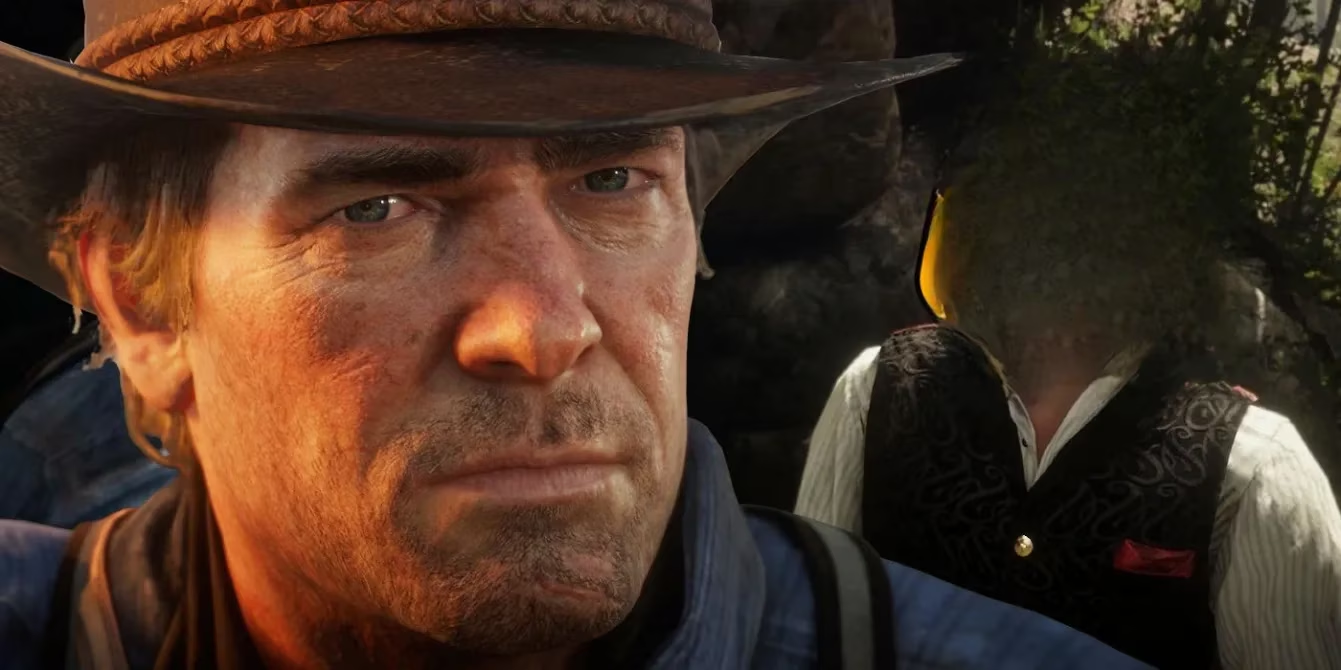
What still stings, even now, is how Red Dead Online was allowed to collapse into neglect. The mode carried over the physical weight of Red Dead Redemption 2: the slow reloads, the horses that behave like nervous partners, the landscapes that turn every ride into a meditation. It even expanded several NPCs into quest-givers, giving players a reason to return. Yet Rockstar treated it less like a live service and more like a boarded-up theater: the lights stayed on, but the marquee never changed. The Save Red Dead Online campaign became a kind of grief ritual. Fans were not demanding a miracle; they wanted the same oxygen that Grand Theft Auto Online had been breathing comfortably for years. Instead, Red Dead Online was left to grow weeds through its own floorboards, a beautiful house abandoned by its architect.
That abandonment sits in blunt contrast to the attention showered on the Grand Theft Auto franchise. Grand Theft Auto V and the GTA Trilogy received remastered or expanded ports, while Red Dead Redemption 2, a game many consider the studio's finest emotional achievement, still waits for even a modest current-generation touch-up. From my seat in 2026, with Rockstar's resources apparently lashed to the ongoing voyage of Grand Theft Auto VI, the silence around a Red Dead Redemption 2 upgrade feels less like strategy and more like a museum quietly closing off its best wing. I understand GTA's gravity; it is the commercial sun around which Rockstar has orbited for decades. But the Red Dead series has proven it can hold its own atmosphere, its own gravity, and its own loyal moon.
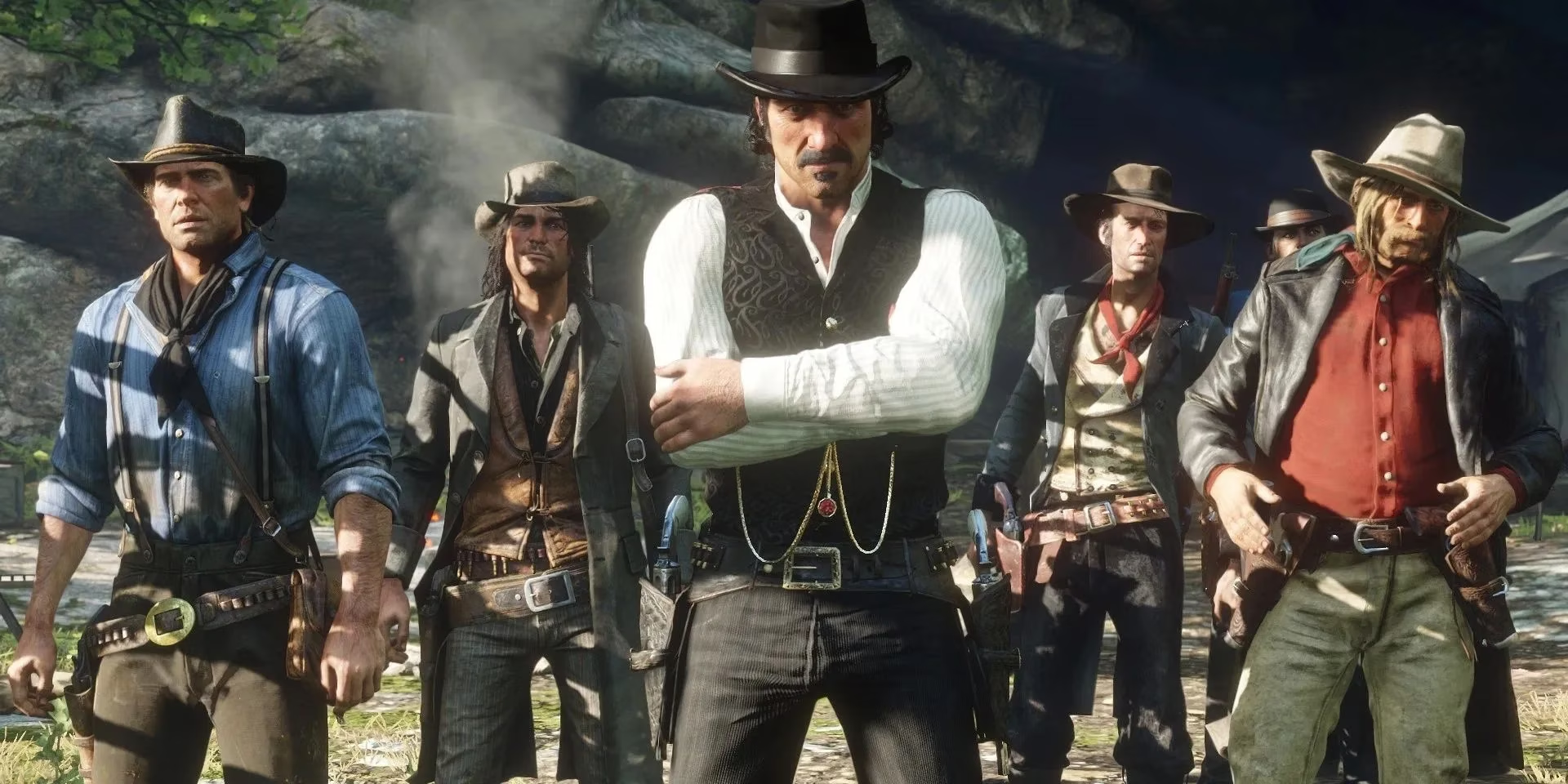
Take-Two Interactive has occasionally hinted that Red Dead Redemption 3 is likely to happen eventually, but "eventually" has become a fog word in this series. Meanwhile, the player base continues to behave like a river that refuses to dry even after the dam's gates were shut. The recent Steam successes should have been read as a demand, not a curiosity. If a four-year-old western can still outsell most new releases during a seasonal sale, then the audience is plainly telling Rockstar that the frontier is not finished. All it would take is a next-gen patch, a resolution bump, faster loading, or a real content injection into Red Dead Online, small gestures that could convert lingering affection into lasting revenue.
I keep returning to the image of that 66,492-player spike. It was not produced by a new heist, a crossover event, or a battle royale mode. It was produced by the simple, stubborn excellence of a world that still feels more alive than most games released after it. Rockstar built a cathedral in the mud and then walked away to polish a casino. Perhaps in 2026, the best thing the studio could do is walk back, open the doors, and let the congregation inside.