Red Dead Redemption 2's Hidden Fishing Camp Detail Exemplifies Its Unmatched Depth
Discover how Red Dead Redemption 2's immersive open world and intricate honor system create compelling gameplay where actions like theft have profound consequences, reinforcing its legendary status in gaming.
Even in 2026, half a decade after its initial release, Red Dead Redemption 2 continues to astound players with its meticulously crafted world. The game's commitment to immersive simulation is legendary, a fact recently underscored by a player's discovery of a nuanced interaction at one of the game's many fishing camps. While fishing itself is a serene and detailed pastime, this particular find highlights how Rockstar Games embedded layers of consequence and realism into even the most peripheral activities, ensuring that the journey through America's heartland remains perpetually surprising. This attention to granular detail transforms simple actions into memorable stories, reinforcing the title's status as a benchmark for open-world design.
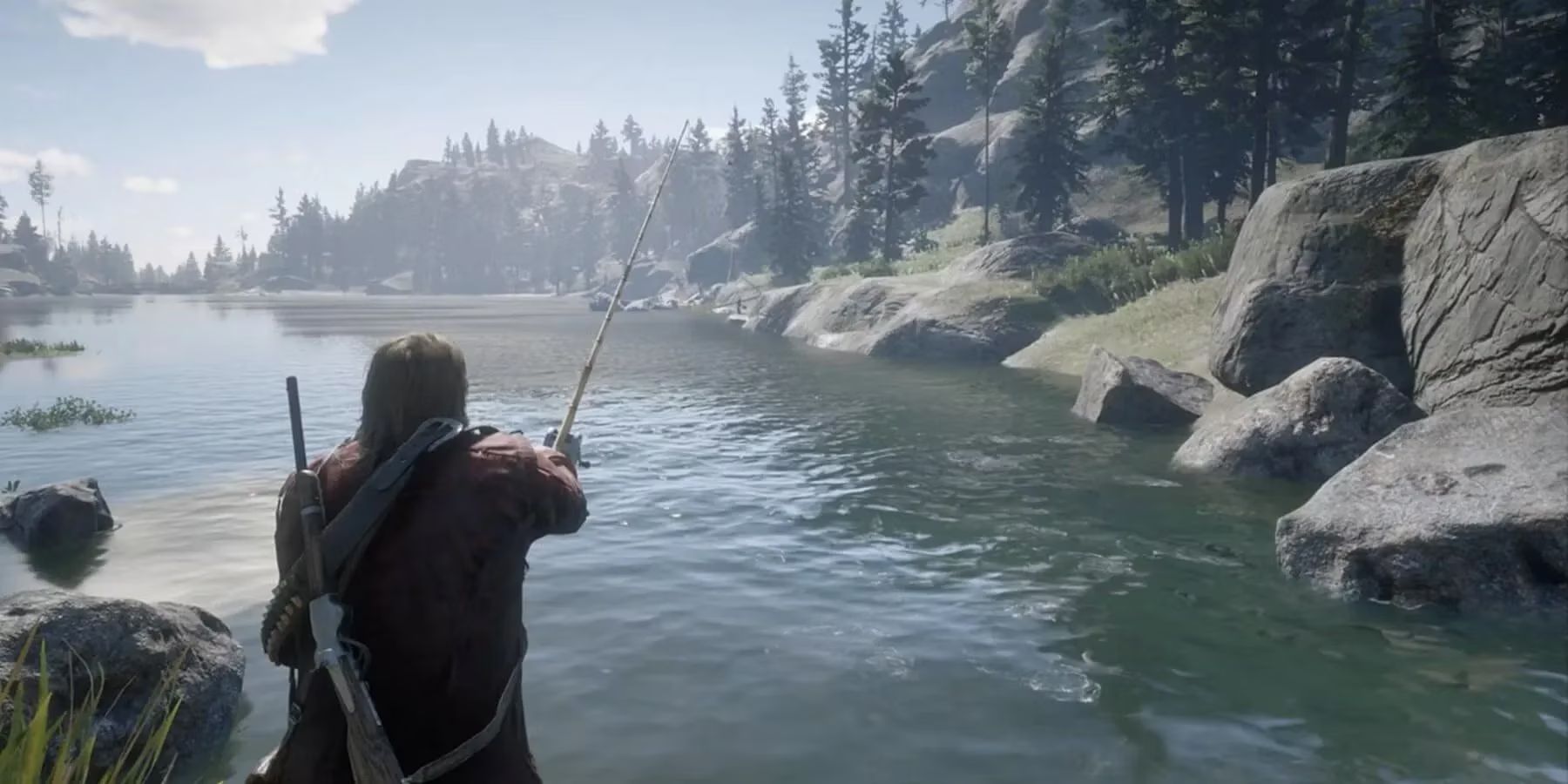
The Mechanics of a Morally Complex Theft
The discovery, shared by a community member known as Worldly-Donut-5956, revolves around the game's reaction to player agency at a fishing camp. After a violent confrontation where the player character eliminates the camp's owner, an additional interactive option presents itself. Players can approach the rack where the camp owner has hung their freshly caught fish and, using a knife, cut them down to claim them. This act is not treated as a simple looting animation; the game's intricate honor system registers it as a distinct, despicable crime. Committing murder already carries a significant honor penalty, but the system then applies a further deduction specifically for the theft of the deceased's property. This layered punishment underscores the game's narrative philosophy: actions have compounded consequences, and wanton cruelty is meticulously tracked and morally quantified.
Beyond Stealing: Functional and Completionist Benefits
What elevates this detail from a mere moral lesson to a meaningful gameplay feature is its practical utility. The stolen fish are not just generic inventory items. Crucially, they are counted toward the player's Compendium, the game's extensive catalog of wildlife, items, and discoveries. For dedicated players pursuing 100% completion, this provides a legitimate, if morally dubious, strategy for checking off certain fish entries. This integration demonstrates how systemic depth permeates every corner of the game; a seemingly opportunistic act of theft is woven into the broader framework of player progression and world exploration.
Moreover, community discussion revealed that this mechanic extends beyond fish. Hanging pelts and animal carcasses found at hunter camps or other locations can also be severed from their racks. Remarkably, these items are retrieved in perfect condition, bypassing the potential degradation that can occur during combat or travel. This consistency in design logic—where interactive world objects behave predictably across different contexts—is a hallmark of Red Dead Redemption 2's believable simulation.
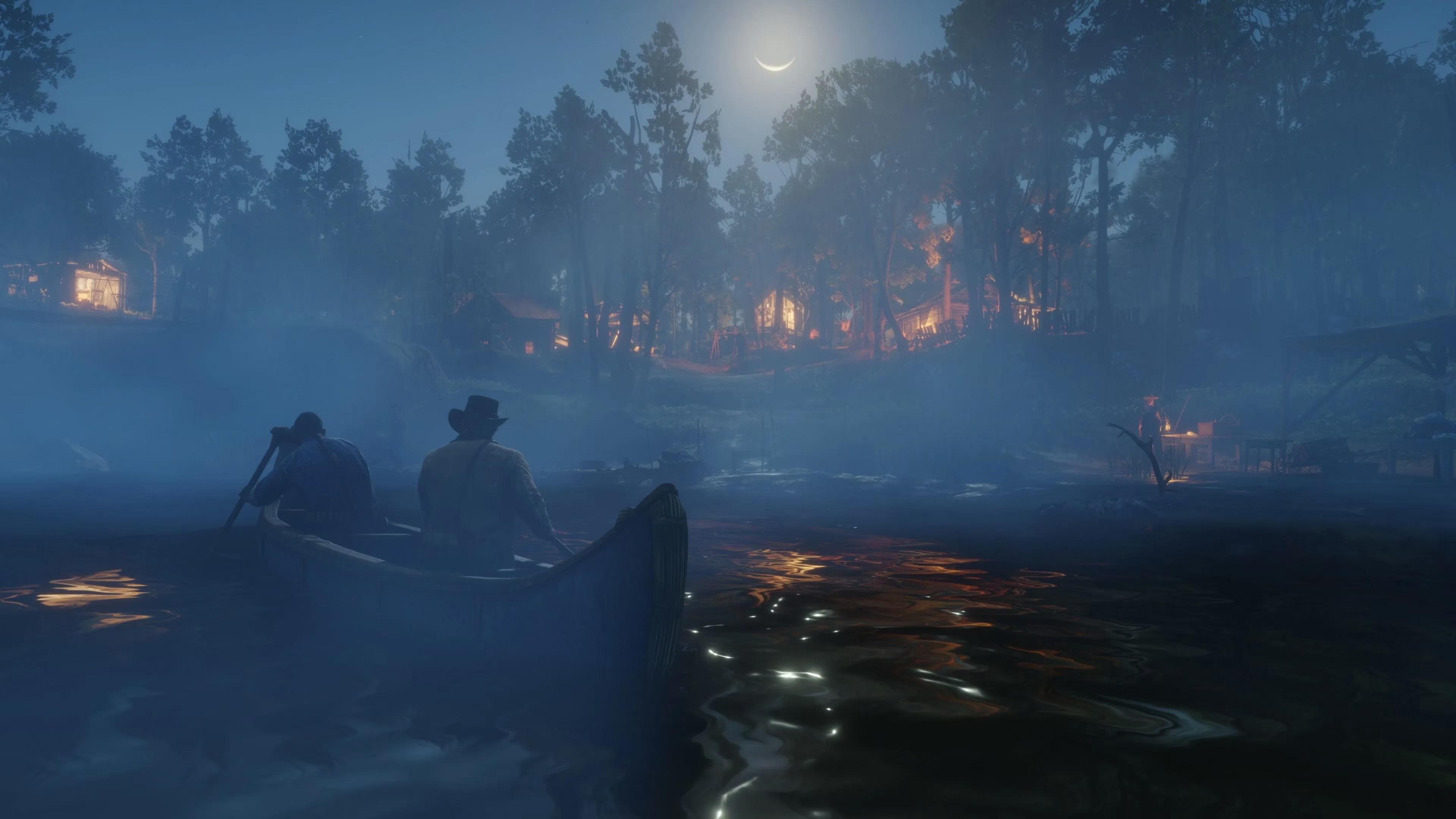
A Testament to Enduring Discovery
The persistence of such discoveries years later speaks volumes about the game's density. The design philosophy appears to have been one of generous excess, populating the world with details that many players may never consciously encounter. This creates a powerful sense of a living, functioning ecosystem that operates independently of the player's presence. The list of similar \u201ceasily missed\u201d details is extensive:
-
Dynamic Camp Interactions: NPCs at camps engage in unique dialogues, cook meals, and tell stories that change over time.
-
Animal Behavior Realism: Predators hunt prey, scavengers circle corpses, and horses react authentically to different terrains and threats.
-
Environmental Storytelling: Abandoned shacks, weather-worn graves, and cryptic notes silently narrate tales of the world's inhabitants.
-
Character Physicality: Arthur Morgan's weight, hair growth, and dirt accumulation all visibly change based on player habits and the passage of in-game time.
This commitment ensures that every playthrough can yield novel experiences, fostering a dedicated community of explorers who continue to share their findings, keeping the game culturally relevant long after its competitors have faded.
The Legacy and Future of Red Dead's Detail
With the confirmed development of Grand Theft Auto VI occupying Rockstar's primary focus, the future of the Red Dead Redemption series, while assured, remains on the distant horizon. The voice actor for Arthur Morgan has expressed confidence in a third installment, but any official revelation is likely years away. This extended development cycle, however, aligns with the studio's proven methodology: a prolonged, meticulous crafting process aimed at achieving unparalleled depth. The fishing camp detail is a perfect microcosm of what players hope will define a potential Red Dead Redemption 3. The expectation isn't merely for a larger map, but for a denser, more reactive, and more morally intricate world.
The enduring appeal of Red Dead Redemption 2 in 2026 is a direct result of this philosophy. It isn't just a game to be completed; it's a space to be inhabited, where the joy comes as much from following the epic narrative as from stumbling upon a quiet, unscripted moment of emergent storytelling. Whether it's the guilt of stealing a dead man's fish or the satisfaction of finding a perfect pelt, these \u201clittle details\u201d are, in fact, the game's greatest triumph. They build a world that feels authentically alive, rewarding curiosity and patience in a way that few other titles have managed, securing its place as a timeless masterpiece of interactive entertainment. 🎣⚔️📜