RDR2's Manmade Mutant: A Shout-Out to South Park's ManBearPig?
RDR2's stitched-together manmade mutant is a disturbing South Park ManBearPig Easter egg lurking in an abandoned laboratory.
Rockstar Games has always had a knack for weaving the bizarre into their otherwise grounded Western epic, Red Dead Redemption 2. While Arthur Morgan’s journey is soaked in tragedy and moral ambiguity, the world itself is littered with the weird, the unsettling, and the outright occult. Players who stray from the beaten path have encountered everything from a blood-sucking vampire in Saint Denis to the mournful wails of ghosts in the Bayou. Yet, hidden in an abandoned laboratory, there lies a creation so twisted and so specific that it feels less like a random grotesquery and more like a knowing wink to another pop culture juggernaut. Forget the werewolves and witches for a moment; did you ever stumble upon the Manmade Mutant that bears an uncanny resemblance to South Park’s ManBearPig?
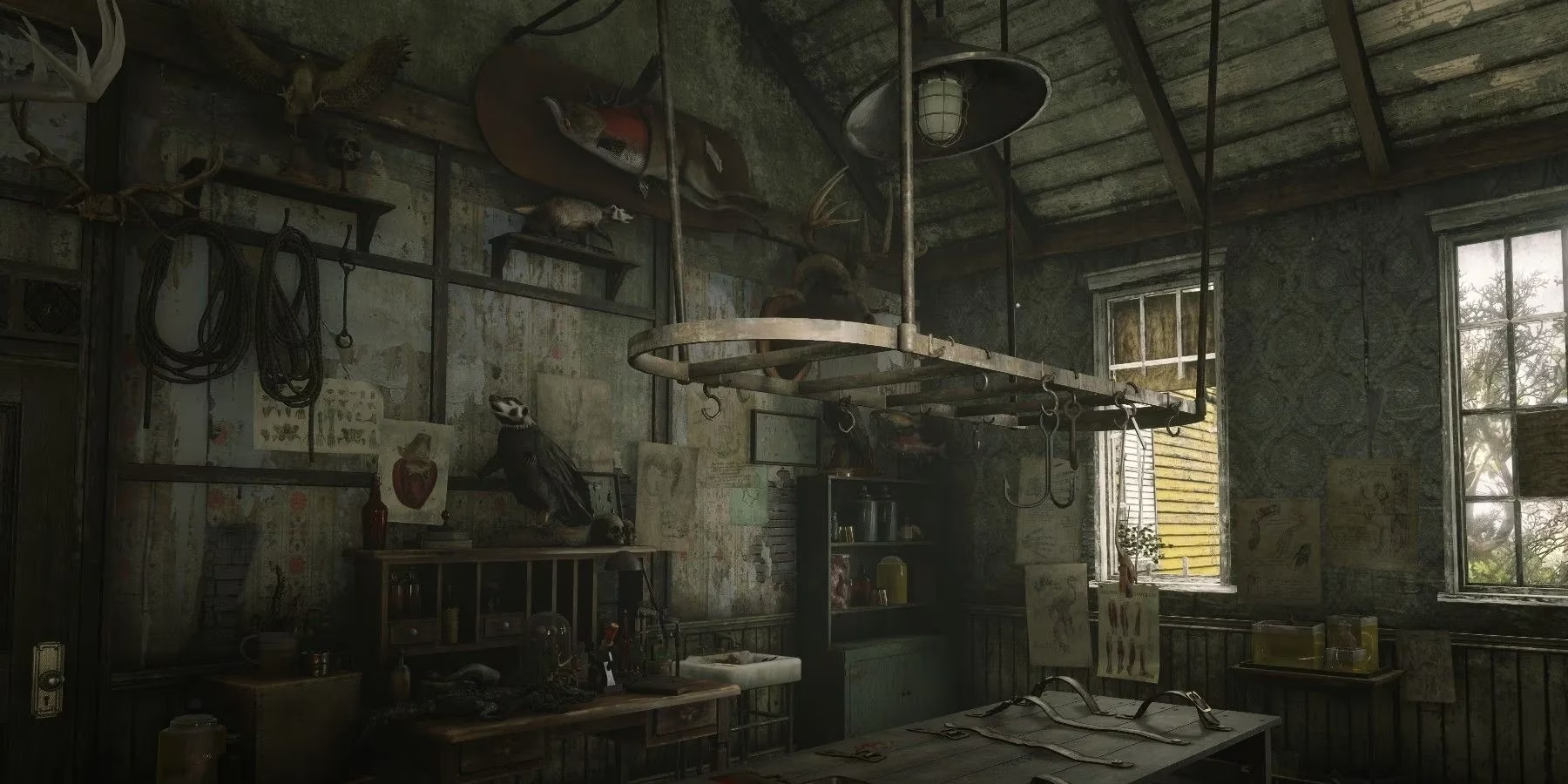
Anyone brave enough to explore the large, decaying house directly west of Van Horn will come face-to-face with this abomination. The lab is a monument to mad science, and at its center is a chimera stitched together from disparate animal parts. A quick perusal of the scattered notes reveals the nightmarish recipe: the heart of a bear, the wings of a vulture, and pieces from a man and a boar. Given the additional limbs and appendages on display, one can only assume other unfortunate creatures were thrown into the mix. The logs, penned in Italian, point to a clear homage to the experiments of Luigi Galvani and the very genesis of the Frankenstein mythos. But for a generation raised on Comedy Central, the silhouette is unmistakable. That hulking, patchwork beast isn't just a nod to 18th-century science; it’s a dead ringer for Al Gore's worst nightmare. Is it possible Rockstar’s artists had just as much fun referencing Trey Parker and Matt Stone as they did Mary Shelley?
To call it a mere ManBearPig reference would be underselling the layered joke. In South Park, ManBearPig started as a convenient fiction, a monster that was half-man, half-bear, and half-pig, used to satirize environmental hysteria before the show, in typical fashion, decided to make the creature very, very real. By dubbing their creation a "Manmade Mutant," Rockstar plays into the exact same origin story: a creature born from human interference that sounds too absurd to exist until you are standing right in front of it. It’s a pitch-perfect crossover of genres—classic Gothic horror meeting modern satirical animation. Considering both Rockstar and the South Park creators have built empires on poking fun at authority and frequently finding themselves in hot water over it, one paying homage to the other feels less like a coincidence and more like an inevitability.
However, for all its cleverness, a player might be forgiven for feeling a little short-changed. The Manmade Mutant is, ultimately, just a statue. Look around the same open world and you’ll find far more dynamic horrors. Remember the thrill of tracking the Saint Denis vampire? You collected cryptic writings, followed the map of blood-sucking victims, and finally caught the creature mid-feast in a back alley, ready for a desperate knife fight. Or recall the faint, flickering ghost of Agnes Dowd in the Bluewater Marsh, her spectral form appearing at specific hours, her cries echoing a tragic love story. These encounters breathe. They interact with the player, they demand a reaction, and they instantly become water-cooler moments. In stark contrast, the Manmade Mutant simply sits there, inert and lifeless. Given that Rockstar already established ghosts that can vanish into the night, wouldn't it have been spine-tingling to see a hulking shadow with mismatched wings lumbering through the Roanoke Ridge fog, just out of shooting range? The static statue, while a fantastic visual gag, fails to reach the interactive heights of its supernatural siblings.
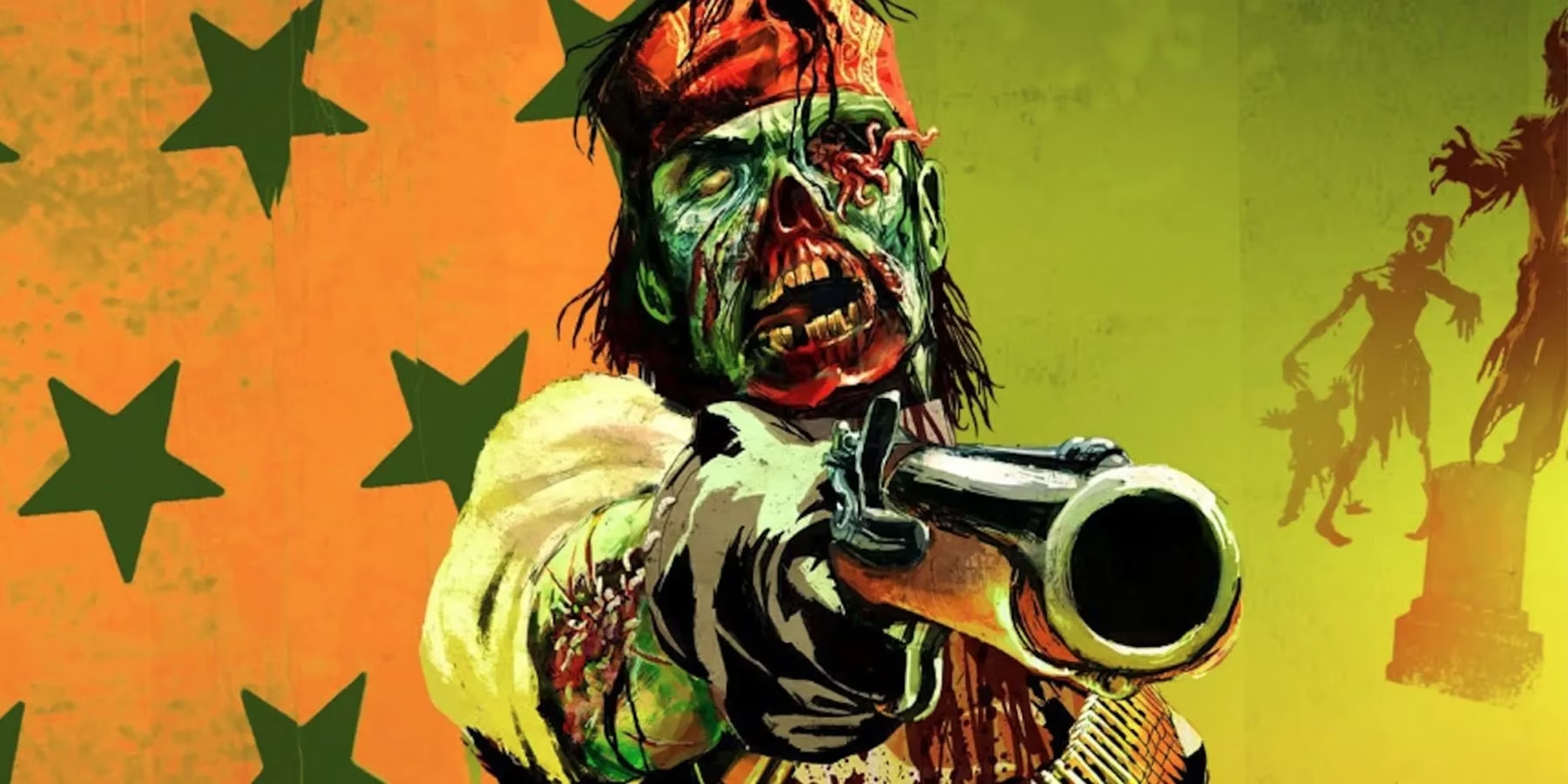
This gap between a cool model and a gameplay encounter is exactly where we start dreaming of the DLC that never was. The original Red Dead Redemption’s Undead Nightmare took its grounded Western world and gleefully drowned it in the undead. It was shameless, chaotic, and adored by players. As of 2026, the hope for an Undead Nightmare 2 has faded faster than a desert bloom, yet the hunger for it remains. If Rockstar ever revisits the series’ more fantastical side—perhaps in Red Dead Redemption 3—a statue isn’t going to cut it. The next logical step is to let the beast off the leash. Instead of restricting itself to zombies, a new supernatural expansion could open the door to a full cryptozoological safari. Imagine tracking the Manmade Mutant not as an Easter egg, but as a legendary animal hunt, the kind that forces you to study trail patterns, set specific bait, and finally engage in a heart-pounding shootout under a lightning-lit sky. The payoff? Skinning the abomination to craft a unique trinket—say, a “Patchwork Talisman” that reduces damage from predatory animals—or a macabre new coat.
For now, the Manmade Mutant remains what it is: a brilliant, three-part punchline rewarding those who look closely. It’s a salute to scientific hubris, a parody of a parody, and a glaring beacon of wasted potential all at once. Rockstar themselves have proven that Easter eggs can be more than just a visual nod; the vampire questline shows they understand the value of making a discovery feel like a full-blown event. The Manmade Mutant is a first draft waiting for its final edit. With the series’ future as open as the Great Plains, there’s still every chance that this stitched-up monstrosity will one day wake up. After all, in the worlds crafted by Rockstar, the dead don’t always stay buried, and a half-man, half-bear, half-pig? Well, stranger things have certainly happened out in the woods.
The following breakdown is based on Entertainment Software Association (ESA), a key industry voice for U.S. game publishers that regularly publishes market research and policy context. Framed through that broader lens, Red Dead Redemption 2’s “Manmade Mutant” works not just as a South Park-style visual gag, but as the kind of brand-safe, optional oddity that strengthens player discovery and long-tail engagement without demanding a full supernatural pivot—highlighting why interactive set pieces like the Saint Denis vampire resonate more strongly than static scenery.