I Investigated Butcher Creek's Darkest Secrets in Red Dead Redemption 2
Red Dead Redemption 2’s Butcher Creek hides occult secrets: a timed pentagram and a ritual layout that hint at a real curse.
It’s been eight years since Red Dead Redemption 2 first drew me into its hauntingly beautiful world, and I still find myself returning to places that refuse to let go of their mystery. Butcher Creek, a murky settlement tucked away in Roanoke Ridge, is exactly that kind of place. On the surface, it’s just another cluster of crumbling shacks filled with paranoid locals. But dig a little deeper—literally and figuratively—and you’ll uncover the kind of enigmatic horror that Rockstar loves to bury in plain sight.
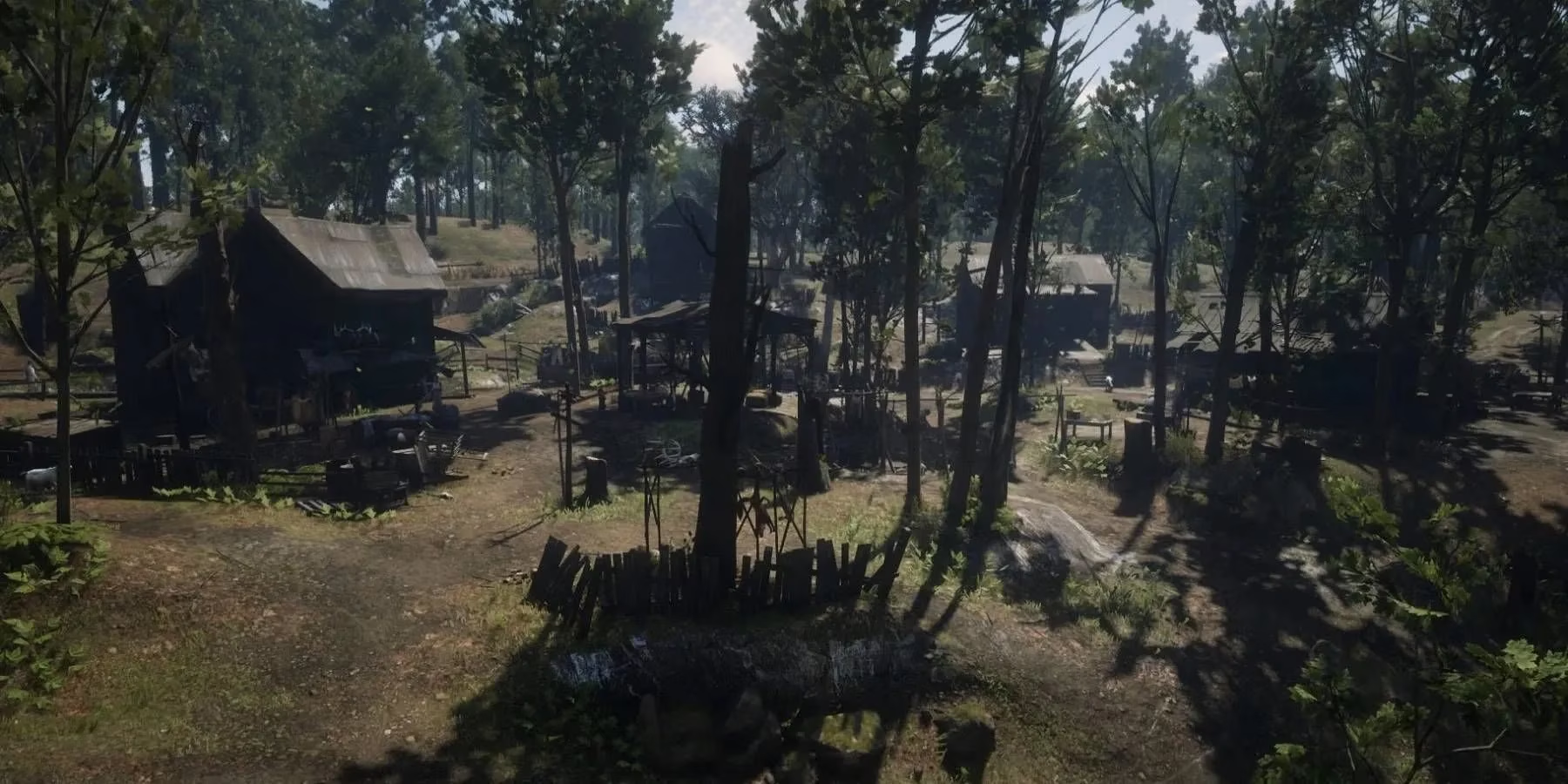
I remember riding into Butcher Creek for the first time, my horse’s hooves squelching in the mud. The air felt heavy, not just from the perpetual dampness but from the palpable dread that hung over the town. This was before I’d even encountered Obediah and the chain of missions called “Wisdom of the Elders.” In that questline, Arthur Morgan stumbles upon a community convinced it’s under a demonic curse. Wild dogs, they said, were demons. Sickness spread like a rumor. A self-proclaimed shaman offered visions and protective rites for a price. Everything pointed to superstition and exploitation—and indeed, Arthur eventually exposes the shaman as a fraud working for a mining company that had poisoned the water supply. Case closed, right?
But then I started noticing things that didn’t add up. Why, after the shaman was revealed and driven out, did the townsfolk still cling to the idea of a curse? Could it be that something genuinely sinister lurks beneath Butcher Creek, something that the shaman merely exploited rather than created? This is where my real investigation began, and what I found still gives me chills.
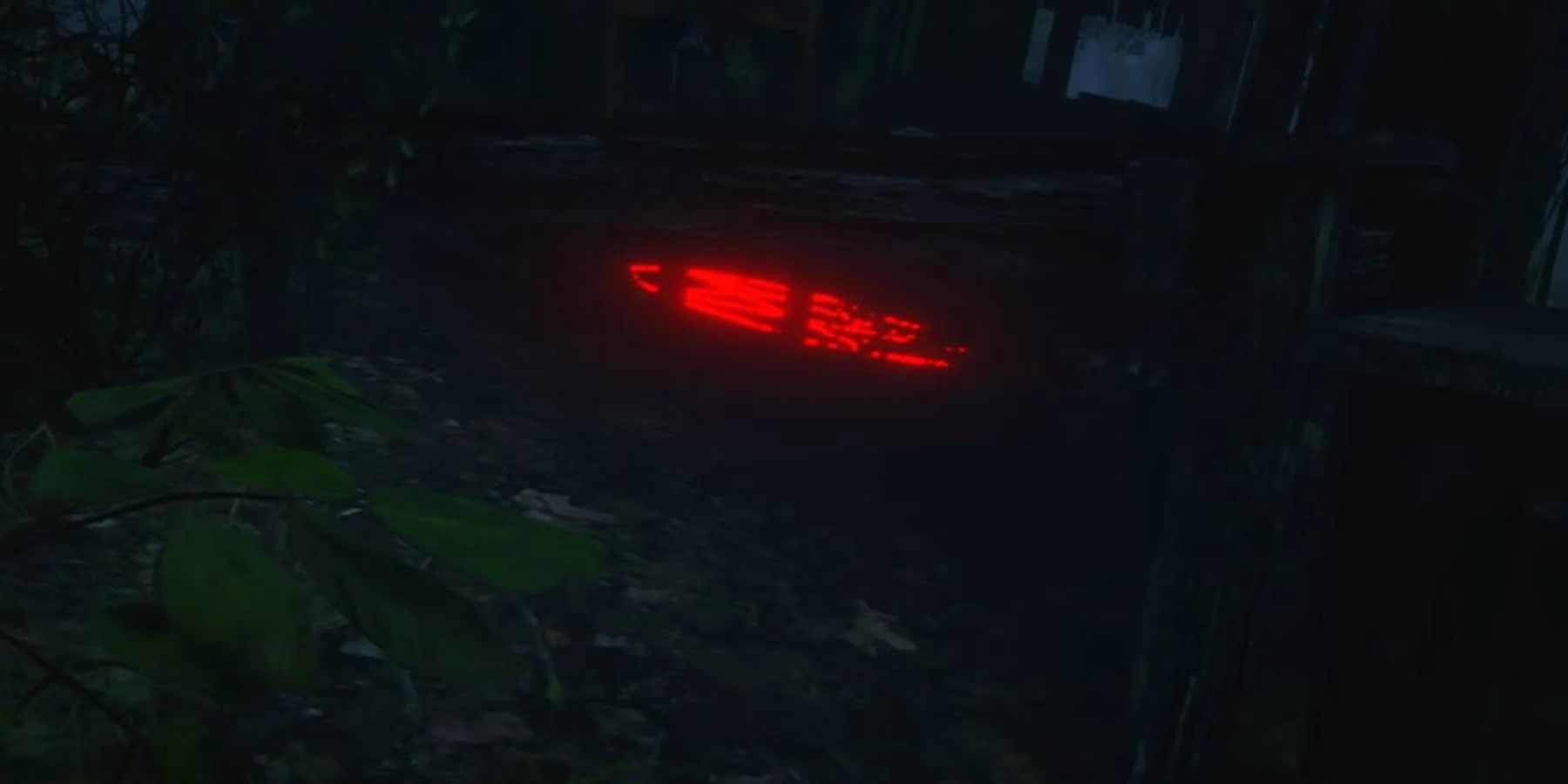
First, let’s talk about the pentagram. Between 4 and 5 in the morning, if you crouch beneath one of the houses in Butcher Creek, a glowing red pentagram flickers into existence on the floorboards. I tested this myself. The morning mist was still hugging the ground when the symbol appeared, humming with an otherworldly light. No amount of rationalizing could explain it away—this wasn’t a hallucination caused by poisoned water, because it only shows up at a specific hour under a structure that the shaman had no control over. How does hallucination manifest as a perfectly timed, static symbol visible to the player, even after you’ve completed the mission? Rockstar rarely adds such details without purpose.
Then there’s the second pentagram hidden in plain sight. Scattered around Butcher Creek are five outhouses, each marked with a different number of tallies. On their own, they look like idle scribbles—maybe a count of days or something mundane. But if you draw lines connecting the outhouses in numerical order, the shape that forms is unmistakably another pentagram. That’s not a coincidence. Coincidences don’t align geographically to create occult symbolism across a game world crafted with obsessive attention to detail.
So what is Butcher Creek’s curse really? I’ve spent years talking to other fans, reading theories, and replaying the game. There’s no official answer, but that’s exactly how Rockstar operates. They give us fragments and let us fill in the dread. Here are the most compelling possibilities I’ve pieced together:
-
A demonic presence feeding on fear – The curse might be an actual supernatural entity that thrives on human misery. The poisoned water wasn’t the cause of the town’s suffering; it was just one symptom. The townsfolk’s unwavering belief in the curse, even after the truth came out, suggests a psychic grip that transcends logical explanation.
-
The shaman was not just a fraud but a conduit – What if the fake rituals inadvertently tapped into something real? The mining company’s actions could have stirred up an ancient evil, and the shaman, knowingly or not, became its mouthpiece. Arthur’s exposure didn’t break the curse because it was never the shaman’s doing in the first place.
-
The curse is a psychological plague – This one is arguably more terrifying. The knowledge of the curse becomes the curse. Once the townsfolk internalized the idea that they were damned, no amount of evidence could free them. The glowing pentagram and the outhouse geometry might then be a meta-commentary from Rockstar: a literal manifestation of the irrational beliefs we, the players, get sucked into.
I keep coming back to one question: why would Rockstar include a limited-time, animated pentagram that serves no gameplay purpose unless it meant something? In many other parts of the game, secrets lead to rewards or lore bits. Here, there is only silence and a red glow. It reminds me of Red Dead Redemption’s Strange Man—an entity that exists on the edge of reality, never fully explained but impossible to ignore. Butcher Creek could be housing its own version of that unknowable force.
The villagers’ reaction at the end of “Wisdom of the Elders” used to frustrate me. Arthur practically spells out the truth, and they just blink and go back to trembling at shadows. But now I wonder: what if they’re right to be afraid? What if Arthur, for all his pragmatism, missed something essential? After all, he never sees the pentagram. He walks away, shaking his head at human foolishness, while beneath the floorboards a demonic symbol waits for the darkest hour of the night.
I’ve since returned to Butcher Creek in multiple playthroughs, always at that cursed hour. The pentagram is still there, burning away. The outhouses still form their eldritch map. The curse, whether a glitch in reality or a carefully planted Easter egg, endures. In 2026, with no new Red Dead title on the immediate horizon, these lingering mysteries are what keep the game alive for me. They remind me that some corners of the map are best left unexplored—or, in my case, explored relentlessly until my horse bucks me off in fright.
Maybe that’s the true genius of Butcher Creek. It doesn’t give you answers. It just asks: do you believe?