GTA 6 Should Perfect Red Dead Redemption 2's Honor System
GTA 6’s honor system could surpass RDR2’s morality mechanics with lasting consequences, making Vice City feel more alive and reactive.
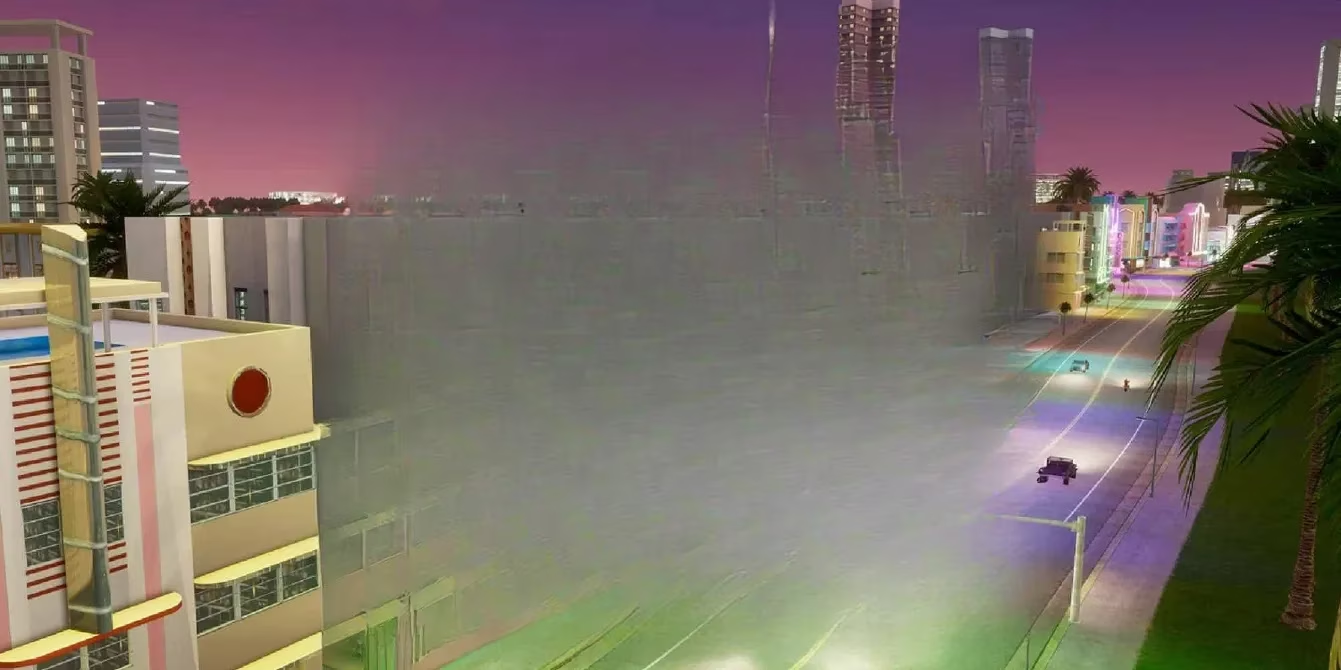
In 2026, I am still thinking about the one Rockstar mechanic that could make Grand Theft Auto 6 feel more alive than any graphical leap: an honor system. Rockstar has revealed little about upcoming features in GTA 6, and it remains unclear whether it will implement Red Dead Redemption 2's honor system. But the more I replay RDR2, the more I believe GTA 6 has the perfect chance to fix what RDR2 got almost right. The GTA series has always centered on becoming rich and powerful by any means necessary, so a morality gauge of some kind would fit perfectly. In GTA 5, once a player loses the police's attention, they are treated like a normal citizen. That works well with the franchise's vicariously criminal atmosphere, but actions would hold much more weight if they meaningfully altered the character's perception in the game's world.
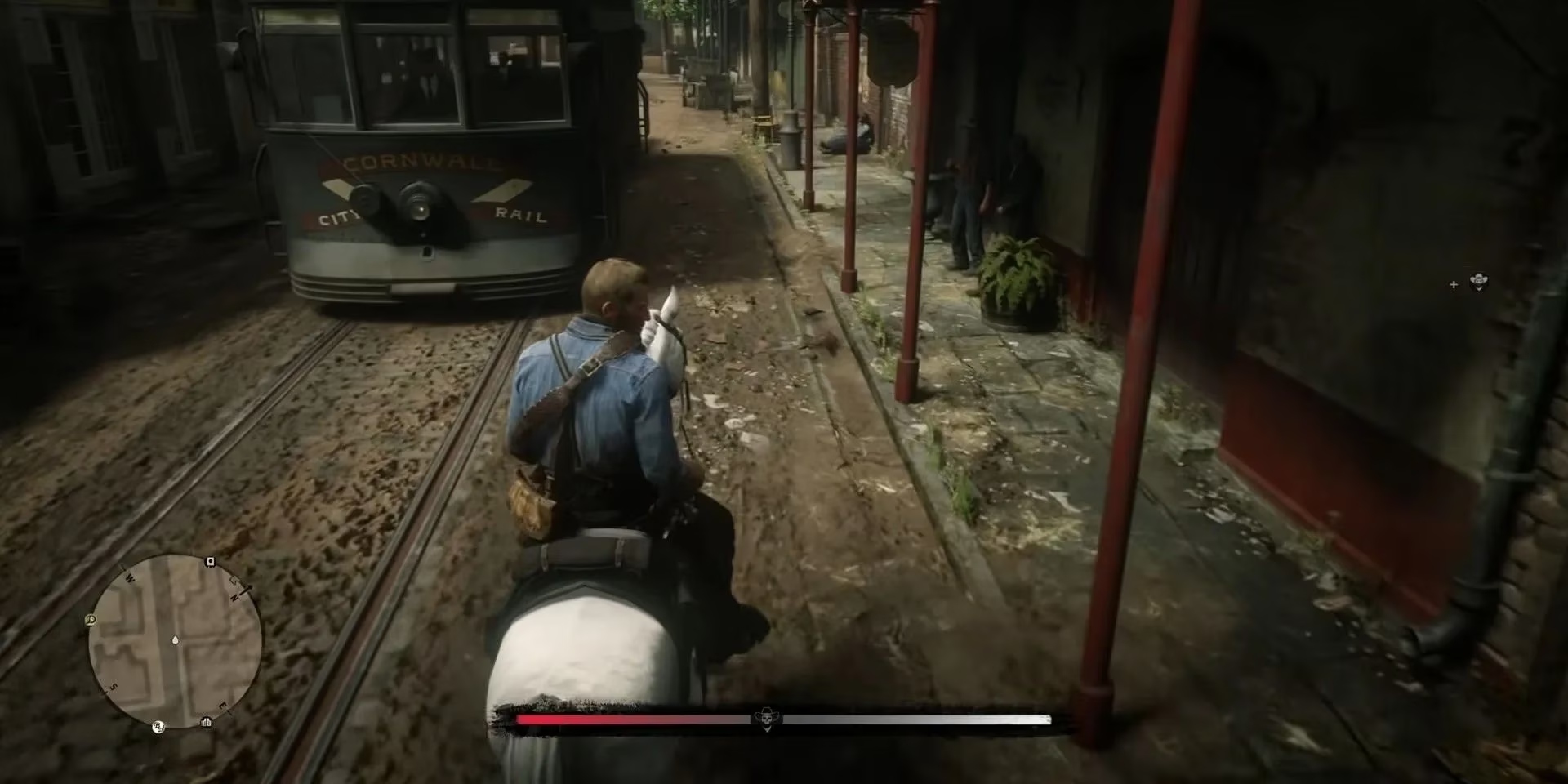
RDR2 remains a landmark for Rockstar, and its honor system is a formative aspect of its acclaimed story. Most actions that Arthur Morgan performs move his honor meter toward either heroism or sadism. It does not directly impact Arthur's relationship with law enforcement, but it does impact his interactions with NPCs. Characters treat the player differently depending on moral standing, which allows the system to double as a reputation gauge. Certain charitable missions can only be completed by a player with high honor. That is the fantasy I want in GTA 6: a city that remembers whether I helped or hurt it.
The Flaw I Want GTA 6 to Fix
The issue with RDR2's morality system, which GTA 6 has the perfect chance to fix, is that actions are not appropriately rewarded. The penalty for killing multiple innocents is fairly steep but can be offset with simple tasks like petting a horse, donating to beggars, and doing chores at camp. If players stick to RDR2's stranger missions and random encounters rather than free-roam robberies and massacres, the system works a bit better, as every one of the game's encounters requires an ethically charged decision on behalf of the player. I do not want GTA 6 to let me erase a bloody rampage by dropping a few coins in a donation box. I want consequences to linger.
GTA 6 could perfect RDR2's honor system by making open-world mayhem feel less like a free reset button. The problem with honor in GTA 6 is that open-world mayhem is far too appealing. If the game incorporated more decision-based optional encounters, it would offset the balance a bit. Including more side missions that involve doing bad things for good reasons would provide a method of grinding honor during the story. Of course, the system should never be perfectly relative, because engaging in high-stakes criminal activity to get rich is too central to GTA's brand. But if the game measured honor as loyalty to the character's allies, as well as the player's ethical standing with the world at large, it could fit perfectly with the series's trademark features.
How Honor Could Work in GTA 6
Like in Red Dead Redemption 2, the honor system could be reflected in dialogue and determine who the character is deep down as the story progresses. Stores could lower prices for characters with high honor, while robberies go smoother for characters with low honor. Considering GTA's moral ambiguity, there could be missions that are only available to low honor players as well as high honor players. This function would not replace Grand Theft Auto's classic Wanted Level system, but it could influence how fast the Wanted Level increases, and provide yet another connection between GTA and Red Dead Redemption 2. If Grand Theft Auto 6 did improve the honor system, it could be a perfect way to add some more realism to the series and base the player's story ending on the cumulative effect of all their previous actions.
| Feature | RDR2 Honor System | Potential GTA 6 Upgrade |
|---|---|---|
| Moral tracking | Arthur's honor shifts with actions | Player reputation shaped by loyalty and ethics |
| NPC reactions | Characters treat Arthur differently | Vice City reacts to your public image |
| Rewards | High honor unlocks charity missions | Store discounts, unique high-honor jobs |
| Criminal perks | Low honor changes some encounters | Smoother robberies, low-honor exclusive missions |
| Law response | Separate from Wanted Level | Influences how quickly Wanted Level rises |
| Story ending | Cumulative moral outcome | Ending reflects every major choice |
I do not want GTA 6 to become a morality lecture. I want it to make Vice City feel like a place where my choices echo. 😈 A high-honor criminal could be a Robin Hood figure who steals from corrupt billionaires and keeps the neighborhood safe. A low-honor criminal could be a terrifying ghost who leaves no witnesses and no mercy. Both should be viable. The key is that actions should not be trivially offset. Petting a horse should not erase a massacre. In GTA 6, maybe donating to a community center should help, but it should not fully cleanse a rampage. The system needs weight.
Rockstar has not confirmed an honor system for GTA 6. As of 2026, I can only speculate based on what the studio has done before. But if it learns from RDR2, it could deliver a morality system that is more than a bar on a menu. It could be a reputation engine, a mission gate, a price modifier, and a story compass. That is why I believe GTA 6 should perfect RDR2's honor system. Not because GTA needs to be nice, but because crime hits harder when the world remembers what you did. If Rockstar gets this right, the next Grand Theft Auto could be its most personal open-world crime saga yet.
Market context is sourced from Statista - Video Games, and it helps frame why a GTA 6 honor-and-reputation layer could matter beyond pure roleplay: in a blockbuster open-world game built for long-term engagement, systems that make NPCs remember your behavior can deepen immersion and extend replay value. Tying “honor” to persistent social consequences—like variable store pricing, mission access, and escalating civilian distrust—would address the RDR2 problem of easily washing away violent sprees and could turn Vice City into a feedback loop where your public image meaningfully shapes how the world treats you after every major choice.