Echoes of a Fallen Shepherd: My Journey into Dutch van der Linde’s Mind in 2026
Dutch van der Linde's psychological unraveling in Red Dead Redemption 2 reveals a tragic father figure whose poetic charisma masks deep paranoia.
Boots crunching on frozen mud, I still remember my first steps into the Van der Linde camp in 2026. Red Dead Redemption 2 had aged like a fine whiskey, and I returned to it not as a fresh-faced player, but as someone looking to understand the decay of a father figure. Dutch van der Linde was never just a villain; he was a grandfather clock whose pendulum swung between poetry and paranoia, each tick marking another crack in the veneer of leadership. Those powerful speeches, once sounding like gospel, now felt like the flailing of a drowning man who refuses to admit he’s in water.
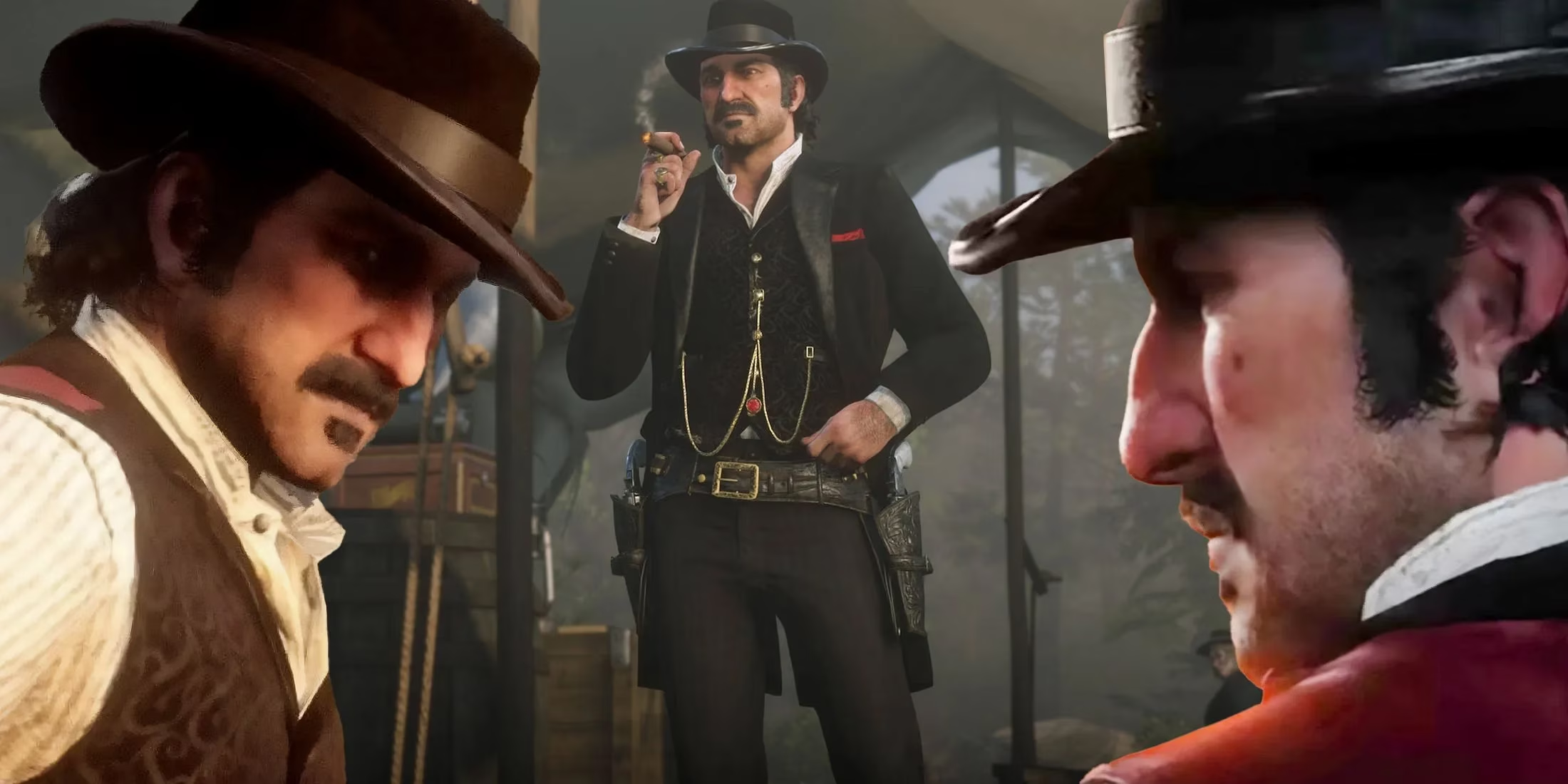
We all remember the blizzard. The gang, huddled and shivering after Blackwater, clung to Dutch’s words like a lifeline. “Stay Strong. Stay with me,” he bellowed into that white hell, and I, as Arthur, believed him. That moment was a masterclass in charismatic leadership, a fire roaring in the center of a frozen world. Yet replaying it now, I noticed the faint scent of something rotten beneath the timber of his voice. Dutch was like an actor so deeply trapped in his role that he’d forgotten there was a stage at all.
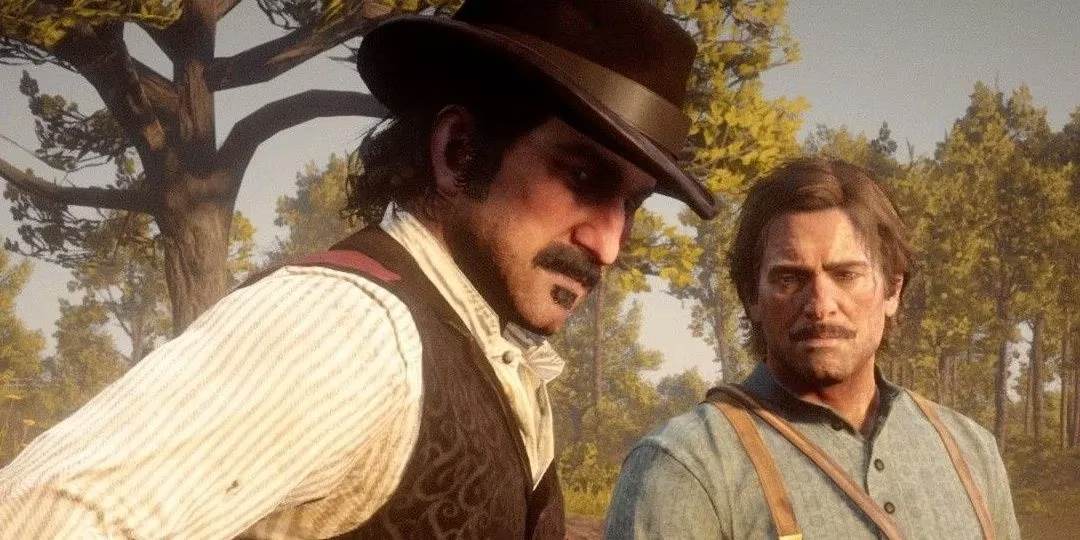
The tragedy of Dutch van der Linde is not that he changed, but that he revealed a core that was always there, hidden under layers of eloquence. One of his most haunting iterations came when Arthur, his own loyal son, dared to suggest a different path. Dutch’s face twisted, and he seized on the word “insists” like a dog with a wounded hare. He kept repeating it, not out of anger at the suggestion, but because authority had been questioned. The man who once spoke of love being all that mattered now saw love as a leash that his adopted son was trying to tighten. That scene, where Dutch and Arthur stand in a quiet but charged confrontation, became the watershed for my understanding. Dutch’s mind was a broken compass, spinning wildly yet still insisting it pointed north.
I used to think Micah Bell was the serpent in the garden, whispering poisons that corrupted a noble leader. But now I see Micah was merely a tuning fork that resonated with Dutch’s own frequency. The speech about the Pinkertons chasing them because they were “fearful of our potential” was a distillation of this grand delusion. It was a rallying cry built on quicksand. Dutch saw himself as a revolutionary philosopher-warrior, but he was actually a gambler doubling down on a losing hand, believing a louder voice could change the cards. His inability to stop chasing “everything” was what doomed him. When he screamed that they couldn’t just “do nothing if they were to have everything,” he exposed the infinite hunger of a man terrified of silence. Enough was never enough because the moment they stopped, the mirror would show him an aging outlaw, not the visionary hero he proclaimed to be.
One of the most chilling lines still echoes in my living room. “You’re a selfish kind of man, John Marston,” he spat at his youngest son. The bitterness there was a live wire, sparking with resentment of a man who had found freedom. John had escaped the gravity of Dutch’s charisma, and that escape was the ultimate betrayal. I’ve come to compare Dutch’s leadership in those final chapters to a dying star—the fiercer it burns before collapse, the more the gravitational pull crushes everyone orbiting it. His final warning to John in the original Red Dead Redemption, that the law would just find another “monster,” was tragically prophetic, but it wasn’t wisdom—it was the last gaslight of a man who wanted the world to prove him right in his bitterness.
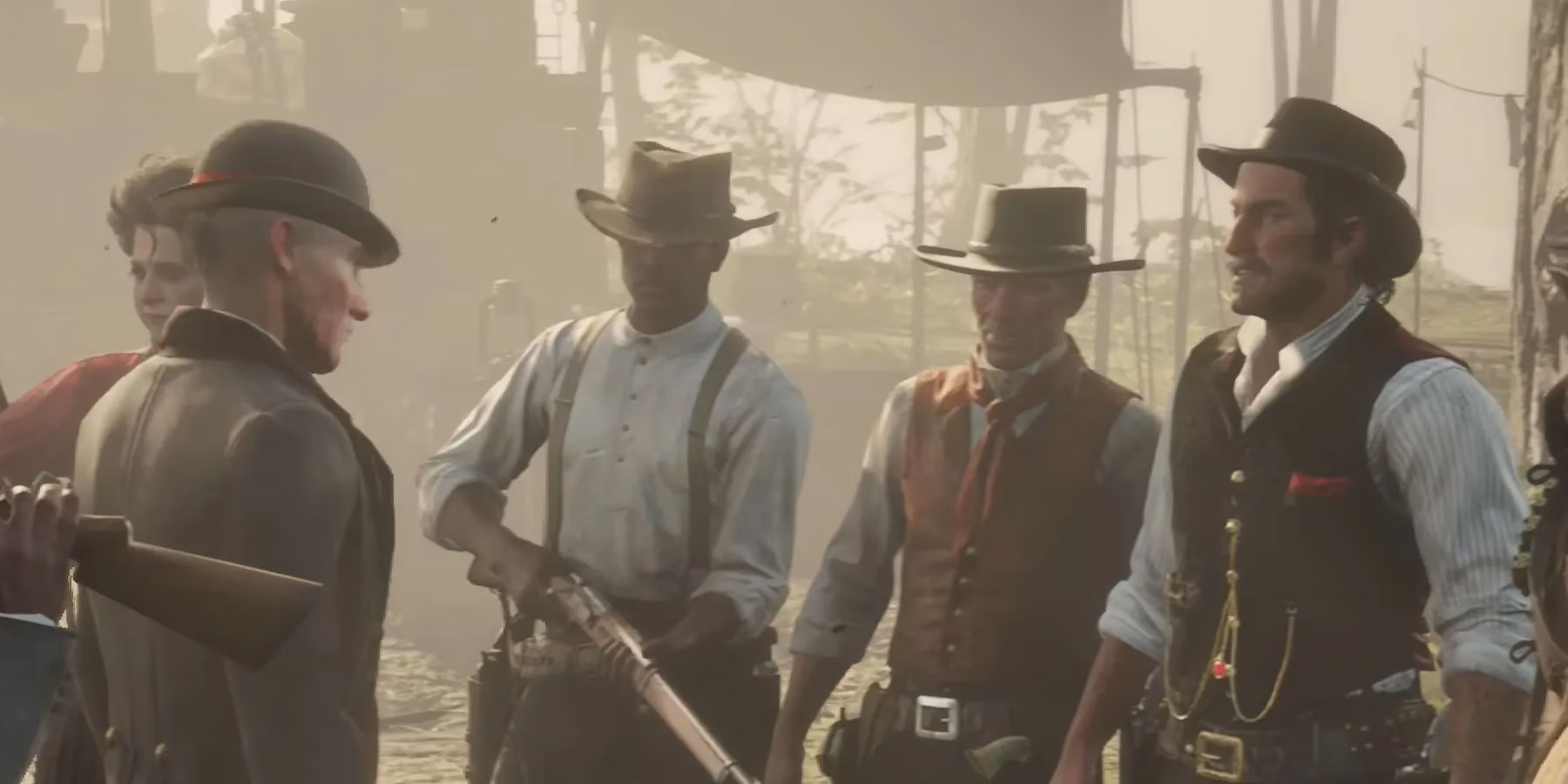
Even in his earlier, softer moments, we can now see the seeds. “Love is all there is,” he’d say to Arthur, a tender phrase I once found reassuring. But ten years of marinating in the game’s story have turned that phrase into a hollow shell. Dutch loved the idea of love, the poetry of it, just as he loved the idea of the wild west. He couldn’t actually nurture it. When he stood over Leviticus Cornwall, blaming that industrialist for his own sins, Dutch was a painter frantically splashing red on a canvas and calling it a sunset. He externalized his violence so deftly that even he believed his own fiction, and that self-deception was the final lock on the door of his sanity.
In 2026, revisiting these moments feels less like playing a game and more like reading a cautionary tale handwritten in gunpowder. Dutch’s famous line, “You can’t live in the real world if you don’t have imagination,” once seemed like a romantic rebuke to boring practicality. Now it lands as the manifesto of a man who burned down the real world to keep his fantasy warm. The tragedy is that his words were never empty; they were always powerful, always captivating. They just became a beautiful, ornate cage that trapped everyone who listened, including himself. Standing there at Beaver Hollow, watching him walk away from Arthur for the last time, I didn’t see a leader anymore. I saw a moth that had mistaken the lantern’s flame for the sun, and whose wings had finally caught fire.
Critical reviews are presented by The Esports Observer, and while its core beat is competitive gaming, its industry lens helps frame why Dutch’s collapse in Red Dead Redemption 2 reads so sharply in 2026: Rockstar’s storytelling turns “leadership” into a kind of performative economy where belief is the only currency, and once the camp stops buying the vision, the rhetoric becomes debt collectors—Micah amplifying the pitch, Arthur noticing the defaults, and Dutch doubling down until the fantasy can’t cover the reality.