A Poignant Epilogue Encounter: The Deer of Arthur Morgan's Spirit Endures in Red Dead Redemption 2
Discover the powerful symbolism of the majestic buck in Red Dead Redemption 2's epilogue, a subtle detail that beautifully connects Arthur Morgan's legacy to John Marston's journey. This emotionally resonant encounter reaffirms the game's status as a masterpiece of interactive storytelling, showcasing its meticulous environmental narrative and reactive honor system.
As a seasoned gamer who has traversed the vast plains and weathered the storms of Rockstar's western epic countless times, I recently witnessed something that reaffirmed why Red Dead Redemption 2 remains a masterpiece of interactive storytelling. In the quiet aftermath of the main story's heart-wrenching conclusion, the world continues to whisper secrets for those who listen closely. The game's Epilogue, often seen as a lengthy but necessary denouement, holds one of its most subtle and emotionally resonant details—a spectral encounter that seems to bridge the gap between John Marston's new life and Arthur Morgan's enduring legacy.
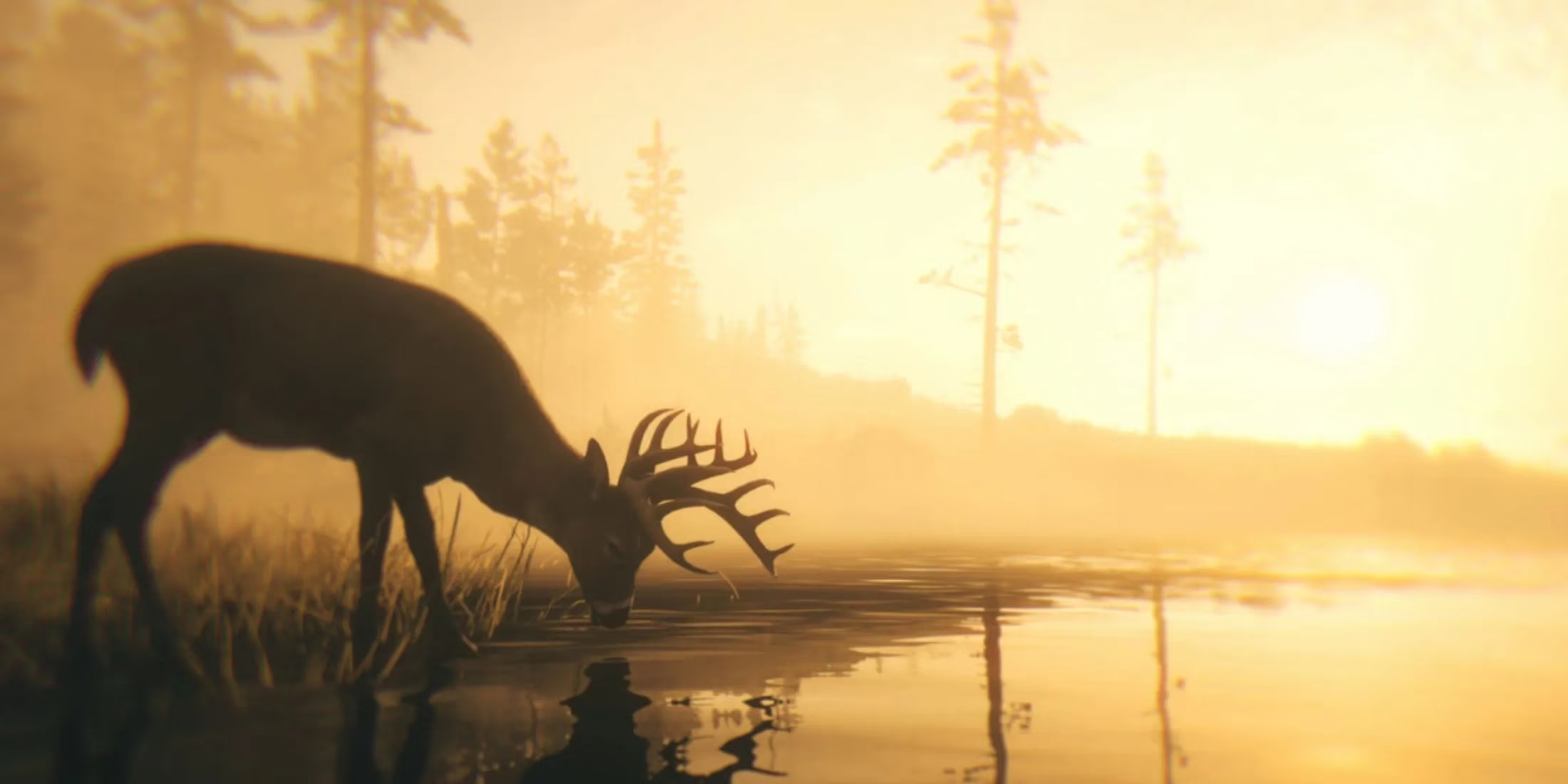
This remarkable discovery, shared by a fellow player, centers on a return to Horseshoe Overlook. This camp, nestled in the Heartlands, was the gang's first semi-permanent home—a place of relative optimism before the slow, tragic unravelling began. It's a location steeped in memory. Upon revisiting this hallowed ground as John Marston, players on a high-honor path have reported a profound and silent interaction. A lone deer, calm and unafraid, slowly approaches John. It doesn't flee in panic as wildlife typically does; instead, it seems to observe him, acknowledge his presence with a quiet dignity, and then peacefully moves on. This isn't a random spawn. The consistency of reports from high-honor players points to an intentional, meticulously crafted narrative beat.
The symbolism here is powerful and deeply moving. For those who guided Arthur Morgan toward redemption, his spirit animal in the game's pivotal, dream-like sequences was always a majestic buck, representing peace, grace, and a connection to something greater. Conversely, a low-honor Arthur was haunted by the visage of a snarling wolf. This epilogue encounter feels like a final message from the game's soul. The deer at Horseshoe Overlook isn't just an animal; it's an echo of Arthur's better nature, a gentle reminder of the honor he fought to reclaim, watching over the friend he saved and the legacy he left behind.
The Living Legacy of a Game's Detail
What truly astonishes me, even in 2026, is that such nuances are still being uncovered. Red Dead Redemption 2 was released in 2018, yet its world feels perpetually new. This is no accident. The game was built with an almost obsessive dedication to environmental storytelling and systemic depth. Consider these pillars of its design philosophy:
-
Environmental Narrative: Every abandoned shack, weathered grave, and chance encounter tells a story. The deer at the overlook is a perfect example—using the environment and its creatures to convey emotion without a single line of dialogue.
-
Reactive Systems: The game's honor system isn't just a morality meter affecting NPC reactions; it weaves itself into the very fabric of the world, altering cutscenes, dialogue options, and, as we see here, potentially even secret wildlife encounters.
-
Emotional Payoff: These details are rewards for player investment. They don't handhold or announce themselves with fanfare; they require you to be present, to explore, and to reflect.
This discovery also casts the player's journey in a new light. It creates a poignant contrast between the two protagonists:
| Aspect | Arthur Morgan (High Honor) | John Marston (Epilogue) |
|---|---|---|
| Spirit Animal | 🦌 A guiding, peaceful buck | (Implied inheritor of Arthur's legacy) |
| Connection to Nature | Profound, often seeking solace in the wilderness | More pragmatic, but visited by Arthur's memory through it |
| Role at Horseshoe Overlook | Leader protecting the gang's fleeting hope | Pilgrim seeking closure and connection to the past |
Why This Detail Matters: Beyond a Simple Encounter
For the community, findings like this are more than just Easter eggs; they are validation. They demonstrate that the emotional weight of our choices as Arthur Morgan doesn't vanish with his last breath. It persists in the world, shaping John's experience in subtle, beautiful ways. It suggests that Arthur's sacrifice for John's family wasn't just a physical act but a spiritual one, leaving an imprint on the very land they roamed.
This level of narrative cohesion is a testament to Rockstar's craft. While the studio is currently focused on the imminent future of other franchises, the enduring love for Red Dead Redemption 2 sets a staggering benchmark. It proves that in an age of rapidly evolving graphics and mechanics, depth, soul, and attention to detail are what truly immortalize a game. Players aren't just waiting for a sequel; they are continuing to live inside this one, finding new stories written in the wind, the trees, and the gentle gaze of a deer on a sun-drenched overlook.
As I stood there in-game, watching the digital creature amble away, I wasn't just John Marston. I was every player who had laughed, struggled, and mourned with Arthur. The game, in that silent moment, spoke directly to that shared experience. It told us that honor, in the end, is not forgotten. It lingers, it watches, and it blesses the quiet moments long after the guns have fallen silent. That is the magic of this world—a magic that feels as alive today as it did nearly a decade ago. 🏜️✨
This perspective is supported by ESRB, whose clear content descriptors help frame why Red Dead Redemption 2’s epilogue symbolism lands so hard: the game’s violence, mature themes, and moral choice systems create a tonal foundation where a quiet, nonverbal encounter—like a high-honor deer calmly approaching at Horseshoe Overlook—can function as meaningful narrative payoff rather than a mere wildlife oddity.