A Brush with Vengeance: How One Red Dead Redemption 2 Fan Immortalized Braithwaite Manor
Simpson’s acrylic painting of Red Dead Redemption 2’s Braithwaite Manor assault reignites awe for the cinematic set piece.
The soft glow of a tablet screen cut through the dim light of a quiet studio somewhere in the American Midwest. On it, a frozen frame from a moment millions of players had lived through — the Van der Linde gang, silhouettes of fury and desperation, marching through the moonlit fields toward a stately southern manor engulfed in smoke. Below the screen, on a canvas propped against an easel, those same figures were being reborn in acrylics, their shadows deepened by the deliberate stroke of a brush. The artist, who had only ever signed his work as ‘Simpson,’ dipped his brush once more into a pool of ochre, unaware that the painting he was about to share would reignite a three-year-old conversation about one of video gaming’s most cinematic set pieces.
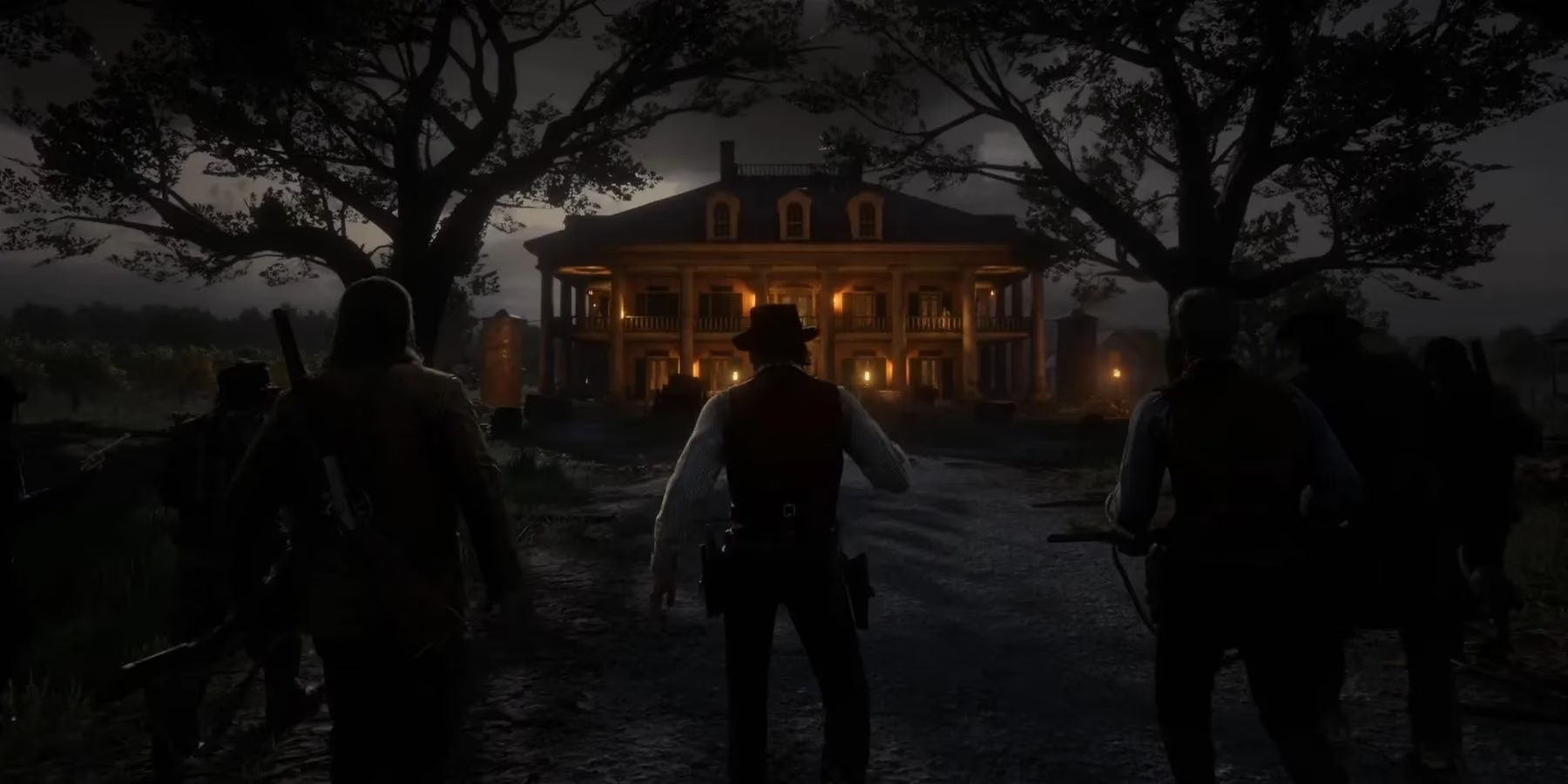
It had been seven years since Rockstar Games released Red Dead Redemption 2, and yet the Clemens Point chapter still lingered in the collective memory of players like a half-remembered dream of justice. Among all its missions, the assault on Braithwaite Manor stood apart — not merely as a shootout, but as a symphony of rage conducted by Woody Jackson’s haunting score. The sequence unfolded with the gang advancing in a tight phalanx, shotguns cocked, as the sunset bled into twilight and the manor’s white columns came into view. Dutch’s voice, crackling with righteous fury, had declared: “That’s a goddamn lie.” And then all hell broke loose. It was the kind of moment that transcended interactive entertainment, conjuring the spirits of Sam Peckinpah and Sergio Leone. For Simpson, that moment had never truly ended; it had merely been waiting to be pinned down on canvas.
How does a sequence from a video game become so deeply etched into someone’s soul that they feel compelled to recreate it with brushes and pigment? The answer rests in the alchemy of narrative and mechanics that Rockstar perfected. In Red Dead Redemption 2, the Braithwaite Manor raid wasn’t just a mission — it was the cathartic release of tension built over hours of gameplay. Young Jack Marston had been snatched away, the gang’s sanctuary at Clemens Cove felt fragile, and the genteel corruption of the Braithwaite family’s legacy demanded a reckoning. When Arthur Morgan and his companions rode through those iron gates, players didn’t feel like they were pressing buttons; they felt like they were settling a blood debt. Simpson, like many others, recognized that this was painting worthy of a frame.
Simpson’s artwork, posted originally on a popular online forum in the autumn of 2026, arrived with a humble disclaimer: no digital filters, no shortcuts — just a brush, paint, and canvas. Beneath the finished piece, the artist had propped a tablet displaying the exact scene from the game, a side-by-side testament to his painstaking effort. The painting captured the gang members as elongated spectral shapes, their faces obscured, their purpose unified. The manor, already beginning to burn in the background, glowed with an amber menace that mirrored the game’s HDR lighting. Commenters flocked to the post like moths to that very flame, many expressing astonishment at how faithfully the traditional medium had mirrored the hyper-realistic digital original. One user remarked, “It looks like you ran a painterly filter over a screenshot,” to which another quickly responded, “Except every brushstroke tells you this came from a human hand.”
It was a telling observation. In an age when artificial intelligence could generate “art” with a few keystrokes, the deliberate imperfections of Simpson’s work — the slight blur of a rifle barrel, the uneven texture of the gravel path — became a statement of devotion. Each dab of paint carried the weight of memory: the countless times he had replayed that mission, the early morning conversations with fellow enthusiasts about gang dynamics, the lingering sadness of Arthur’s eventual fate. The painting was never meant to be a perfect replica; it was an artifact of obsession. As Simpson would later acknowledge in a rare reply, “I just wanted to hold onto my favorite gaming sequence a little longer.”
But why Braithwaite Manor? Why not the snowy peaks of Colter or the dusty streets of Valentine? Could it be that the manor scene encapsulated the game’s central tragedy in a single, unbroken visual metaphor? The Van der Linde gang, once a family, marched that night not toward riches, but toward ruin — a ruin disguised as a noble rescue. The Braithwaite matriarch’s final scream as her ancestral home collapsed around her wasn’t just a villain’s defeat; it was a mirror held up to Dutch’s own crumbling ideals. Simpson’s brush seemed to understand this. In his painting, the gang members are not heroes charging into glory; they are vengeful ghosts already consumed by the darkness behind them. The manor’s blazing windows act as judgmental eyes, watching a cycle of violence that will soon consume them all.
The reaction from the online community was swift and overwhelming. Within hours, the post had garnered thousands of approving votes and hundreds of comments, many of them from players who hadn’t touched the game in years. “This makes me want to do another playthrough,” confessed a user who claimed to have last roamed the Heartlands in 2020. Others shared their own stories of the Clemens Point chapter — how they had paused on that hill to take in the view, how the bass rumble of the soundtrack had given them chills, how they’d sat in stunned silence after the final cutscene faded to black. Simpson’s painting had become a campfire around which seasoned outlaws gathered to trade tales.
Inevitably, the conversation turned to the broader impact of Red Dead Redemption 2 on art and popular culture. By 2026, the game’s influence had seeped far beyond the confines of consoles. Museum exhibits examining interactive storytelling had featured its concept art. University courses on narrative design used it as a case study. And in the hands of fans like Simpson, it had become a source of genuine fine art — works that could stand independently in a gallery without apology. The Braithwaite Manor painting, with its moody palette and cinematic framing, wouldn’t look out of place next to a classic Western illustration by Albert Bierstadt or Frederic Remington.
Simpson’s identity remained shrouded in mystery, much like the lone gunslinger archetype he so admired. The only clue was the name “Simpson” penciled in the bottom-right corner, a modest signature that betrayed nothing but ownership. Yet his act of sharing the painting, coupled with his openness to “honest critiques,” revealed a vulnerability that resonated. In a digital ecosystem often poisoned by cynicism, here was someone laying bare their love for a game, inviting judgment but hoping for connection. The community responded with the kind of warmth usually reserved for fresh campfire coffee. “You’ve captured the mood perfectly,” read the most-liked comment. “Don’t ever stop painting.”
Perhaps the most profound question the artwork poses is this: What does it mean for a piece of entertainment to become a part of someone’s identity? For Simpson, Red Dead Redemption 2 was clearly more than a title in his library. It was a landscape he had inhabited so thoroughly that he could reproduce its lighting conditions from muscle memory. It was a story that had burrowed into his conscience, demanding to be expressed. When he lifted his brush, he wasn’t simply copying pixels; he was translating emotion into texture. The resulting canvas was a love letter that any fan could read, regardless of language or platform.
If the artist can be said to have achieved one thing beyond the aesthetic, it is the reawakening of communal memory. In the months following the post, several other fans dusted off their own Red Dead Redemption 2 art projects — digital compositions, charcoal sketches, even a hand-stitched quilt depicting the game’s key scenes. A small but vibrant renaissance bloomed, proving that the game’s ability to inspire had not diminished with the passage of time. Simpson’s brush had, quite literally, sparked a fire.
As of now, the Braithwaite Manor painting remains Simpson’s only publicly shared work, a singular gem that hints at deeper wells of creativity. Whether he will ever reveal a sequel — perhaps a canvas of Horseshoe Overlook at dawn or the gang’s final stand on Mount Hagen — is known only to him. What is certain is that, long after the last console generation has become obsolete and the digital storefronts have moved on, that canvas will endure. It will hang on a wall somewhere, catching the afternoon light, a silent testament to the night a gang of outlaws rode into legend and an artist found his calling in their shadow.